
Which Pumps Are Suitable for Abrasive Mine Tailings?
For most abrasive mine tailings duties, a heavy-duty centrifugal slurry pump is the starting point. Vertical sump pumps suit collection pits, while positive displacement pumps can address demanding pressure or high-solids applications.
The best choice depends on particle size, slurry concentration, flow rate, discharge distance, and operating conditions. Wear-resistant materials and maintainable designs are equally important to long-term performance.
Which Pump Type Is Best for Your Tailings Application?
There is no universally best tailings pump. A design that handles a large flow efficiently may struggle with a thick slurry or a long, high-pressure pipeline.
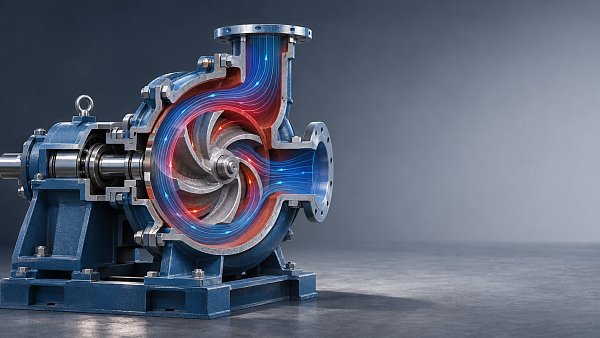
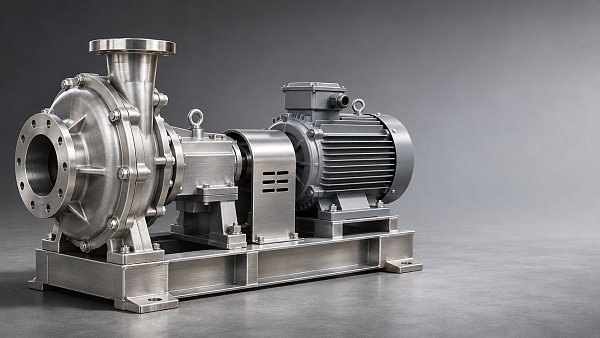
Among the main pump options for abrasive mine tailings, horizontal centrifugal slurry pumps are often selected for continuous transfer at moderate pressures and relatively high flow rates.
Vertical sump pumps are useful when slurry collects below floor level or drainage must be removed from a pit. They solve a different installation problem from long-distance transfer.
Positive displacement pumps can be suitable when the slurry requires high discharge pressure or consistent flow. Their higher system complexity makes careful duty verification especially important.
For coarse or variable tailings, start by confirming the particle-size distribution and maximum particle size. Then compare pumps against the actual operating range, not a single nominal condition.
When Should You Choose a Centrifugal Slurry Pump?
Heavy-duty centrifugal slurry pumps use a rotating impeller to move a mixture of liquid and solids. They are widely used for mill discharge, tailings transfer, and processing duties.
They are particularly attractive when the required flow is substantial, the slurry can be transported without settling, and the pressure requirement falls within the pump's operating range.
Compared with more complex high-pressure arrangements, a single centrifugal pump may offer a straightforward layout and familiar maintenance procedures. Actual economics depend on wear life and energy consumption.
For longer pipelines or greater elevation changes, multiple centrifugal pumps may operate in series. The design must account for pressure ratings, control, startup, and shutdown at each stage.
Centrifugal pumps have limits. As slurry viscosity and solids concentration increase, performance can depart substantially from clean-water curves, reducing capacity and efficiency while increasing power demand.
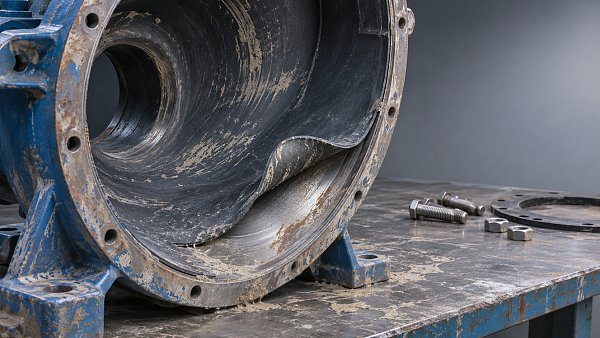
Large, angular particles can damage impellers and liners, especially at excessive speeds. Select a slurry-specific design with suitable passage size, generous wear allowance, and replaceable components.
Ask suppliers to provide corrected performance estimates for the actual slurry and operating conditions. Confirm that the proposed motor has adequate power margin throughout the expected duty range.
Check the available net positive suction head against the manufacturer's requirements, with an appropriate margin. Poor suction conditions can cause cavitation, unstable operation, and accelerated component damage.
When Does a Vertical Sump Pump Make Sense?
A vertical sump pump is installed with its pumping end in a pit or collection sump. It can remove settled drainage, process spills, or accumulated tailings slurry.
This configuration can simplify collection where a flooded suction is impractical. Many designs keep the drive above the liquid, although the exact bearing and sealing arrangement varies.
Vertical pumps are a good fit for intermittent or variable-level duties when the selected design accommodates the expected liquid levels and solids loading without losing prime.
Confirm the minimum operating level, maximum immersion depth, and allowable run-dry conditions with the supplier. These limits differ between cantilever, submerged-bearing, and other vertical designs.
Also consider sump geometry. Dead zones encourage solids accumulation, while inadequate inlet clearance or a poorly positioned agitator can restrict flow and increase wear.
A sump pump is not automatically the best choice for a long tailings pipeline. Check its pressure capability and consider a separate transfer pump if necessary.
When Are Positive Displacement Pumps Worth Considering?
Positive displacement pumps move a defined volume through each operating cycle. Depending on the design, they can deliver high pressures and relatively steady flow at lower speeds.
They may be useful for long-distance transport, high static lift, or thickened tailings when a centrifugal system would require multiple stages or operate inefficiently.
Piston diaphragm pumps are one established option for demanding high-pressure slurry pipelines. A diaphragm separates the pumped slurry from hydraulic components, but diaphragms and valves still require monitoring.
Other designs, including hose pumps, may suit smaller flows or specific dosing and transfer duties. Their pressure, flow, particle-size, and consumable limits must match the application.
Positive displacement equipment generally requires more attention to pressure protection and system controls. A blocked discharge can produce dangerous pressure unless suitable protective devices are installed.
Specify properly sized relief protection, pressure monitoring, and procedures for blocked lines. Where flow pulsation matters, evaluate pulsation dampening and its maintenance requirements with the supplier.
Higher initial cost does not automatically rule out this category. Compare energy, pipeline configuration, component replacement, availability, and the consequences of downtime over the intended operating life.
What Slurry Data Do You Need Before Requesting a Quote?
Reliable selection starts with representative samples and a clear operating envelope. Tailings characteristics can change with ore type, grinding conditions, water recovery, and processing performance.
Particle size and shape: Provide the particle-size distribution, maximum expected size, and information about angular or irregular particles. Average size alone does not describe blockage and wear risks.
Solids concentration: State whether the figure is by mass or volume, and provide normal and maximum values. These measures are not interchangeable without density information.
Slurry density and rheology: Give the liquid and solids densities, plus measured flow behavior where available. Thickened or non-Newtonian tailings may require specialized testing and calculations.
Flow rate: Identify normal, minimum, and maximum operating rates, including expected changes over the mine life. A pump selected only for a peak case may operate inefficiently.
Pipeline duty: Provide pipe length, internal diameter, material, elevation profile, fittings, valves, and discharge conditions. Include both static lift and friction losses in the assessment.
Chemistry and temperature: Share pH, relevant corrosive species, temperature range, and process-water composition. Abrasion and corrosion together can shorten component life more than either mechanism alone.
Operating pattern: Describe continuous or intermittent service, expected starts, shutdowns, flushing arrangements, and available suction conditions. These details affect both pump selection and system reliability.
How Do You Select Wear-Resistant Pump Materials?
Material choice depends on the interaction between particle impact, sliding abrasion, corrosion, temperature, and operating speed. A material that lasts well in one mine may disappoint elsewhere.
High-chrome white iron is commonly used for slurry pump impellers and liners where abrasion resistance is critical. Its suitability depends on particle characteristics and the specific operating conditions.
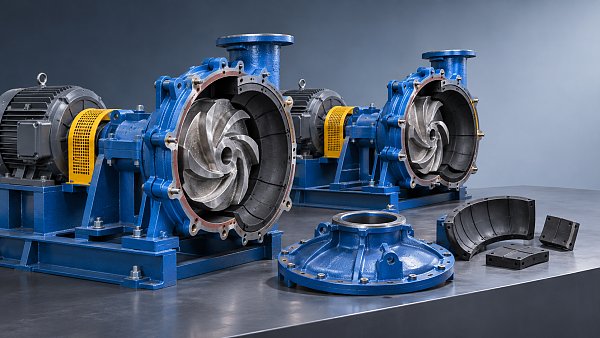
Elastomer liners can perform well with fine particles and suitable slurry chemistry. Natural rubber and synthetic elastomers differ in chemical resistance, temperature limits, and response to coarse particles.
Coarse, sharp particles or high impact energy may damage some elastomer components. Conversely, corrosion or certain wear patterns can make a metal-only solution less attractive.
Consider the complete wet end, including the impeller, casing, throatbush, and liners. Mixing compatible materials can be appropriate when different components experience different wear mechanisms.
Ask vendors for relevant field references and expected inspection intervals, but treat quoted wear life as an estimate. Verify performance through measurements under your actual operating conditions.
How Should You Account for Pipeline and Operating Risks?
Pump selection and pipeline design must be evaluated together. An apparently efficient pump can still perform poorly if the line is undersized, oversized, or difficult to restart.
If slurry velocity falls too low, particles may settle and form deposits. The limiting velocity depends on particle properties, concentration, pipe diameter, and slurry behavior.
Excessively high velocity can increase friction losses, energy use, and erosion. Determine an acceptable operating range through slurry-specific calculations, testing, and relevant operating experience.
Plan for normal stops and unplanned trips. Settled solids can block a line or make restart difficult, particularly where the route includes low points or long horizontal sections.
Depending on the system, flushing connections, drain points, isolation valves, and standby arrangements may reduce recovery time. Their location and capacity should be engineered for the pipeline.
Check pressure ratings for the entire system, including pipework, fittings, seals, and instruments. Assess transient pressures during startup, shutdown, valve movement, and power loss.
Where variable-speed drives are proposed, verify the full operating range. Reducing speed may save energy, but it must not bring pipeline velocity below the safe transport range.
How Can You Compare Pump Costs Beyond the Purchase Price?
The lowest quoted price rarely reveals the full cost of tailings handling. Compare alternatives over a consistent operating period using the same production assumptions and slurry data.
Include installed equipment, civil work, pipework, power supply, controls, and commissioning. A pump requiring additional stages or specialized foundations can change the overall project cost.
Estimate energy consumption at expected operating points rather than relying only on motor nameplate power. Account for changes in slurry properties and pump efficiency as components wear.
Include liners, impellers, seals, valves, diaphragms, and other relevant consumables. Consider local spare-parts availability, replacement lead times, labor, lifting equipment, and planned maintenance intervals.
Downtime deserves separate attention. A more expensive pump may justify its cost if it improves availability, but the benefit should be supported by realistic maintenance and production assumptions.
Request a comparison that states the duty point, design margins, power estimate, maintenance assumptions, and exclusions. This makes competing proposals easier to assess on equivalent terms.
What Should You Ask a Pump Supplier?
Ask which installations most closely resemble your slurry, flow, pressure, and operating pattern. References from unrelated water or fine-slurry duties may not predict tailings performance.
Request the proposed pump curve, slurry corrections, operating range, motor sizing, and expected wear components. Confirm which assumptions depend on samples or information you have not yet provided.
Discuss access for inspection and replacement, required lifting clearances, seal-water needs, and service support. Practical maintenance constraints can matter as much as laboratory material properties.
Finally, agree on commissioning checks and performance criteria. Track flow, pressure, power, vibration, and component wear so the site can identify changes before they cause a failure.
Conclusion
For many abrasive tailings transfers, a heavy-duty centrifugal slurry pump is the practical first option. Vertical sump pumps address collection duties, while positive displacement pumps merit consideration for high-pressure or thickened-slurry applications.
The strongest selection combines representative slurry data, a complete pipeline assessment, suitable wear materials, and realistic lifecycle costs. Validate the proposed operating range with suppliers before committing to equipment.
Related Information
 Nov 13, 2026
Why Is My Slurry Pump's Rubber Liner Peeling?
Can Hebei Delin Machinery Co. help diagnose a peeling slurry pump liner? Explore common causes, repair options, and tips for choosing the right replacement.- Nov 13, 2026
Can Delin Provide CFD Results for a Proposed Slurry Pump?
Can Delin Pump Co., Ltd. provide CFD results for a proposed slurry pump? Discover what to request, how to assess reports, and when project-specific analysis adds value. - Nov 12, 2026
How Much Does a Stainless Steel Slurry Pump Cost?
Explore stainless slurry pump price factors, from steel grades to operating costs. Learn how to compare quotes and budget with confidence. - Nov 12, 2026
High-Chrome vs. Rubber Slurry Pumps: Which Should You Choose?
High chrome vs rubber slurry pumps: compare wear resistance, corrosion, maintenance, and lifecycle costs to choose the right pump for your application.

{item.title}
Get a Quote
Please leave your information and email address, and we will contact you as soon as possible.