
How Much Solids Content Can a Slurry Pump Handle?
How much solid material can a slurry pump handle before performance suffers or the equipment wears prematurely? The answer depends on more than a single concentration figure. Particle size, density, shape, viscosity, and pump design all influence high solids slurry pumping limits. Understanding how these factors interact can help you select the right pump, maintain reliable flow, and reduce operating costs. This article explains the key limits and practical considerations for handling high-solids slurries in industrial applications.
There Is No Universal Maximum Solids Percentage
A slurry pump can handle only as much solids as the complete pumping system allows. The practical limit is reached when the required flow can no longer be maintained reliably, power or pressure exceeds an equipment limit, the pipeline begins to accumulate settled material, or wear becomes unacceptable for the operation.
That limit may be lower than the maximum concentration stated in a pump catalog. A manufacturer’s figure is useful as an initial screening point, but it cannot describe every combination of particle size, mineral density, pipe length, suction condition, and operating schedule. A pump that moves a fine, uniform slurry at a given concentration may struggle with a coarser mixture at the same reported percentage.
The operating objective also matters. A pump may move a dense slurry for a short transfer duty but be unsuitable for continuous operation at that condition. A realistic specification therefore needs a normal operating point, an expected range, and the duration of any peak-concentration events.
Start by Defining What “Solids Content” Means
Solids concentration is commonly expressed by weight or by volume. The two figures are not interchangeable. Concentration by weight compares the mass of dry solids with the total mass of slurry. Concentration by volume compares the volume occupied by solids with the total slurry volume.
For dense mineral particles in water, the weight percentage will be higher than the volume percentage for the same mixture. Converting between them requires the densities of both the solids and the carrying liquid. If the solids are a mixture of materials, use a representative bulk solids density established for the application rather than assuming the density of a single mineral.
This distinction is more than a paperwork detail. Weight concentration is convenient for mass balance and production reporting. Volume concentration is particularly relevant when assessing how much space particles occupy in the flow and how strongly they interact. An inquiry that says only “40% solids,” for example, leaves a crucial question unanswered: 40% by weight or by volume?
Sampling matters too. A sample taken from the top of a settling tank may understate the concentration reaching the pump suction. Collect representative samples under normal and difficult operating conditions, and identify whether the reported solids are dry solids or include retained moisture.
Why Two Slurries at the Same Concentration Behave Differently
Particle size and settling
Coarse particles tend to settle more readily than fine particles, although density, shape, liquid properties, and particle interactions also affect settling. If flow in a horizontal pipeline becomes too slow, particles can collect along the bottom. The resulting deposit reduces the effective flow area, raises resistance, and can eventually block the line.
The particle size distribution is more useful than an average alone. A small coarse fraction may govern passage through the pump or contribute disproportionately to pipeline settling. Specify the distribution and the largest credible particle size, including occasional oversize material, rather than relying only on a nominal screen size.
Density, shape, and abrasiveness
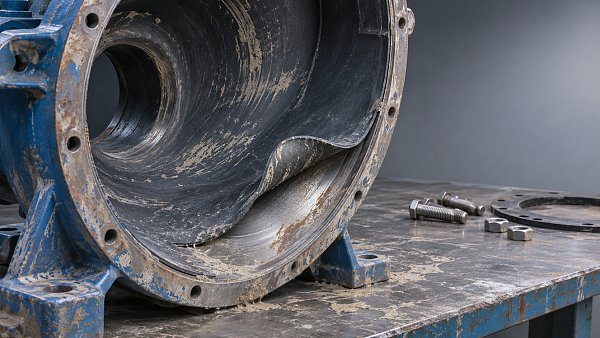
Higher-density solids increase the mass the pump must move and can increase settling risk. Angular, hard particles may cause more erosive wear than rounded or softer particles under otherwise comparable conditions. Wear also depends on velocity, impact angle, concentration, and the materials used for the impeller and casing.
Abrasiveness is not captured by concentration alone. When wear life is critical, provide a representative sample for material assessment and discuss the expected wear pattern with the pump supplier. A harder wear material is not automatically the right answer if impact, corrosion, cost, or maintenance access points toward another option.
Viscosity and yield stress
Fine particles can produce a thick mixture that behaves differently from water. Some slurries become less resistant to flow when agitated; others require a minimum stress before they begin to move. These properties affect suction, pipeline friction, pump performance, and restart after shutdown.
For such mixtures, a single viscosity value may be misleading. Rheology testing across relevant shear rates and temperatures can give a more useful basis for design. The test should reflect the expected concentration range and, where relevant, what happens after the slurry has been standing.
The Pipeline Can Set the Limit Before the Pump Does
A pump selection is only part of the calculation. The system curve must account for static lift, pipe length and diameter, bends, valves, and the friction associated with the actual slurry. Water-based pressure-loss calculations may be a starting point, but they should not be treated as a reliable final design for a concentrated or settling mixture.
For settling slurries, the line needs enough velocity to limit deposition under the intended operating conditions. The required velocity is application-specific; it changes with particle properties, pipe size, concentration, and flow regime. Increasing velocity without checking the consequences is not a free solution, because it can increase friction losses and erosive wear.
Pipe diameter creates a trade-off. A larger line can reduce friction at a given flow rate, but it also reduces velocity and may encourage settling. A smaller line raises velocity at that same flow, potentially improving solids transport while increasing pressure loss and wear. The pump and line should be assessed together across the expected flow range, not sized independently.
Pay attention to low-flow periods. A system may perform well at design throughput but accumulate solids during production turndown, recirculation, or an upstream interruption. Restarting a line containing settled material can require more pressure than normal operation and may not be possible without flushing or clearing the line.
How Pump Design Changes the Answer
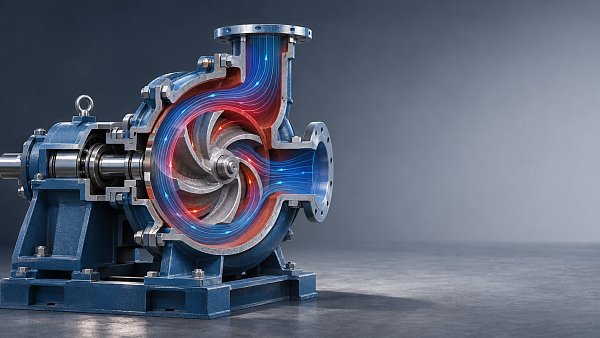
Centrifugal slurry pumps are widely used where continuous flow is needed and the slurry can be kept moving through the system. Their solids-handling capability depends on passage size, impeller geometry, speed, wear materials, and the effect of the slurry on head and efficiency. A clear-water performance curve alone does not establish the duty point for a dense mixture; appropriate slurry performance corrections and the supplier’s application method should be considered.
Positive displacement pumps may be considered when the material is highly viscous or when flow control at higher pressure is important. They also have limits: particle size, abrasiveness, suction conditions, internal clearances, pulsation, and allowable pressure can all constrain the application. Their discharge system requires suitable pressure protection, since a blocked line can cause pressure to rise rapidly.
Neither pump type eliminates the need to assess the pipeline. A machine capable of generating the required pressure cannot make an unstable mixture immune to settling, nor can it compensate indefinitely for poor suction supply. For either type, check the largest particle the pump can pass, the expected wear rate, and whether the selected seal arrangement suits the slurry and the available services.
Suction Conditions Deserve Special Attention
High-solids slurry is often harder to feed into a pump than to discharge from it. A long or undersized suction line, excessive lift, air entrainment, or an unstable tank level can restrict supply. With centrifugal pumps, inadequate available net positive suction head can lead to cavitation and loss of performance. The required margin must be evaluated for the actual fluid and operating conditions with the equipment supplier.
A short, direct suction arrangement and a stable flooded supply are often helpful where the layout permits them. Tank agitation must also match the duty: insufficient mixing can send alternating dilute liquid and concentrated solids to the pump, while excessive air entrainment can disturb flow. If the process produces variable feed, specify both the normal concentration and credible surges rather than designing around an average alone.
Recognizing When the System Is Being Pushed Too Far
A declining flow rate at the same pump speed can indicate increased system resistance, wear, restricted suction, or a change in slurry properties. Rising differential pressure may point to deposits or a blockage, while unstable pressure and noise can indicate suction problems or air entering the system. None of these symptoms identifies a cause on its own.
Compare readings rather than reacting to one instrument. Trend flow, suction and discharge pressure, motor load, speed, tank level, and solids concentration where practical. Inspect wear parts and the pipeline when the trend suggests deterioration. Motor load can change for several reasons, so it should not be used as a stand-alone concentration measurement.
Do not assume that increasing pump speed is the safest response to falling flow. Higher speed may temporarily restore throughput, but it can also increase power demand and accelerate wear. Confirm the cause and check the pump, motor, and pressure limits before changing the operating point.
What to Confirm Before Selecting or Upgrading a Pump
A useful inquiry describes the slurry and its operating envelope, not just a target flow and a solids percentage. Gather the following information where available:
- Normal, minimum, and maximum flow rates; operating hours; and expected variation in feed.
- Solids concentration by weight or volume, with the basis clearly stated, plus solids and liquid densities.
- Particle size distribution, maximum particle size, particle shape, and any available abrasiveness or corrosion information.
- Viscosity or rheology data at relevant concentrations and temperatures, particularly for fine or paste-like mixtures.
- Suction arrangement, available liquid level, discharge elevation, pipe dimensions, fittings, and required delivery pressure.
- Shutdown and restart conditions, flushing provisions, acceptable maintenance intervals, and access for replacing wear parts.
Where data are uncertain, identify the uncertainty instead of hiding it in a single design number. A representative sample and a review of the most demanding operating cases can prevent a misleading comparison between pumps quoted on different assumptions.
The workable solids limit is ultimately the concentration at which the pump, suction supply, pipeline, drive, and maintenance plan still meet the required duty. Check that limit at normal throughput, during feed surges, and after a shutdown. If any one of those conditions remains undefined, the percentage on a datasheet is not yet a dependable operating limit.
Related Information
 Nov 13, 2026
Why Is My Slurry Pump's Rubber Liner Peeling?
Can Hebei Delin Machinery Co. help diagnose a peeling slurry pump liner? Explore common causes, repair options, and tips for choosing the right replacement.- Nov 13, 2026
Can Delin Provide CFD Results for a Proposed Slurry Pump?
Can Delin Pump Co., Ltd. provide CFD results for a proposed slurry pump? Discover what to request, how to assess reports, and when project-specific analysis adds value. - Nov 12, 2026
How Much Does a Stainless Steel Slurry Pump Cost?
Explore stainless slurry pump price factors, from steel grades to operating costs. Learn how to compare quotes and budget with confidence. - Nov 12, 2026
High-Chrome vs. Rubber Slurry Pumps: Which Should You Choose?
High chrome vs rubber slurry pumps: compare wear resistance, corrosion, maintenance, and lifecycle costs to choose the right pump for your application.

{item.title}
Get a Quote
Please leave your information and email address, and we will contact you as soon as possible.