
Why Is My Slurry Pump's Rubber Liner Peeling?
A slurry pump rubber liner can peel because its bond has failed, the rubber has been damaged by the slurry, or operating conditions have pushed it beyond its intended limits. Installation problems, abrasive particles, chemical exposure, heat, and abnormal flow can all play a part. The appearance and location of the damage often provide the best clues.
Before ordering a replacement, determine whether the rubber is separating from its backing, being torn away by wear, or breaking down throughout its thickness. These failures can look similar from outside the pump, but they do not call for the same fix. Installing an identical liner without addressing the cause may simply repeat the problem.
What does the peeling look like?
Start by examining the damaged liner after the pump has been safely isolated, drained, and opened. Follow the site’s lockout procedures and account for hot, pressurized, corrosive, or otherwise hazardous slurry. Do not reach into the casing or inspect the liner while the equipment can start or rotate.
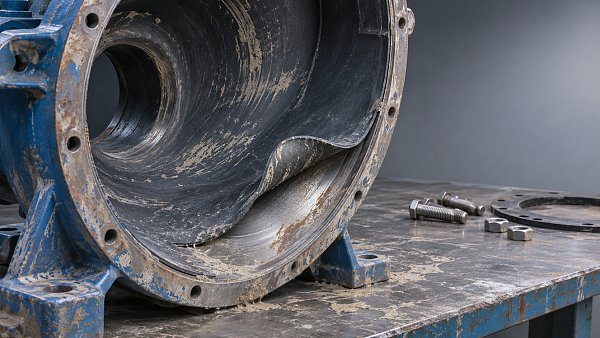
Look at both the rubber surface and the area underneath any lifted section. Take photographs before cleaning away all the evidence, and note whether the damage is concentrated near an inlet, joint, edge, or area of high flow. Avoid pulling a loose flap further than necessary: its original shape and attachment point can help identify how the failure began.
- Rubber lifting from a backing or bond line: A relatively clean separation between layers points toward a bonding, preparation, contamination, or heat-related issue. A bonded liner and a replaceable molded liner have different construction, so inspect the attachment method before drawing conclusions.
- Thin, ragged rubber with exposed material beneath: Wear may have reduced the rubber until a remaining edge caught the flow and tore. Check the surrounding surface for directional scouring or impact marks.
- Swollen, soft, sticky, or cracked rubber: Chemical exposure, heat, aging, or an unsuitable elastomer may have weakened the material. These signs are clues, not proof of a particular chemical reaction.
- Damage beginning at a joint or edge: Poor fit, incorrect assembly, a protruding edge, or material trapped between mating parts can expose the liner to localized attack.
A liner can suffer more than one failure mechanism. For example, chemical softening can make rubber easier to tear, while an installation gap can allow slurry to attack a bond line. The goal is to identify what started the damage, not merely what finally caused the rubber to come loose.
Could installation or bonding be responsible?
For a liner bonded to a casing or backing plate, adhesion depends on the condition of the surfaces, the specified adhesive system, and the installation and curing process. Oil, moisture, residual scale, old adhesive, or poorly prepared metal can interfere with a bond. Incorrect adhesive application or curing outside the procedure can also leave weak areas.
If peeling appeared soon after installation, compare the failed area with the installation record. Was the entire bonding surface prepared as specified? Were the correct materials used together? Did the assembly have the required curing conditions before exposure to slurry? A clean-looking surface alone does not establish that the bond was sound.
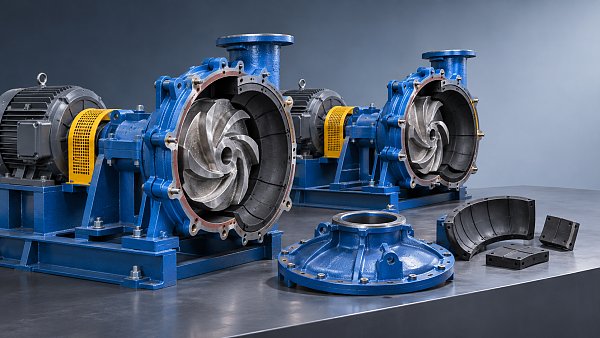
Not every rubber liner relies on the same kind of field-applied bond. Some pumps use molded, replaceable liner sections held in position by the casing and mating components. In those designs, focus on fit and assembly as well: a liner seated unevenly, pinched during assembly, or trapped over debris may leave an edge exposed to the flow.
Check the casing and mating surfaces for distortion, corrosion, and damage. Replacing the rubber will not correct a damaged support surface that prevents the new liner from seating properly. Use the pump manufacturer’s assembly procedure for tightening, clearances, and any required sealant; excessive tightening can damage components just as insufficient tightening can leave gaps.
Is the slurry wearing the liner away?
Rubber can perform well against many fine-particle slurries, but its suitability depends on the whole application. Particle size, shape, hardness, concentration, and impact conditions all influence wear. Coarse particles or sharp fragments may cut or tear the rubber, particularly where they strike the liner directly or catch an exposed edge.
Flow conditions matter as much as the material itself. A liner may last well under one operating regime and fail quickly after a change in pump speed, slurry concentration, or the size of solids. If the plant has changed its process feed, compare the current slurry with the conditions used when the liner material was selected.
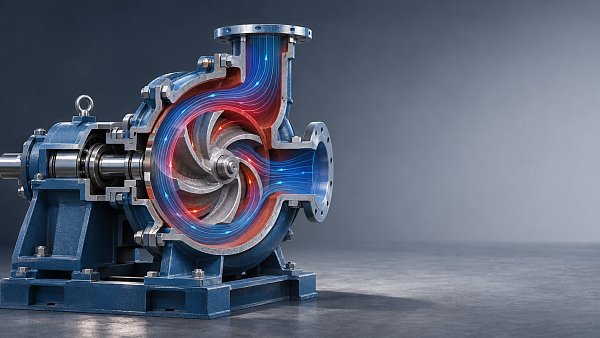
Damage near the suction side or along a particular flow path may indicate concentrated impact or turbulence, but location alone is not a complete diagnosis. Inspect the impeller, throatbush, and adjacent liner sections as a set. Uneven wear, a damaged impeller, incorrect clearances, or a poorly seated component can change the flow reaching the liner.
Also consider whether oversized debris has entered the pump. A torn section caused by a foreign object requires a different response from uniform wear caused by the normal slurry. If debris is recurring, investigate its source and whether the existing upstream screening or process controls are appropriate.
Can chemicals or temperature cause the rubber to peel?
Yes. An elastomer that resists abrasion may still be unsuitable for the liquid carrying the solids. Oils, solvents, acids, alkalis, and process reagents can affect different rubber compounds in different ways. Possible signs include swelling, softening, hardening, cracking, or loss of elasticity. Once weakened, the rubber can separate or tear under normal hydraulic forces.
Compatibility depends on the actual compound, not simply on the word “rubber.” Natural rubber and synthetic elastomers do not have interchangeable chemical resistance, and formulations within a material family can differ. Provide the liner supplier with the slurry chemistry, operating temperature, and any cleaning chemicals or upset conditions the pump may encounter.
Temperature deserves attention even when the slurry chemistry appears unchanged. Heat can affect the rubber, the bond, or both. Short periods of elevated temperature, such as during process upsets or cleaning, may matter as much as the usual operating temperature. A liner chosen only for normal conditions may not tolerate what happens during startup, shutdown, or cleaning.
Do not identify chemical attack solely from a swollen or discolored surface. Compare the damage with operating records and, where practical, have the failed material examined by a qualified supplier or repair specialist. The findings should be considered alongside the liner’s service history and the location of the damage.
Could the pump’s operating conditions be damaging the liner?
Running outside the pump’s intended operating range can increase vibration, recirculation, and uneven wear. Cavitation may also damage internal surfaces when pressure conditions cause vapor bubbles to form and collapse. Its causes can include inadequate suction conditions, a restricted suction line, or operating conditions that do not match the pump installation.
Listen and look for changes such as unusual noise, vibration, unstable flow, or fluctuating pressure. These symptoms do not automatically prove cavitation; blockages, air ingress, worn components, and mechanical problems can produce similar signs. Compare the symptoms with suction and discharge readings, the pump’s operating curve, and the condition of the impeller and casing.
Dry running is another risk. Without sufficient liquid, friction and heat can damage rubber components and affect bonded areas. Check whether the pump is properly primed and whether process interruptions can leave it running without adequate flow. Follow the pump manufacturer’s operating limits rather than assuming that a liner material alone can compensate for an unsuitable duty.
Should you repair the liner or replace it?
Stop operating a pump with a loose liner until the extent of the damage has been assessed. A lifted section can catch the flow, break away, obstruct passages, or expose the casing to rapid wear. Continued operation may turn a liner replacement into a larger casing or impeller repair.
A localized repair may be suitable when the liner construction permits it, the surrounding rubber and backing are sound, and a qualified repair procedure is available for the material and service conditions. The repair must be compatible with the slurry and withstand the loads at that location. Simply applying a general-purpose adhesive to a loose flap is not a dependable repair: contamination, an unsuitable bond, or an exposed edge can cause it to lift again.
Replacement is usually the more practical choice when separation is widespread, the rubber has hardened or swollen, multiple edges are lifting, or the liner has worn thin across a large area. Replaceable molded sections should be evaluated for fit and wear according to the pump’s maintenance instructions; patching one section may not restore the intended clearances or seating.
Inspect the casing beneath the liner before fitting a new one. Grooves, corrosion, cracks, or trapped material can prevent proper support or sealing. Repair or replace damaged underlying components as appropriate, and remove contamination using the preparation method specified for the liner system.
What should you check before choosing a replacement liner?
Start with the pump identification and the liner design, then review the duty that caused the failure. A part that fits the casing is not necessarily the right material for the slurry. Conversely, changing to a different material without addressing an assembly or operating problem may not improve service life.
Prepare the following information for the pump or liner supplier:
- Pump model and the identification of the failed liner section, including dimensions or part markings where available.
- Whether the liner is bonded, molded, or otherwise mechanically retained, and how it was installed.
- Slurry composition, particle size and shape, solids concentration, and any changes in the feed.
- Normal and upset operating temperatures, process chemicals, and cleaning agents.
- Operating conditions and symptoms, including speed, flow, pressure, vibration, and any dry-running or blockage events.
- Photographs showing the damage location, the exposed backing, and the condition of adjacent wear parts.
Ask how the proposed liner material handles both the solids and the liquid phase. Rubber may be a good choice for a suitable fine-particle duty, while a different elastomer or a hard-metal wear part may be more appropriate for certain chemicals, temperatures, or coarse, sharp solids. The pump’s design and available compatible components also determine what can actually be fitted.
How can you tell whether the replacement has solved the problem?
Record the condition of the casing and adjacent parts during assembly, along with the liner material and installation details. After restart, monitor the same operating indicators that helped investigate the failure: flow, pressure, vibration, noise, and process conditions. Check the liner at the next suitable maintenance opportunity, especially around the original failure location.
Early damage in the same place suggests that the underlying flow, fit, material, or operating issue may remain. A different wear pattern can also be useful information: it may show that the original problem has changed, or that another component is now controlling service life. Compare like operating periods where possible, since a change in slurry or production rate can make a simple time-in-service comparison misleading.
Can a liner peel even if the pump has not been running?
Yes. Storage conditions, aging, chemical exposure during cleaning, or an existing bond defect can affect a liner before normal operation resumes. A liner that has been stored for a long period or exposed to unsuitable conditions should be inspected for cracking, distortion, hardness changes, and loose edges before installation. Handle and store replacement parts according to the supplier’s instructions.
Does peeling always mean the liner material was wrong?
No. The material may be suitable for the slurry but fail because an edge was pinched, the backing was damaged, or the pump operated under conditions outside the intended duty. Equally, a well-installed liner can fail if the slurry chemistry or particle characteristics are incompatible with it. The most useful decision comes from matching the visible damage with the installation and operating history.
Related Information
 Nov 13, 2026
Why Is My Slurry Pump's Rubber Liner Peeling?
Can Hebei Delin Machinery Co. help diagnose a peeling slurry pump liner? Explore common causes, repair options, and tips for choosing the right replacement.- Nov 13, 2026
Can Delin Provide CFD Results for a Proposed Slurry Pump?
Can Delin Pump Co., Ltd. provide CFD results for a proposed slurry pump? Discover what to request, how to assess reports, and when project-specific analysis adds value. - Nov 12, 2026
How Much Does a Stainless Steel Slurry Pump Cost?
Explore stainless slurry pump price factors, from steel grades to operating costs. Learn how to compare quotes and budget with confidence. - Nov 12, 2026
High-Chrome vs. Rubber Slurry Pumps: Which Should You Choose?
High chrome vs rubber slurry pumps: compare wear resistance, corrosion, maintenance, and lifecycle costs to choose the right pump for your application.

{item.title}
Get a Quote
Please leave your information and email address, and we will contact you as soon as possible.