
High-Chrome vs. Rubber Slurry Pumps: Which Should You Choose?
Choosing between high chrome vs rubber slurry pumps can shape far more than the next maintenance bill. The material surrounding the slurry affects how quickly parts wear, how often the pump must be opened, and how reliably the process can run between shutdowns. High-chrome alloys are often chosen for hard, sharp solids, while rubber can be effective with finer particles and in some corrosive services.
There is no universal winner, though. Particle shape, size, temperature, chemistry, and pump speed all influence the outcome. The questions below address the decisions that matter most before specifying a new pump or changing the wear materials in an existing installation.
What is the difference between high-chrome and rubber slurry pumps?
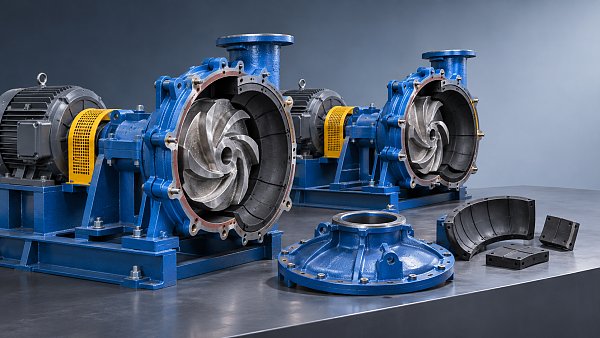
The distinction usually refers to the materials used for the pump’s wear components, not necessarily the material of every part in the assembly. In a high-chrome pump, components exposed to the slurry—commonly the impeller and liners—are made from a hard, wear-resistant high-chromium alloy. In a rubber-lined pump, replaceable elastomer liners protect the casing, and the impeller may also be rubber-covered or made from another compatible material.
High-chrome alloys resist cutting and gouging from abrasive particles. Rubber responds differently: its elasticity can absorb particle impacts and resist wear effectively when solids are sufficiently fine and the operating conditions suit the elastomer. Rubber can also provide a useful barrier against certain corrosive liquids, although compatibility depends on the specific rubber compound and chemical exposure.
Neither description guarantees that a particular pump will handle your duty. Hydraulic design, component geometry, material grade, and operating point are just as important as the broad material category.
High chrome vs rubber slurry pumps: how do they compare?
Use this comparison as a starting point rather than a specification. A high-chrome alloy is not automatically corrosion-proof, and a rubber lining is not automatically suitable for every acidic or alkaline slurry.
Which material is better for abrasive slurry?
For slurry containing coarse, hard, angular particles, high chrome is often the safer initial choice. Sharp solids can cut into rubber surfaces or damage liner edges, while a suitable hard alloy is generally better able to resist that cutting action. Mineral processing duties involving abrasive rock particles are typical situations where metal wear parts deserve close consideration.
Rubber can be a strong candidate when particles are smaller and less likely to cut or tear the lining. In those conditions, its ability to deform and rebound can reduce the damage caused by repeated impacts. A fine tailings slurry, for example, may behave very differently from a stream carrying sharp fragments, even if both contain the same mineral.
Ask for more than an average particle size. The largest particles, their shape, hardness, and concentration can determine whether a rubber lining survives. A small amount of oversized material may cause damage that an average-size figure does not reveal.
Does rubber always provide better corrosion resistance?
No. Rubber can protect the underlying casing from some corrosive media, but different elastomers respond differently to acids, alkalis, solvents, oils, and temperature. A compound that works in a water-based acidic slurry may swell, soften, or deteriorate in another liquid. Exposure time and concentration matter too.
High-chrome alloys also vary. Chromium content contributes to their wear-resistant structure, but a material selected for abrasion resistance should not be assumed to resist the chemical conditions in every process. Corrosion and erosion can act together, with chemical attack weakening a surface that particles then remove.
Before choosing either material, provide the pump supplier with the liquid composition, concentration, pH where relevant, operating temperature, and any cleaning chemicals. Check every wetted component—including seals and fasteners where applicable—not just the liner or impeller.
How do particle size and shape influence the choice?
Imagine two slurries with similar solids concentrations. One carries rounded, fine particles; the other contains angular fragments. Their effect on a pump can be entirely different. Fine particles may produce widespread erosion, while sharp fragments can create local cuts, gouges, or impact damage.
When reviewing a duty, gather as much of the following as practical:
- Particle-size distribution: Include the upper end of the range, not only the average.
- Particle shape: Note whether solids are rounded, angular, flaky, or fibrous.
- Particle hardness: Identify minerals or other solids likely to be particularly abrasive.
- Solids concentration: State whether the figure is by weight or by volume.
- Variability: Identify occasional oversized solids or changes caused by upstream equipment.
If the process changes with the ore body, production campaign, or season, select for the realistic range of conditions rather than a single sample taken on an unusually calm day.
What role do pump speed and operating point play?
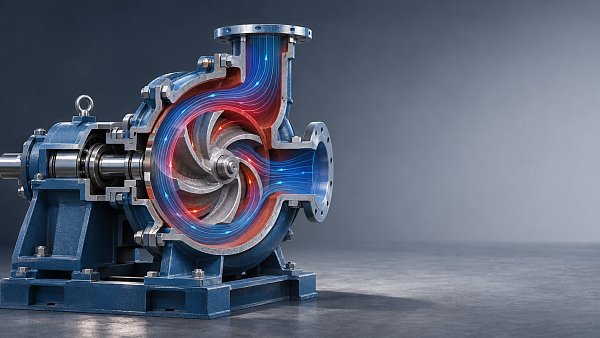
Material selection cannot compensate for a pump operating far from its intended duty. Higher relative velocities can intensify erosion, particularly where the flow changes direction inside the casing or around the impeller. Cavitation and recirculation may also cause damage that is easily mistaken for a material failure.
Review the required flow rate and total dynamic head, including static lift and pipe friction. Then compare the expected operating range with the pump curve. A pump should be selected to operate within the manufacturer’s recommended range across normal process variations, not just at one theoretical duty point.
Speed is especially important for elastomer components because the allowable duty depends on the material and design. Ask the manufacturer about limits for impeller speed, particle size, pressure, and temperature. Do not apply a rule from one rubber-lined pump to another without checking.
Are high-chrome pumps more expensive to maintain?
They can be, but the answer depends on how often parts need replacing and what a shutdown costs. A component with a higher purchase price may be the better investment if it runs substantially longer in a particular slurry. Equally, a replaceable rubber liner may offer attractive lifecycle costs when its wear life is adequate and changeout is straightforward.
Compare the full maintenance picture rather than the initial pump price alone:
- Expected service life of the impeller, liners, and other wear parts.
- Labor, lifting equipment, and time required for each changeout.
- Production lost during planned or unplanned shutdowns.
- Availability of replacement parts and opportunities to schedule maintenance.
- Changes in energy use as clearances grow and performance deteriorates.
Historical wear records are valuable here. If an existing pump requires frequent intervention, examine which surfaces fail first and how they fail before assuming a different material is the entire answer.
Can rubber and high-chrome components be used together?
Some slurry pumps are designed to use combinations such as a metal impeller with rubber liners. This may be worth investigating when the impeller and casing experience different wear mechanisms, or when corrosion protection is needed in one area and greater resistance to cutting wear is needed in another.
Compatibility is design-specific. Components must fit the pump’s hydraulic and mechanical arrangement, and clearances must remain within the manufacturer’s requirements. Mixing parts from different constructions or suppliers without engineering approval can compromise fit, performance, and safe operation.
A mixed-material arrangement should also be evaluated as a system. For example, protecting the casing with rubber does not resolve a chemical compatibility problem at the exposed metal impeller.
What can wear patterns tell you about the right material?
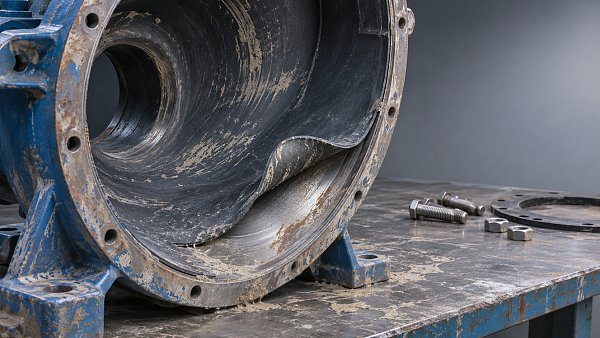
Worn parts provide evidence that a specification sheet cannot. Broad, relatively even thinning may suggest a different mechanism from deep localized grooves, torn liner edges, or damage concentrated at the impeller inlet. Corrosion, cavitation, misalignment, and operation away from the intended duty can all complicate the picture.
During a planned inspection, photograph components, record operating hours, and note the locations and approximate depth of wear. Compare those observations with process changes and operating data. If possible, review the findings with the pump manufacturer or a qualified engineer before changing materials; the solution may involve hydraulic selection or operating conditions as well as the wear parts.
When is high chrome the more practical choice?
Start with a suitable high-chrome alloy when the slurry contains hard, coarse, or sharply angular particles that could cut an elastomer. It may also be appropriate where operating conditions fall outside the limits of available rubber compounds, provided the alloy and the rest of the pump are compatible with the process chemistry and temperature.
The important word is suitable. High-chrome alloys are not interchangeable, and increased hardness does not eliminate every wear mechanism. Confirm the actual grade and its intended application rather than relying on the label alone.
When should you consider a rubber-lined slurry pump?
A rubber-lined design is worth close examination for fine-particle slurries where the solids are unlikely to cut or tear the liner. It may also make sense when the liquid is corrosive to available metal wear materials and an elastomer with verified chemical compatibility is available.
Check for occasional large particles, hydrocarbons or other incompatible chemicals, and temperature excursions. A rubber-lined pump that looks attractive under normal conditions may be a poor fit if a recurring upset exposes it to conditions beyond the compound’s limits.
What information should you have before requesting a recommendation?
A useful pump enquiry describes both the process and the operating envelope. Provide the required flow and head, slurry temperature, liquid chemistry, solids concentration, particle-size distribution, and details of the solids’ shape and hardness. Include suction conditions, hours of operation, and any expected changes in duty.
If the installation already exists, share the current pump model, speed, materials, wear life, and maintenance history. Mention whether failures occur during normal operation, startup, shutdown, or process upsets. These details help distinguish a material-selection problem from a hydraulic or operational problem.
Ultimately, the choice between high-chrome and rubber slurry pumps comes down to evidence from the actual duty. Match the wear material to the particles and liquid, check the pump’s operating limits, and compare the cost of keeping the system running—not just the cost of buying it.
Related Information
 Nov 13, 2026
Why Is My Slurry Pump's Rubber Liner Peeling?
Can Hebei Delin Machinery Co. help diagnose a peeling slurry pump liner? Explore common causes, repair options, and tips for choosing the right replacement.- Nov 13, 2026
Can Delin Provide CFD Results for a Proposed Slurry Pump?
Can Delin Pump Co., Ltd. provide CFD results for a proposed slurry pump? Discover what to request, how to assess reports, and when project-specific analysis adds value. - Nov 12, 2026
How Much Does a Stainless Steel Slurry Pump Cost?
Explore stainless slurry pump price factors, from steel grades to operating costs. Learn how to compare quotes and budget with confidence. - Nov 12, 2026
High-Chrome vs. Rubber Slurry Pumps: Which Should You Choose?
High chrome vs rubber slurry pumps: compare wear resistance, corrosion, maintenance, and lifecycle costs to choose the right pump for your application.

{item.title}
Get a Quote
Please leave your information and email address, and we will contact you as soon as possible.