
Can Delin Provide CFD Results for a Proposed Slurry Pump?
Can Delin Pump Co., Ltd. provide CFD results for a proposed slurry pump? The answer depends on the project, the proposed pump design, and the analysis Delin agrees to supply.
Buyers should request confirmation directly rather than assume that a CFD report is included in every quotation. Ask about its scope, cost, delivery date, and the operating conditions modeled.
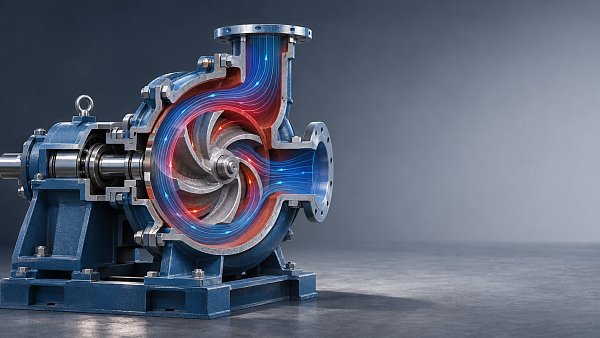
Computational fluid dynamics can help assess flow patterns, identify potential wear zones, and compare hydraulic behavior before manufacture. Its value depends on realistic inputs and careful interpretation.
What Should You Ask Delin Before Requesting a CFD Report?
Start by asking whether CFD analysis is available for your proposed pump model and duty point. Explain whether you need an existing study or a new project-specific simulation.
An existing report may illustrate the general behavior of a pump family, but its geometry and operating conditions may differ from your application. Request enough detail to judge its relevance.
A project-specific study can address your stated operating conditions, provided the supplier has an appropriate model and agrees on the assumptions. Confirm whether modifications can be assessed before manufacture.
Ask Delin to identify who performs the analysis, what software and modeling approach will be used, and whether the findings will be reviewed by an experienced pump engineer.
Also clarify commercial terms. CFD may be included in an engineering package, offered as a separate service, or unavailable for a particular proposal; do not assume any arrangement without confirmation.
Finally, agree on deliverables and ownership. Determine whether you will receive a written report, selected images, numerical results, or underlying files, and whether confidentiality restrictions apply.
Which Operating Data Does Delin Need?
A useful CFD request begins with the intended duty: flow rate, differential head, operating speed, and fluid temperature. Specify normal, minimum, and maximum conditions where these are known.
Provide the slurry density and, where available, solids concentration by weight or volume. Identify the measurement basis because confusing these concentrations can materially affect the modeled mixture.
Describe the solids themselves: particle size distribution, typical and maximum particle sizes, shape, hardness, and mineral composition. Include settling characteristics or test data if available.
For the carrier liquid, supply density and viscosity at operating temperature. If the slurry exhibits non-Newtonian behavior, provide a measured rheology curve and explain the testing conditions.
Include suction conditions, such as suction pressure or liquid level, pipe diameter, and available net positive suction head. Note operating constraints that may affect inlet flow or cavitation risk.
Share the proposed installation arrangement, including suction bends, reducers, valves, and discharge piping near the pump. State whether the analysis should include these components or only the pump.
Where information is incomplete, identify assumptions explicitly. Ask Delin which missing inputs materially affect the analysis and whether sensitivity cases would be more useful than a single estimate.
What Should a Useful Slurry Pump CFD Report Include?
The report should identify the pump model, impeller diameter, rotational speed, modeled geometry, fluid properties, and duty points. Without these details, attractive graphics are difficult to evaluate.
Request a description of the computational domain and boundary conditions. It should be clear whether the model includes the impeller, casing, suction arrangement, and relevant clearance regions.
Ask how the mesh was checked and whether further refinement materially changed key results. A mesh independence assessment supports confidence, although it does not guarantee physical accuracy.
The report should identify the turbulence model and explain whether the calculation is steady or transient. Transient analysis may reveal fluctuations that a steady-state calculation cannot capture.
For predicted head, efficiency, and power, request numerical values with units and stated reference conditions. Check whether reported efficiency covers the hydraulic model only or includes mechanical losses.
Pressure and velocity contours should include readable scales and identify the locations shown. Streamlines or velocity vectors can help engineers investigate recirculation, separation, and uneven inlet flow.
For slurry-specific conclusions, ask how solids were represented and whether a suitable erosion model was used. A clean-water simulation alone cannot establish actual slurry wear rates.
Request a limitations section that identifies uncertain inputs, omitted components, and areas where testing or operating experience is needed. These qualifications are essential to a sound purchasing decision.
Can CFD Predict Wear and Service Life?
CFD can highlight regions where flow conditions may contribute to erosion, such as impeller passages, the casing tongue, or areas affected by particle impact and recirculation.
However, a high-velocity region is not automatically the fastest-wearing surface. Particle trajectories, impact angles, concentration, material properties, and operating duration all influence actual damage.
A quantitative wear prediction requires a suitable erosion model and credible particle and material data. Even then, results should be treated as estimates with application-specific uncertainty.
Ask whether the wear model has been calibrated or compared with test results or field experience for similar slurries and materials. Request the basis for any claimed service life.
For most purchasing decisions, CFD is strongest as a comparative tool: it can help identify design changes or operating conditions that warrant closer examination before a pump is built.
Use those findings alongside material selection, replaceable wear components, maintenance records, and site experience. A simulation should inform the maintenance strategy, not replace it.
How Should You Compare CFD Results With Pump Performance Data?
First, verify that the simulated duty point matches your required flow, head, speed, and impeller diameter. A result at a different condition may not answer your purchasing question.
Compare predicted performance with the supplier's pump curve and ask whether that curve comes from testing, calculation, or a combination. Confirm whether it represents water or slurry service.
Water-based curves may need correction for slurry properties. Ask Delin to explain the correction method, its applicable range, and any uncertainty introduced by your particular solids and viscosity.
Review expected operation across the duty range, not just at one point. A pump that looks suitable at design flow may experience undesirable behavior during startup or reduced production.
For each proposed operating point, examine head, power, efficiency, and any identified recirculation or wear concerns. Include the expected frequency and duration of off-design operation in your assessment.
Check that the motor and drive have adequate margins under credible maximum power conditions. CFD output alone does not establish the required electrical, mechanical, or thermal margins.
Where possible, seek a factory performance test and agree on its acceptance criteria in advance. Confirm the test liquid, measurement standard, tolerances, and procedure for resolving discrepancies.
Does CFD Demonstrate That Cavitation Will Not Occur?
No single CFD image can guarantee cavitation-free operation. Pressure contours can identify low-pressure regions, but interpretation depends on the model, fluid properties, and suction conditions used.
Ask whether cavitation was explicitly modeled or whether the report simply compares local pressure with vapor pressure. These approaches support different conclusions and have different limitations.
Compare available net positive suction head with the pump's required value at relevant flow rates. Define the required operating margin with the supplier for your site conditions.
Consider changes in tank level, temperature, suction losses, and operating flow. Where suction conditions are uncertain or critical, request sensitivity cases and discuss suitable testing.
When Is a Project-Specific CFD Study Worth Requesting?
A tailored study is more likely to be valuable when the application has high downtime costs, unusual slurry characteristics, restricted suction conditions, or demanding reliability requirements.
It can also help when comparing modified impellers, casing designs, or operating speeds. Define the design alternatives and decision criteria before commissioning simulations so results remain comparable.
For a familiar duty using a proven pump, an existing performance curve, relevant references, and appropriate testing may provide better value than a new CFD study.
Consider the cost of analysis against the consequences of a poor selection: production losses, energy use, replacement parts, and maintenance. CFD reduces some uncertainty but cannot eliminate operational risk.
Before approving the study, agree on the engineering question it must answer. A focused comparison is usually more actionable than a general request for colorful flow visualizations.
How Can You Compare CFD Reports From Different Suppliers?
Give each supplier the same duty data, slurry properties, operating scenarios, and requested outputs. Ask them to identify deviations, assumptions, and information they consider insufficient.
Compare like with like: geometry, impeller diameter, speed, modeled domain, fluid representation, and duty point. Different assumptions can produce apparent performance differences unrelated to design quality.
Review the evidence behind each result, including mesh checks, validation, and test references. A detailed report is not automatically more accurate, but transparent methods make scrutiny possible.
Ask each supplier to explain how its findings affect the proposed design, materials, expected maintenance, and test plan. Separate calculated predictions from contractual guarantees and measured results.
Keep commercial comparisons equally explicit. Include engineering fees, delivery impact, testing costs, and any charges for revised simulations when evaluating the total proposal.
A Practical Request to Send Delin
Provide your pump duty sheet and ask whether Delin can supply CFD results for the proposed slurry pump at the normal and relevant off-design operating points.
Request confirmation of the modeled geometry, slurry assumptions, predicted hydraulic results, wear assessment method, validation evidence, and any limitations that could affect the selection.
Ask for a quotation that states the analysis cost, schedule, deliverables, revision allowance, and whether the report is project-specific. Identify any information you cannot yet supply.
Before placing an order, agree on how CFD findings relate to pump selection, performance testing, and contractual acceptance. This prevents a simulation report from being mistaken for a guarantee.
Conclusion
Delin may be able to provide CFD results for a proposed slurry pump, but availability and scope must be confirmed for the specific project and quotation.
The most useful report connects realistic operating data to a clear engineering decision, explains its assumptions, and shows where predictions need support from testing or field experience.
Use CFD to investigate hydraulic behavior and potential wear risks, then assess the complete proposal against performance curves, materials, maintenance requirements, and agreed acceptance criteria.
Related Information
 Nov 13, 2026
Why Is My Slurry Pump's Rubber Liner Peeling?
Can Hebei Delin Machinery Co. help diagnose a peeling slurry pump liner? Explore common causes, repair options, and tips for choosing the right replacement.- Nov 13, 2026
Can Delin Provide CFD Results for a Proposed Slurry Pump?
Can Delin Pump Co., Ltd. provide CFD results for a proposed slurry pump? Discover what to request, how to assess reports, and when project-specific analysis adds value. - Nov 12, 2026
How Much Does a Stainless Steel Slurry Pump Cost?
Explore stainless slurry pump price factors, from steel grades to operating costs. Learn how to compare quotes and budget with confidence. - Nov 12, 2026
High-Chrome vs. Rubber Slurry Pumps: Which Should You Choose?
High chrome vs rubber slurry pumps: compare wear resistance, corrosion, maintenance, and lifecycle costs to choose the right pump for your application.

{item.title}
Get a Quote
Please leave your information and email address, and we will contact you as soon as possible.