
What Is the Typical Lead Time for Bulk Mining Slurry Pump Orders?
When a maintenance shutdown or mine expansion depends on new pumps arriving, a quoted delivery date can become a critical scheduling constraint. What is the typical lead time for mining slurry pump bulk orders? The practical planning scale is weeks to months, rather than days: confirmed stock may allow earlier dispatch, while made-to-order batches require production time, and customized designs or special materials can extend the schedule further. There is no dependable universal lead time without checking the configuration, quantity, factory workload, and delivery destination.
The important distinction is between factory readiness and availability at the mine. A supplier’s lead time may end when the pumps are ready for dispatch, not when they have cleared customs, reached site, and passed receiving checks. For shutdown planning, request a schedule that identifies both dates and states what must happen before the delivery clock starts.
Establish which kind of order you are placing
Bulk slurry pump orders do not all follow the same production route. Several identical replacement pumps may use existing drawings and established components. A package covering different duties, motor ratings, seal arrangements, and wet-end materials can behave more like several separate orders, even when purchased under one contract.
Use these categories to frame the supplier discussion, not to assign a guaranteed delivery window. A standard model can still take longer than a customized unit if its required components are unavailable or its production line is fully committed.
Make the quoted lead time measurable
A quotation stating “delivery after order” leaves several questions unresolved. Does the period begin with purchase-order receipt, advance payment, technical approval, or release of final drawings? Does it finish at assembly completion, inspection acceptance, dispatch, or delivery to the named destination?
Ask the supplier to express the commitment in this form: start event → production milestones → readiness date → delivery endpoint. This exposes assumptions that otherwise remain hidden until the shutdown date approaches.
- Start event: Identify the exact commercial and technical conditions required to release production.
- Factory endpoint: Confirm whether readiness includes testing, documentation, preservation, and packing.
- Delivery endpoint: Name the destination and establish who arranges transport, customs clearance, and unloading.
- Order completion: Clarify whether the date covers the first unit, each scheduled batch, or the entire quantity.
Delivery terms define responsibilities, but they do not replace a dated logistics plan. A factory-ready commitment may be suitable for purchasing control while still being insufficient for site scheduling.
Identify the parts that can hold up the whole batch
Wet-end materials and manufacturing route
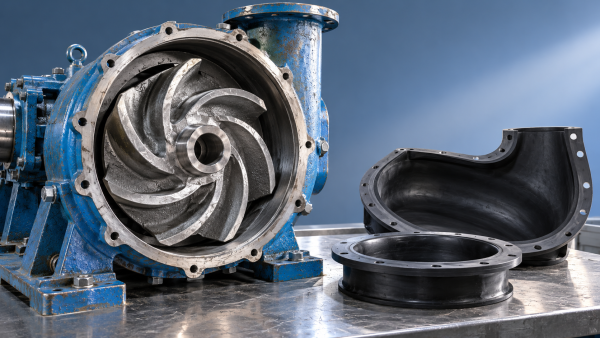
High-chrome iron components, elastomer liners, and other wear-resistant materials have different manufacturing requirements. New castings may require pattern preparation, foundry scheduling, heat treatment, machining, and inspection. Elastomer-lined designs depend on the specified compound, suitable tooling, and lining or molding capacity.
Ask whether the quoted material is already available in the required component sizes or must be produced specifically for the order. An alloy name alone does not establish availability. Material certificates, traceability requirements, and acceptance criteria should be agreed before manufacturing begins, rather than added during final inspection.
Motors, seals, and packaged equipment
A completed pump wet end is not necessarily a complete pump package. Motors, gearboxes, couplings, mechanical seals, instrumentation, baseplates, or control equipment can become the controlling items. Particular motor ratings, electrical supplies, enclosure requirements, or seal arrangements may require separate procurement.
Request the status of these items individually. “Main components available” is not enough when one missing drive component prevents testing or shipment. Also confirm whether bought-in equipment is physically available, ordered against a confirmed date, or merely covered by a budget quotation.
Quantity and variation
Increasing quantity can exceed available stock or push manufacturing beyond one production batch. However, quantity alone does not determine lead time. A repeated configuration can simplify production, while a smaller order containing several unique designs may create more engineering and setup work.
Have the supplier separate first-unit readiness, batch release dates, and final-order completion. This is particularly useful when some pumps serve an imminent shutdown and others are intended for later installation or warehouse replenishment.
Prepare an RFQ that suppliers can schedule accurately
An incomplete request for quotation often produces a provisional lead time that changes after technical review. The goal is not to include every possible specification; it is to resolve the information that affects selection, manufacturing, and acceptance.
- Define the hydraulic duty. Provide required flow, head, operating range, and relevant suction conditions. Explain whether the duty is fixed or varies during operation.
- Describe the slurry. Include available information on solids concentration, particle size, temperature, abrasiveness, and chemical conditions. State the basis and units for the supplied values.
- Confirm the package boundary. Identify whether the purchase covers bare-shaft pumps, complete motor-driven assemblies, controls, or installation accessories.
- List configuration and interface requirements. Include materials, seals, motor requirements, connection details, rotation, and dimensional constraints where applicable.
- Specify acceptance requirements. State required tests, inspection hold points, documentation, and any witness arrangements.
- Separate quantities by required date. Distinguish shutdown-critical units, project installations, operational spares, and spare wear parts.
For repeat purchases, reference the approved drawings and configuration revision, not only the model name. A model designation may cover different impellers, materials, seals, or drive arrangements. Confirming the exact build prevents a seemingly routine reorder from entering a new clarification cycle.
Ask bidders to list exclusions and unresolved assumptions alongside their delivery offer. Comparable quotations need the same technical scope and delivery endpoint; otherwise, the shortest quoted period may simply omit work included elsewhere.
Build the procurement schedule backward from site need
The required date should be when the equipment must be available for its intended activity, not automatically the shutdown start. Receiving inspection, storage preparation, installation planning, and interface verification may need to happen beforehand.
Work backward through the activities that must occur: site receipt and checks, inland transport, import clearance where applicable, main transport, export preparation, factory acceptance, manufacturing, and technical release. Some activities can overlap, so avoid simply adding every duration. The governing schedule is the sequence of dependent activities that controls completion.
Agree who owns each milestone. Engineering owns specification approval; purchasing handles commercial release; the supplier controls manufacturing; inspection personnel manage hold-point attendance; and logistics providers handle transport within their assigned scope. A milestone without an owner is difficult to recover when it slips.
Keep contingency separate from the supplier’s committed production duration. Base it on identifiable uncertainty: unproven transport routes, new material processing, unresolved interfaces, inspection availability, or customs documentation. An unexplained allowance does not show which risk it is intended to cover.
For a shutdown-critical purchase, obtain a latest acceptable dispatch date as well as a required site date. This makes it possible to recognize a delivery threat while transport options are still available.
Reduce delay without weakening the specification
The most useful acceleration measures remove waiting or unnecessary variation. Ask whether an existing approved configuration meets the duty, whether common components are available, and whether production capacity can be reserved once the technical scope is frozen. Standardization helps only when hydraulic suitability, wear performance, and installation compatibility remain acceptable.
Avoid approving a different material or seal solely because it ships sooner. Such changes require engineering review against the slurry and operating conditions. Receiving an unsuitable pump earlier can create a larger operational problem than the original delivery delay.
For mixed-priority orders, consider staged delivery. The first shipment might contain complete shutdown-critical packages, followed by lower-priority units and stock replenishment. Confirm any additional freight, inspection, and documentation requirements before agreeing to split the order.
Complete packages matter more than isolated components. Sending pumps ahead of their motors or couplings may not advance installation. Likewise, expedited freight only helps after equipment is ready; it cannot recover time still needed for casting, machining, assembly, or mandatory acceptance work.
Inspection scheduling is another practical lever. Agree test procedures early, arrange witness availability before completion, and resolve documentation requirements during production. Where the contract allows it, remote witnessing or review of agreed test records may reduce scheduling conflicts, but acceptance requirements should not be relaxed informally.
Monitor evidence, not just revised completion dates
Once the order is released, progress updates should identify completed work and remaining dependencies. A repeated statement that production is “on schedule” provides little warning when a critical component has not yet been secured.
Request reporting against the agreed milestones, including drawing approval, material availability, completion of major components, assembly, testing, documentation release, and packing. The level of detail should match the order’s complexity and operational importance.
- A milestone slips: Ask which downstream activities are affected and whether they can genuinely overlap.
- A critical component remains unconfirmed: Request its committed availability date and the proposed alternative, subject to technical approval.
- Testing moves later: Check witness availability, retest allowance, and the effect on dispatch booking.
- Partial delivery is proposed: Verify that each released package is complete enough for its intended use.
A recovery plan should name the delayed activity, responsible party, revised milestone, and evidence supporting recovery. Extra shifts or expedited transport may help in some circumstances, but neither automatically removes a bottleneck elsewhere.
Before accepting a bulk-order commitment, obtain a technically defined scope, a clear lead-time start event, dated batch milestones, and a named delivery destination. If the supplier cannot confirm those elements, treat the offered lead time as provisional and do not use it as the sole basis for a fixed shutdown schedule.
Related Information
 Oct 24, 2026
How Much Should a Froth Pump Be Oversized for Flotation Concentrate?
How much should a froth pump be oversized for flotation concentrate? Learn how inlet air, peak flow, and head affect sizing to avoid costly mistakes and select the right pump.- Oct 24, 2026
Is Higher Hardness Always Better for High-Chrome Pump Castings?
Is higher hardness always better for high chrome pump castings? Discover how toughness, carbide structure, and slurry conditions affect service life—and choose smarter to reduce downtime. - Oct 23, 2026
Which Leakage Test Should You Specify for a Zero-Leakage Knife Gate Valve?
Which leakage test should I specify when ordering a zero-leakage knife gate valve? Compare API 598 and ISO 5208, define seat leakage limits, and avoid costly purchasing mistakes. - Oct 23, 2026
Which Pump Material Lasts Longest in Limestone-Gypsum FGD Slurry?
Which pump material lasts longer in limestone-gypsum desulfurization slurry? Compare high-chrome iron, rubber and duplex steel to find the right fit, reduce downtime and extend service life.



{item.title}
Get a Quote
Please leave your information and email address, and we will contact you as soon as possible.