
How Dredging Pumps Move Solids: Types, Limits, and Typical Applications
Dredging is often described as “moving sand or mud,” but the engineering challenge is more specific: a pump must move a mixture of liquid and solids through an intake, pump casing, pipeline, bends, valves, and discharge point without allowing the solids to settle, block the system, or destroy wear components too quickly.
That distinction matters because a pump that transfers water efficiently may fail rapidly when exposed to angular gravel, high-density mineral slurry, fibrous debris, or thick sediment. Dredging Pumps are therefore designed around a combination of hydraulic performance and wear resistance. Their real capability is determined not by one headline flow figure, but by the relationship between particle characteristics, solids concentration, total pipeline length, elevation, and the energy available to keep material suspended.
How a dredging pump actually moves solids
Most dredging systems rely on centrifugal pumping. An impeller rotates inside a casing, creating a low-pressure area near its eye. Water and loosened sediment enter the suction side, then are accelerated outward by the impeller. The casing converts part of that velocity into pressure, allowing the slurry to travel through a discharge pipeline.
The pump itself does not “grab” solids. Solids are carried by the water phase. This is why dredging performance depends as much on the slurry and piping system as on the pump. If flow velocity falls below the level needed to keep particles in suspension, solids begin to deposit along the bottom of the pipe. Deposits increase friction loss, reduce the available flow area, and can eventually form a blockage that requires shutdown and manual clearing.
At the intake, the material must also be presented to the pump in a manageable form. A cutterhead may loosen compacted soil; an excavator-mounted dredge attachment may agitate sediment; a submersible agitator may stir settled material into the water. In other cases, such as sand recovery from a pond or tailings transfer from a sump, natural slurry movement and gravity provide enough feed.
For this reason, a dredging installation should be understood as a material transport system rather than a standalone pump. The pump produces pressure and flow, but production depends on how effectively material is excavated, entrained, transported, and discharged.
Slurry behavior determines whether pumping is feasible
Not all solids behave alike. Fine silt, clay, sharp silica sand, rounded gravel, coal fines, ore particles, and organic debris produce very different operating conditions.
Particle size is the obvious starting point. Large particles need sufficient internal clearance through the impeller and casing. A pump may pass a certain maximum particle size under controlled conditions, but that does not mean it will handle a continuous stream of irregular rocks near that limit without elevated blockage and wear risk. Long, flat, fibrous, or plate-like materials can be more troublesome than rounded particles of similar nominal size.
Particle density changes the energy needed to maintain suspension. Dense mineral particles settle faster than light organic material. A pipeline velocity that keeps silt moving may be inadequate for coarse, high-density sand or gravel. In practice, designers use hydraulic calculations and slurry test data to establish a safe transport velocity, rather than assuming that a water-flow rating applies directly to a slurry duty.
Solids concentration has a similarly large effect. As concentration rises, the slurry becomes harder to accelerate and produces higher friction losses. Higher concentration can improve the amount of solids moved per unit of water, but only until it overloads the pump or causes unstable pipeline transport. Very dilute flow may be hydraulically easy yet commercially inefficient because too much water is being moved for each tonne of useful material.
Abrasiveness governs wear life. Quartz-rich sand, crushed aggregate, and mineral concentrates can erode wet-end components quickly, particularly at high velocity or wherever turbulence is concentrated. Wear is not limited to the impeller. Liners, throatbushes, suction liners, shaft seals, elbows, reducers, and discharge pipe can all become maintenance points.
Clay introduces another complication. Some clays form cohesive mixtures rather than freely settling slurries. They may require agitation, dilution, cutter action, or a different excavation approach before they can be pumped consistently. A pump with generous solid passage may still perform poorly if the material enters the suction line in compacted lumps.
The main types of dredging pumps
Several pump configurations are used in dredging and slurry transport. The right category depends largely on where the pump sits relative to the water and material, how the sediment is mobilized, and how far it must travel.
Horizontal centrifugal dredge pumps
Horizontal centrifugal units are widely used where a pump can be installed onshore, on a barge, in a dredger pump room, or within a fixed processing plant. They are practical for sustained, high-volume work and can be driven by electric motors or diesel engines. Their layout makes inspection and replacement of wear parts relatively accessible compared with fully submerged equipment.
They are commonly selected for sand and gravel recovery, mining slurry pipelines, port-maintenance work, reclamation, tailings transport, and industrial settling-pond cleanup. Their limitations are usually related to suction conditions. If the pump is located above the water or slurry source, the suction lift and inlet arrangement must remain within acceptable limits to avoid air ingress, cavitation, or loss of prime.
Submersible slurry pumps
Submersible pumps operate directly in the slurry or underwater work zone. Because the pump is close to the material, they avoid many suction-lift constraints associated with surface-mounted equipment. They are useful in pits, sumps, harbors, ponds, tanks, and confined locations where installing a floating dredger or long suction line is impractical.
Many designs can be paired with mechanical agitators or water jets to disturb settled solids. This can be valuable when the material is dense and does not naturally flow toward the inlet. The trade-off is that underwater maintenance, cable management, sealing integrity, and motor cooling become more important considerations. A submersible unit is not automatically the best answer for deep-water or long-distance discharge duties; the available head still has to overcome the pipeline system.
Booster pumps
When slurry must travel over long distances or significant elevation, a single main pump may not generate enough pressure. Booster pumps are installed along the pipeline to add energy and maintain transport velocity. They are a central feature of many land-reclamation, mining, and large-scale sand-transfer systems.
Booster design is not simply a matter of adding more pumps. The system must account for pressure ratings of the pipe, startup and shutdown behavior, communication between stations, and the possibility of transient pressure events. Poorly coordinated booster operation can produce pressure surges, uneven flow, or pipeline settlement.
Vertical and cantilever sump pumps
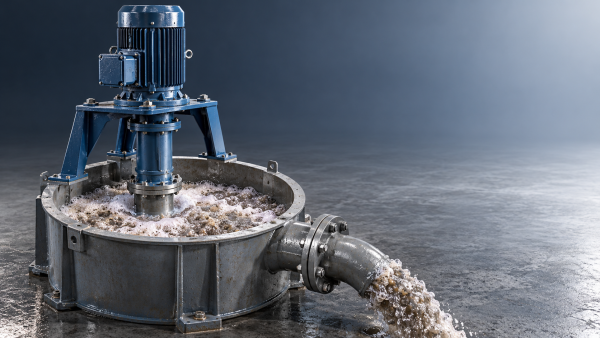
Vertical slurry pumps are frequently used in processing plants, tailings facilities, wash plants, and sumps where slurry collects below floor level. Cantilevered designs keep certain drive components out of the slurry, reducing dependence on submerged shaft seals. They are generally suited to transfer duties rather than open-water dredging, but they often form part of the broader solids-handling process after excavation.
Jet pumps and airlift systems
Hydraulic jet pumps use high-pressure water to entrain material, while airlift systems inject compressed air into a riser to reduce the density of the fluid column and lift sediment. Both can be useful in specialist applications, including underwater recovery, environmental sampling, sensitive locations, or situations where mechanical contact needs to be minimized.
They are usually less energy-efficient than conventional centrifugal slurry pumping for high-production bulk dredging. Their value lies in operating simplicity, reduced moving parts at the intake, or suitability for particular underwater conditions—not in replacing a conventional dredge pump across every duty.
Operating limits are usually system limits
A recurring mistake in early equipment research is to compare pump models only by flow rate and head. Those values are important, but they are commonly published for water or for a defined test condition. A real dredging duty may require very different performance once solids are included.
Maximum particle passage is one constraint. Material larger than the pump’s clearance can jam the impeller or lodge at the inlet. Even material that passes through can cause damaging impacts if it is oversized, angular, or intermittently fed in large batches. Screens, grizzlies, cutterheads, or controlled excavation may be needed to protect the pump.
Head capability is another. Total dynamic head includes static lift, pipeline friction, fittings, bends, valves, discharge conditions, and slurry-related losses. As pipe length grows, friction can become the dominant load. A project that works well with a short test hose may underperform once several hundred meters of production pipeline are installed.
Suction conditions can be equally restrictive. Centrifugal pumps require adequate pressure at the inlet to prevent cavitation. Cavitation occurs when local pressure falls sufficiently for vapor bubbles to form and collapse; it can reduce output, generate noise and vibration, and damage impeller surfaces. Warm liquid, restrictive suction piping, excessive suction lift, high operating speed, and insufficient inlet submergence can all worsen the risk.
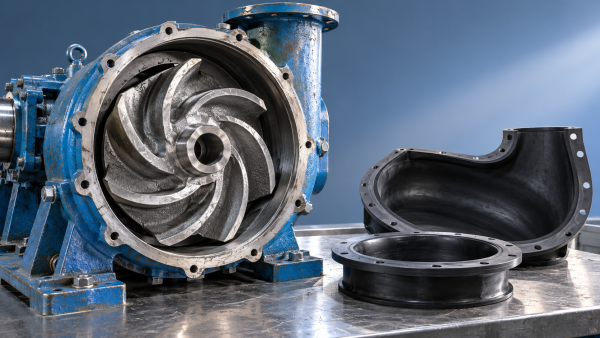
Wear rate is an operating limit in economic terms. A pump may technically move highly abrasive slurry, yet its maintenance interval may be too short for the project schedule or operating budget. Material selection matters: hard-metal components are commonly used for abrasive mineral slurries, while elastomer linings can offer advantages with certain finer or less impact-intensive duties. Neither option is universally superior; particle size, sharpness, temperature, chemical exposure, and impact energy all matter.
Pipeline velocity requires a balance. Too low, and solids settle. Too high, and energy consumption and wear rise sharply. This is why experienced operators monitor both discharge pressure and flow behavior rather than treating maximum speed as the goal. Stable transport near the intended operating point is usually more valuable than intermittent high output followed by line cleaning.
Typical applications and the different demands behind them
In marine maintenance dredging, pumps remove sediment from channels, berths, marinas, and intake areas. Material may range from soft mud to sand mixed with shells, debris, or occasional debris. Environmental requirements can be prominent, particularly where turbidity, contaminated sediments, disposal routes, or habitat disturbance are concerns. The pumping challenge is often inseparable from the method used to contain and place dredged material.
In land reclamation and beach nourishment, the objective is usually to move large volumes of sand reliably over distance. High production and pipeline continuity become critical. Booster stations, floating pipelines, shore connections, and discharge management all influence the final result. Sand quality and grading may also matter because the material is being placed as a construction or coastal-protection resource rather than simply removed.
In sand and gravel extraction, the dredge pump is part of a production chain that may include screening, washing, classification, dewatering, and stockpiling. The pump must tolerate abrasive feed and variable particle size while delivering a slurry suitable for downstream processing. Excessive degradation of particles, poor feed control, or avoidable dilution can affect the economics of the entire plant.
Mining and mineral processing use slurry pumps for tailings, concentrates, mill discharge, thickener underflow, and mine-water solids. These duties are not always called dredging, but the underlying solids-transport principles are closely related. Reliability, wear management, process control, and planned maintenance tend to receive more attention because unplanned failure can interrupt upstream production.
For wastewater treatment, industrial lagoons, and pond cleanup, the challenge may be sludge consistency rather than coarse abrasion. Solids can be sticky, fibrous, chemically aggressive, or highly variable. A practical solution often combines agitation, dilution, screening, and a pump designed for the expected solids rather than relying on a general water-transfer pump.
A heavy-duty horizontal slurry design such as the DHS Slurry Pump belongs to the category typically considered where abrasive slurry transfer, maintainability, and sustained solids handling are more important than the compactness expected from a small utility pump. The suitability of any such design still depends on the actual slurry curve, particle distribution, pipe route, and duty cycle.
What to examine before drawing conclusions from a pump specification
Useful early research begins with the material, not the catalog. Identify the expected solids size range, density, shape, abrasiveness, concentration, and whether the feed contains debris or cohesive clay. Then define the route: suction depth, discharge elevation, total pipe length, internal pipe diameter, bends, valves, and final discharge condition.
It is also worth separating nominal capacity from production capacity. A system moving a large volume of water may show impressive flow while transporting relatively little solids. Conversely, a highly concentrated slurry may carry more solids but reduce hydraulic efficiency and accelerate wear. The relevant measure depends on the project: cubic meters of slurry per hour, tonnes of dry solids per hour, placed sand volume, or removed sediment volume may each be the appropriate basis.
Maintenance access deserves attention early. Dredging pumps are wear machines by nature. The practical question is not whether parts will wear, but whether the operator can inspect, adjust, and replace them without excessive downtime. Availability of liners, impellers, seals, bearings, and compatible pipe components can be as important as the initial pump selection, especially for remote projects or export operations.
The most reliable way to understand dredging pumps is to view them as part of a controlled solids-handling process. Pump type matters, but material behavior, excavation method, pipeline hydraulics, wear exposure, and maintenance planning ultimately decide whether a dredging system moves solids efficiently or merely moves water around them.
Related Information
 Oct 24, 2026
How Much Should a Froth Pump Be Oversized for Flotation Concentrate?
How much should a froth pump be oversized for flotation concentrate? Learn how inlet air, peak flow, and head affect sizing to avoid costly mistakes and select the right pump.- Oct 24, 2026
Is Higher Hardness Always Better for High-Chrome Pump Castings?
Is higher hardness always better for high chrome pump castings? Discover how toughness, carbide structure, and slurry conditions affect service life—and choose smarter to reduce downtime. - Oct 23, 2026
Which Leakage Test Should You Specify for a Zero-Leakage Knife Gate Valve?
Which leakage test should I specify when ordering a zero-leakage knife gate valve? Compare API 598 and ISO 5208, define seat leakage limits, and avoid costly purchasing mistakes. - Oct 23, 2026
Which Pump Material Lasts Longest in Limestone-Gypsum FGD Slurry?
Which pump material lasts longer in limestone-gypsum desulfurization slurry? Compare high-chrome iron, rubber and duplex steel to find the right fit, reduce downtime and extend service life.

{item.title}
Get a Quote
Please leave your information and email address, and we will contact you as soon as possible.