
Delin Slurry Pump Reviews: What Do Industrial Buyers Say?
When an abrasive slurry line begins consuming impellers, volute liners, or shaft seals faster than planned, the pump itself quickly becomes the focus of the maintenance meeting. Buyers looking for Delin slurry pump reviews are usually not looking for a generic statement that a pump is “reliable.” They want to know whether it will hold up against coarse solids, corrosive process water, fluctuating feed conditions, and the practical realities of shutdown scheduling.
The most useful conclusion is that a slurry pump should not be judged by its name alone. Feedback from industrial users tends to center on wear-part life, hydraulic stability at the operating duty point, ease of maintenance, parts availability, and the supplier’s ability to confirm the correct material and configuration. When comparing Delin equipment with another high chrome slurry pump supplier, buyers should evaluate those operating factors against their own slurry rather than treating broad online opinions as proof of fit.
What industrial buyers usually mean when they ask about reviews
In slurry service, a favorable review rarely means that a pump has required no attention. Abrasive systems are designed around controlled wear. A more meaningful positive assessment is that the pump reaches a predictable service interval, maintains acceptable head and flow as components wear, and can be rebuilt without excessive downtime or unexpected fit-up issues.
Negative feedback also needs interpretation. A pump may be criticized for short liner life when the actual cause is operation far from the best efficiency range, a higher solids concentration than originally specified, oversize particles, air entrainment, or poor gland-water control. Reviews can reveal useful patterns, but they cannot replace duty-point verification.
For Delin slurry pumps, the review areas worth investigating are the same areas that matter for other heavy-duty centrifugal slurry pumps:
- Whether wetted components are offered in suitable high-chrome alloys, elastomers, or other materials for the slurry.
- How the pump performs when solids concentration, particle size, or slurry density changes during production.
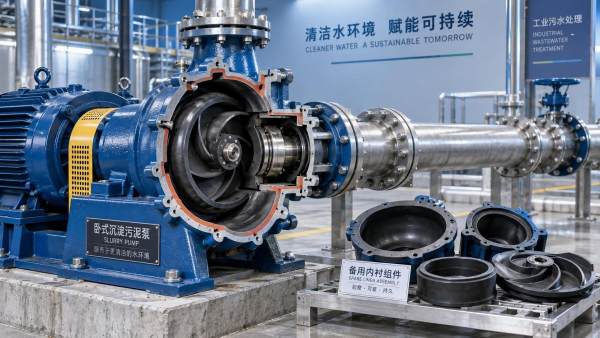
- How accessible the impeller, throatbush, liners, seal components, and bearings are during maintenance.
- Whether replacement parts arrive with consistent dimensions and material identification.
- How clearly the supplier handles pump selection, installation questions, and wear-related troubleshooting.
A review that merely says a pump is “good quality” is less useful than one describing its duty conditions, wear locations, seal arrangement, and maintenance interval. Procurement teams should give greater weight to feedback that includes these details, even when the comments are not entirely positive.
Durability: the question behind most slurry pump reviews
Wear resistance is usually the first issue buyers raise because it has a direct effect on labor, spares inventory, process interruption, and total operating cost. In mineral processing, tailings transfer, sand handling, dredging, ash service, and similar duties, the highest-cost failure is often not the purchase of a liner or impeller. It is the unplanned stoppage needed to replace it.
High-chrome white iron is widely selected for abrasive slurry duties because it resists sliding abrasion and particle impact better than standard iron in many applications. But “high chrome” is not a complete material specification. Hardness, alloy chemistry, heat treatment, casting quality, component wall thickness, and the actual wear mechanism all influence results. A coarse, sharp, high-velocity slurry can wear a pump differently from a fine but highly concentrated slurry.
Where buyers should look for evidence of real wear performance
Rather than asking whether a pump is durable in general, ask which parts wear first and why. This gives a clearer view of both the pump and the process.
Buyers often find that component wear is manageable when it is predictable. A high-quality pump selection should make it possible to plan inspections around known wear zones. If reviews mention frequent unexpected failures without explaining the application, the information should be treated carefully rather than accepted at face value.
Performance feedback depends on matching the pump to the duty
A slurry pump can be mechanically sound and still perform poorly if selected for the wrong flow, head, speed, or slurry characteristics. This is why experienced reviewers often discuss operating behavior rather than only build quality. They may comment on unstable discharge pressure, loss of capacity over time, vibration, cavitation noise, or a need to run at an impractical speed.
Before using any review to guide a purchase, compare the reviewed application with the intended one. The following variables have a major effect on whether the experience is transferable:
- Particle size and shape: Coarse, angular particles create different impact and passage requirements than fine tailings.
- Solids concentration: Higher concentration increases slurry density, changes friction losses, and may alter the required pump power.
- Specific gravity of solids: Dense mineral particles affect head calculations and wear behavior.
- Corrosion conditions: A material that performs well in neutral abrasive water may not be appropriate for chemically aggressive slurry.
- Static lift and pipeline layout: Elevation, pipe length, bends, valves, and fittings all shape the system curve.
- Operating variation: Intermittent feed, changing cyclone conditions, and fluctuating sump levels can move the pump away from its selected duty.
A supplier should be able to work from a duty sheet containing these inputs. If the process team cannot provide every value, the uncertainty should be made explicit. Selecting a pump based only on nominal pipe diameter or motor power is a common source of disappointing field performance.
Maintenance experience often separates acceptable pumps from costly ones
Reviewers who work close to plant maintenance tend to value serviceability as much as initial performance. A pump may have a robust casing and wear materials, but maintenance will still be expensive if the crew needs excessive lifting work, difficult alignment, unusual tools, or prolonged access time to replace routine parts.
When reviewing Delin slurry pumps or alternatives, examine the mechanical layout rather than relying only on a parts drawing. Ask whether the rotating assembly can be removed without disturbing pipework, whether liner sections can be handled safely, and whether impeller adjustment can be performed in a controlled and repeatable way. The practical answer may depend on pump size, mounting arrangement, and the space around the installed unit.
Bearings and seals deserve special attention. Bearing issues may result from imbalance, belt-drive loading, misalignment, excessive vibration, lubricant errors, or contamination. Seal complaints may involve a packed gland, expeller arrangement, mechanical seal, or double-seal system that was not suited to the available flush water or pressure conditions. A review describing “seal failure” without the sealing arrangement is incomplete.
Questions to ask before treating maintenance comments as comparable
- Was the pump operated continuously or intermittently?
- Did the system allow the pump to run dry, deadhead, or operate at very low flow?
- Were wear clearances inspected and adjusted according to the equipment requirements?
- Did the plant use genuine or dimensionally verified replacement parts?
- Were vibration, bearing temperature, power draw, and discharge pressure monitored?
These questions do not excuse a poor design or poor manufacturing quality. They help distinguish a product issue from an operating issue, which is essential when comparing review comments from different plants.
Parts support and documentation are part of the ownership experience
For industrial buyers, a pump is not just the assembled machine delivered at startup. It is also the availability of impellers, liners, seal parts, shafts, bearings, fasteners, and compatible consumables throughout its service life. A lower initial quote can become less attractive if critical parts have uncertain lead times or if serial numbers and component codes are difficult to trace.
Useful supplier feedback often concerns response quality: whether drawings match the delivered configuration, whether material options are clearly stated, whether spare-part quotations identify the correct item, and whether technical questions receive application-specific answers. These are practical review points because they affect how quickly a maintenance planner can act during a shutdown.
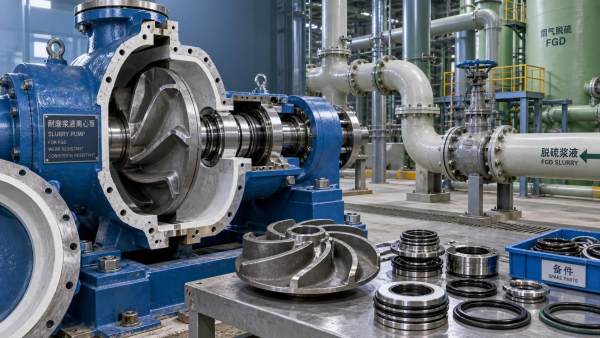
When evaluating a high chrome slurry pump supplier, request a recommended initial spares list based on the intended duty. The list should separate routine wear parts from longer-life mechanical components. It is also reasonable to ask how the supplier identifies wet-end materials, how component interchangeability is confirmed, and what information is needed to support a repeat order. Clear answers reduce the chance of receiving a part that appears similar but does not fit or does not provide the expected wear resistance.
How to use reviews without making a risky purchasing decision
Public reviews, informal recommendations, and supplier references can be valuable starting points, especially when they identify recurring strengths or concerns. They are not a substitute for comparing technical submissions. The best approach is to use review themes to build sharper questions during evaluation.
For example, if users praise a pump’s wear life, ask for the material grade and the approximate type of slurry where that performance was observed. If users mention easy maintenance, request an assembly drawing and discuss access limitations at the installation site. If service support receives positive comments, clarify who will handle selection verification, startup questions, and spare-parts identification for the actual order.
Also compare the offered pump curve with the calculated system curve. The desired operating point should sit in a stable and suitable portion of the curve, with allowance for expected wear and process variation. Confirm motor sizing, suction conditions, NPSH requirements where relevant, seal plan, drive arrangement, and maximum particle passage. These details will influence the ownership experience more than a star rating ever can.
Questions buyers commonly ask
Are Delin slurry pump reviews enough to confirm suitability for mining or mineral processing?
No. They can indicate the areas other users considered strong or weak, but mining slurries vary widely in density, particle size, abrasiveness, chemistry, and operating pattern. Suitability should be confirmed against the actual duty conditions and material requirements.
Does a high-chrome wet end always last longer than rubber?
Not always. High-chrome alloys are often appropriate for coarse, abrasive slurry, while rubber can perform well with certain fine-particle duties and may offer advantages where impact conditions and chemistry allow it. The right choice depends on the slurry and pump operating point.
What is the most useful sign of a dependable slurry pump supplier?
Look for clear technical communication before purchase: a documented duty basis, identified material options, a pump curve tied to the proposed configuration, seal recommendations, dimensional information, and a realistic spare-parts plan. These are stronger indicators than broad promotional claims.
Why does a slurry pump lose capacity before a part fails completely?
As the impeller, liners, and internal clearances wear, hydraulic efficiency can decline. The pump may continue running while delivering less head or flow. Tracking discharge pressure, flow where available, motor load, vibration, and wear clearances helps identify this decline before production is affected.
Related Information
 Oct 03, 2026
Selecting pumps for flue gas desulfurization systems with gypsum slurry
Flue Gas Desulfurization Systems pump selection guide: optimize gypsum slurry handling with wear-resistant materials, reliable sealing, and lower lifecycle costs.- Oct 02, 2026
How abrasive slurry handling reduces premature impeller wear
Abrasive Slurry Handling reduces premature impeller wear through optimized velocity, material selection, suction control, and inspection strategies. Discover practical maintenance tips. - Oct 01, 2026
How mining slurry pumps affect downtime in high-wear circuits
Mining Slurry Pumps can make or break uptime in high-wear circuits. Learn how smarter selection, wear materials, and maintenance reduce failures and lifecycle costs. - Sep 30, 2026
Selecting coal washing pumps for fine coal recovery circuits
Coal Washing Pumps for fine coal recovery: learn how to select reliable slurry pumps for stable pressure, longer wear life, efficient dewatering, and lower downtime.

Get a Quote
Please leave your information and email address, and we will contact you as soon as possible.