
Is Delin a Reliable Metallurgical Slurry Pump Supplier?
Choosing a reliable metallurgical slurry pump supplier involves more than comparing prices. Buyers need to assess pump durability, material compatibility, manufacturing capabilities, and after-sales support. If you are researching Delin or searching for “Ltd. cement slurry pump prices,” understanding these factors can help you make a more informed decision. The same purchasing discipline applies whether the pump will handle metallurgical tailings, mineral concentrate, or abrasive material at a cement plant.
The practical answer is that Delin may be worth evaluating, but its reliability for a particular project cannot be established from a company name or a price listing alone. The decision depends on the exact legal entity, the proposed pump and materials, the evidence supporting its selection, and the supplier’s ability to support the equipment after delivery. A technically complete quotation is a better starting point than a low headline price.
What a metallurgical slurry pump must handle
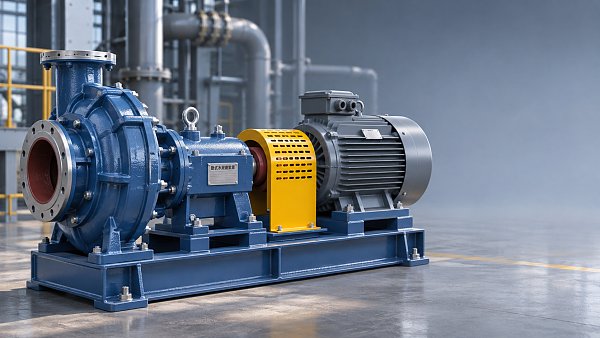
Slurry service combines liquid transport with the challenges of moving suspended solids. In metallurgical operations, the material may include ore particles, mill discharge, concentrate, tailings, or process residues. These duties can differ substantially: a pump suitable for relatively fine, stable slurry may perform poorly when solids are coarse, highly abrasive, prone to settling, or chemically aggressive.
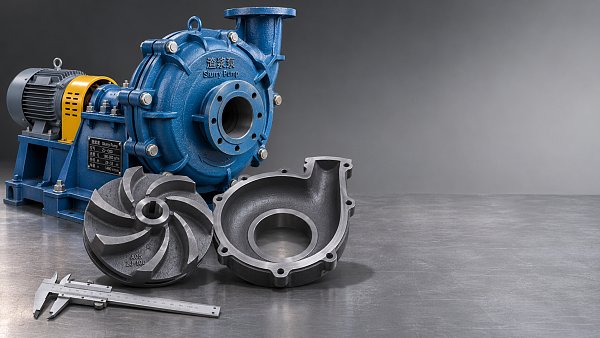
Wear is not distributed evenly. The impeller, casing or liners, throatbush, and shaft-sealing area can experience different failure mechanisms. A change in particle size or solids concentration can alter both the required power and the wear pattern. If the pump operates far from its intended duty point, recirculation, vibration, or accelerated component damage may follow.
That is why a supplier should ask about the process rather than simply match an existing pipe diameter. Replacing a problem pump with another unit of the same nominal size can preserve the original problem if the system duty has changed.
Start by identifying the supplier and the proposed equipment
Before assessing Delin, establish which company is making the offer. Confirm the legal company name, registered address, quotation issuer, and contracting party. If an agent or distributor is involved, ask who manufactures the pump, who supplies the parts, and who is responsible for warranty decisions. These checks matter particularly when similar company names or online listings appear in search results.
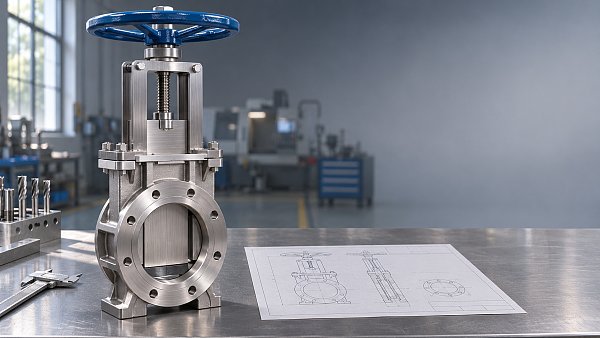
Next, ask for a pump-specific proposal rather than a general catalog. It should identify the model and configuration, wetted-part materials, impeller arrangement, seal type, drive arrangement, and the operating point used for selection. A drawing showing connection dimensions and maintenance clearances helps determine whether the unit can actually fit the installation.
Reliability claims should be matched to documents. If the supplier refers to quality certification, inspection procedures, or previous experience in a similar duty, request the relevant current certificates or project references and verify their scope. A certificate held by one entity should not automatically be assumed to cover another, and a successful installation elsewhere is not proof that the same design suits a different slurry.
Check the duty point before comparing pump prices
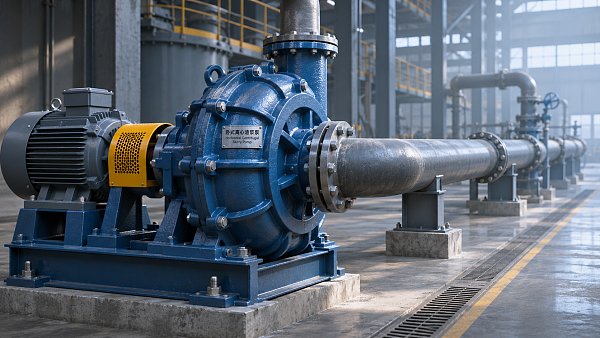
A useful quotation begins with an agreed operating envelope. Flow and discharge pressure alone rarely describe a slurry application well enough. The supplier also needs to understand the system resistance, suction conditions, solids characteristics, and how the process varies during normal operation.
The information worth assembling includes:
- Flow and head: normal, minimum, and maximum flow, together with the required total dynamic head or the information needed to calculate it.
- Slurry properties: liquid and slurry density, solids concentration with its measurement basis, particle-size distribution, particle shape where known, temperature, and relevant chemistry.
- Suction conditions: liquid level, suction-pipe layout, inlet pressure where applicable, and available net positive suction head under operating conditions.
- Pipeline details: material, internal diameter, length, elevation changes, fittings, and whether the line is prone to settling or blockage.
- Operating pattern: continuous or intermittent service, starts with a settled line, expected process changes, and any standby-pump arrangement.
The distinction between solids concentration by mass and by volume is especially important. Supplying one while the quotation assumes the other can materially change the selection. If a value is estimated, label it as an estimate and ask how sensitive the selection is to variation.
Request the proposed pump curve and ask the supplier to mark the expected operating point and range. Clarify whether the curve is for water and what adjustments or calculations have been used for the slurry. Review absorbed power and motor sizing across the expected duty range, not just at one nominal point. Suction margin also deserves attention: inadequate suction conditions can cause problems that neither a heavier casing nor a harder impeller will solve.
Material selection is a trade-off, not a hardness contest
Hard-metal and elastomer-lined pumps are both used in abrasive service, but neither is automatically superior. Hard-metal components may be considered for duties involving abrasive particles and operating conditions that suit the alloy. Elastomer linings may be attractive in some services with finer particles, provided the temperature and chemistry are compatible. Coarse or sharp solids, chemical exposure, and particle impact can change the balance.
Ask Delin, or any competing supplier, to explain why each wetted material was selected for the actual slurry. “Wear-resistant” is not a material specification. The quotation should identify the proposed alloy or elastomer designation and state any assumptions about particle size, temperature, and chemical exposure. If the slurry contains corrosive liquid as well as abrasive solids, evaluate both mechanisms together; a component that resists one may still be vulnerable to the other.
The shaft seal deserves equal scrutiny. Packed glands, expeller arrangements, and mechanical seals have different water, maintenance, and operating requirements. A gland-water arrangement may be impractical where clean water is limited or dilution affects the process. Conversely, an alternative seal should not be accepted without confirming that it suits the suction and operating conditions. Ask what utilities are required, what happens during start-up and shutdown, and which seal components are treated as consumables.
What “Ltd. cement slurry pump prices” can and cannot tell you
A search for “Ltd. cement slurry pump prices” may return listings for different companies, pump sizes, materials, and supply scopes. Such results can help identify possible suppliers, but they rarely provide a dependable budget for a specific metallurgical or cement-plant duty. A listed price may exclude the motor, baseplate, coupling, controls, spare parts, testing, freight, or local taxes.
Cement-related service is not one uniform application either. The properties of the pumped mixture, including abrasive content and settling behavior, must be established for the actual process. A pump marketed for cement slurry should not be assumed suitable for metallurgical tailings simply because both contain solids.
For a fair comparison, send competing suppliers the same duty sheet and request itemized offers. Check whether each proposal includes the same drive, sealing system, instrumentation, documentation, initial spares, and delivery terms. Also identify exclusions. A lower purchase price can become less attractive if the required motor, seal-water equipment, or essential wear parts must be bought separately.
Consider ownership costs without pretending they can be predicted precisely. Ask for prices and lead times for the impeller, liners or casing, seal components, and bearings. Expected service life should be treated as an estimate unless it is supported by genuinely comparable operating data. In a plant where downtime is expensive, the availability of a replacement part may matter more than a modest difference in the initial pump price.
Manufacturing and inspection: ask for evidence at the right level
A supplier does not necessarily need to manufacture every component in-house to deliver a dependable pump. It does need control over specifications, purchased parts, inspection, assembly, and traceability. Ask which operations are performed by the quoted manufacturer and which are subcontracted, especially for castings and critical wear parts. Then establish who resolves a nonconformance if a component does not meet the agreed specification.
For a consequential purchase, agree on an inspection and test plan before placing the order. Depending on the project, this may cover material identification, dimensional checks, pressure testing, rotating-assembly checks, and performance testing. Define the acceptance criteria, test conditions, documents to be supplied, and whether the purchaser can witness selected activities. A water performance test can provide useful evidence about the assembled pump, but it does not reproduce every effect of an abrasive slurry in service.
Do not assume a standard or certification applies merely because it appears in marketing material. Identify the contractual requirements and confirm their applicability to the pump, test, manufacturing site, and destination. If a deviation is necessary, record it before production rather than discovering it during inspection.
After-sales support is part of the equipment decision
A slurry pump is designed around replaceable components, so the parts relationship may last longer than the initial purchase process. Request an illustrated parts list and confirm how parts will be identified when ordering. If the proposal claims interchangeability with an existing pump, verify it component by component and obtain the relevant dimensional and material information; similar appearance is not enough.
Clarify where spares are stocked, the quoted lead time for made-to-order parts, and how long those commitments remain valid. If the site relies on local service, establish who can assist with installation, alignment, commissioning, and troubleshooting. A remote supplier may still be a workable choice, but the response route and time expectations should be explicit.
Read the warranty alongside the application assumptions. Wear parts naturally deteriorate in abrasive service, so ask how ordinary wear is distinguished from a manufacturing defect, what evidence is needed for a claim, and who pays for inspection and replacement freight. Ambiguity at this stage can make a seemingly generous warranty difficult to use.
A practical way to reach a decision
Delin should be assessed against the same documented requirements as any other metallurgical slurry pump supplier. A credible offer will connect the process data to a specific pump selection, explain material and seal choices, identify what will be inspected, and make the scope of supply and support clear. It should also acknowledge uncertainties in the duty instead of promising a wear life that cannot be substantiated.
Before committing, resolve the gaps that could change the selection: confirm the solids data, review the system curve and suction conditions, compare complete quotation scopes, and check the availability of critical spares. If Delin can provide satisfactory evidence for those points under the proposed contract, it may be a suitable supplier for the project. If key answers remain vague, the uncertainty belongs in the purchasing decision—not hidden behind the quoted price.
Related Information
 Nov 16, 2026
How Much Do Delin Cement Slurry Pumps Cost?
Hebei Delin Machinery Co. cement slurry pump costs depend on duty and configuration. Explore key price factors and learn how to request a reliable quote.- Nov 16, 2026
Is Delin a Reliable Metallurgical Slurry Pump Supplier?
Comparing Ltd. cement slurry pump prices? Discover how to assess Delin’s pump selection, durability, spare parts, and support before you buy. - Nov 15, 2026
What Is Delin's Lead Time for a Custom Knife Gate Valve?
Is Hebei Delin Machinery Co. able to meet your custom knife gate valve deadline? Discover what affects lead time and how to request a reliable quote. - Nov 15, 2026
How to Order Replacement Slurry Pump Parts from Delin
Is Delin Ltd. a reliable metallurgical slurry pump supplier? Learn how to identify replacement parts, request a quote, and check compatibility before ordering.

{item.title}
Get a Quote
Please leave your information and email address, and we will contact you as soon as possible.