
How Good Are Delin's High-Chrome Alloy Pumps?
How Good Are Delin's High-Chrome Alloy Pumps?
Pump reliability can make a significant difference in demanding slurry-handling applications, where abrasive materials and continuous operation put equipment under pressure. If you are evaluating Hebei Delin Machinery high chrome alloy pump quality, it is important to look beyond material specifications and consider wear resistance, manufacturing consistency, operating conditions, and maintenance requirements. This article examines these factors to help buyers assess how well Delin’s high-chrome alloy pumps may perform in their applications.
The practical answer is conditional: a high-chrome pump can be a sensible choice for abrasive slurry, but the alloy name alone does not establish how well a particular Delin pump will perform. The supplied information does not include model-specific test results, material certificates, or operating histories, so a firm ranking against competing pumps would not be justified. A useful assessment starts with the duty, then examines the evidence for the exact pump and components being offered.
What high-chrome alloy can—and cannot—tell you
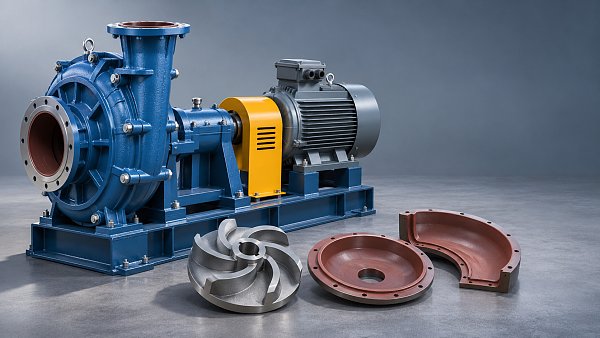
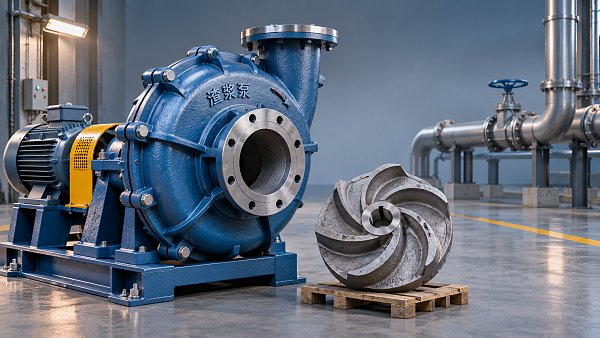
High-chromium white irons are commonly used for slurry pump wear parts because their hard carbide-containing structure can resist abrasion. Depending on the pump design, the impeller, casing, or replaceable liners may use a wear-resistant alloy. That matters when particles repeatedly strike or slide across internal surfaces.
But “high chrome” is a broad description, not a complete material specification. Chemistry, heat treatment, casting soundness, and the properties achieved in the finished component all matter. Two parts described with similar marketing language may not have equivalent hardness, toughness, corrosion resistance, or service life.
There is also a trade-off. A hard wear part can resist abrasive particles well yet be less forgiving of impact, mishandling, or unsuitable installation stresses. A pump moving relatively fine mineral slurry may face a different wear mechanism from one passing coarse, sharp particles or occasional tramp material. Ask which alloy is proposed for each wetted component and why it suits the actual solids—not simply whether the pump is “high chrome.”
Start with the slurry and the operating point
A pump that performs well on one abrasive duty may disappoint on another. Solids concentration, particle size distribution, particle hardness, liquid chemistry, temperature, and the presence of air all influence the selection. Flow rate and total dynamic head determine where the pump operates on its performance curve; they are not details to fill in after the model has been chosen.
Consider a mineral-processing circuit where the feed changes between shifts. If the pump was selected for a steady, dilute slurry but regularly sees heavier solids or larger particles, the wear pattern and power demand can change. A quotation based only on pipe diameter and a nominal flow rate gives little confidence that the selection will remain suitable across those variations.
Request the proposed pump curve at the quoted speed and impeller diameter, together with the assumptions used to account for the slurry. Check the expected duty range, not just one operating point. Operating far from the pump’s best efficiency region can contribute to internal recirculation, vibration, and accelerated wear. Equally, slowing a pump without considering solids transport can cause settling in the pipeline. The best speed is a system decision, not simply the lowest number on a drive.
Suction conditions deserve the same attention. Inadequate available net positive suction head, blocked strainers, excessive suction losses, or entrained air can cause unstable operation or cavitation damage. A worn impeller may be blamed on poor alloy when the underlying problem is an unsuitable suction arrangement. Confirm that the supplier has reviewed the suction conditions against the pump’s stated requirements, with an appropriate margin for the application.
How to examine manufacturing quality before ordering
For a Delin quotation, the most revealing question is not “Is the casting good?” but “What can be verified for the parts I will receive?” Ask for the material designation and inspection documentation applicable to the impeller, liners, and casing. A material certificate is more useful when its identification can be traced to the supplied component or relevant production batch.
Hardness records can help establish whether a part was checked against the agreed specification, but a hardness number alone does not prove that a casting is free of internal defects or will achieve a particular wear life. Discuss how critical dimensions are inspected, how casting defects are assessed, and what acceptance criteria apply. If additional inspection is important, agree on its scope, timing, and cost before placing the order.
A shop performance test can also reduce uncertainty, provided its limitations are understood. Confirm the test medium, speed, measured flow and head, and acceptance criteria. A water test can verify aspects of hydraulic performance and mechanical operation; it does not reproduce the wear behaviour of the site’s slurry. If vibration, leakage, or other checks are required, specify them in the purchase documents rather than assuming they are included.
None of these checks is unique to one manufacturer. They are the same questions worth asking any supplier competing for a demanding slurry duty, particularly when a low initial price is doing most of the persuasive work.
Wear life depends on more than the alloy
Impeller and liner life is affected by hydraulic design, operating speed, clearances, solids characteristics, and the way the pump is maintained. A harder component is not automatically the lowest-cost choice if it fractures, wears unevenly, or forces an inconvenient maintenance interval.
Look at the whole pump assembly. Bearings need suitable lubrication and protection from contamination. Shaft sealing must match the application and available utilities. Depending on the design, a gland seal, expeller arrangement, or mechanical seal may be offered, each with different operating and maintenance demands. Where seal water is required, its availability, pressure, quality, and effect on the process need to be confirmed. Do not assume every sealing option is available on every Delin model.
Maintenance access can be just as consequential as part hardness. Can the wet end be opened safely in the available space? Are lifting provisions and isolation arrangements adequate? How is impeller clearance checked and adjusted? A pump that is difficult to inspect may stay in service until wear damages more expensive components or causes an unplanned shutdown.
Where an existing pump is being replaced, keep the old wear parts for inspection if practical. Localised damage at the impeller eye, liner, or discharge region can point to different causes. The pattern is not a diagnosis by itself, but it gives the supplier a better starting point than a statement that “the pump wears out quickly.”
High chrome is not the answer for every slurry
For slurry containing fine abrasive solids, a high-chrome wet end may be worth evaluating. In other services, rubber or another lining material may be a better candidate, depending on particle size, shape, temperature, chemical exposure, and the pump’s design. Coarse particles, sharp impact, or tramp material can alter that comparison. Corrosive liquid adds another complication: resistance to abrasion does not guarantee resistance to the process chemistry.
Ask the supplier to explain the recommended material in relation to the known duty and to identify uncertainties where the slurry has not been fully characterised. If the process changes seasonally or between production campaigns, provide the extremes as well as the average. A material selected for the easiest part of the operating cycle may not survive the hardest part economically.
Compare the quotation over a maintenance cycle
A credible comparison between Delin and another supplier should cover the same duty, operating assumptions, and scope of supply. A lower purchase price is difficult to interpret if one offer excludes the motor, baseplate, seal system, testing, or commissioning support. Energy consumption also depends on the selected operating point and drive arrangement, so compare predicted absorbed power under equivalent conditions rather than relying on a general efficiency claim.
Spare parts are often where an attractive purchase becomes expensive. Request prices and expected availability for the impeller, liners, seals, bearings, and any other planned maintenance parts. Confirm whether quoted parts are made to the same material specification as the original components. For an existing installation, verify dimensions and fit against drawings or measured parts; do not assume interchangeability based on appearance or a similar model description.
Delivery promises should be specific enough to plan around: which parts are stocked, which are made to order, and when does the lead time begin? Also clarify warranty terms, exclusions for wear, and the process for resolving a casting or dimensional defect. Normal abrasive wear and a manufacturing defect are not the same thing, so the distinction should be discussed before a failure occurs.
What to request before making a decision
Give the supplier a written duty sheet that includes the required flow and head range, slurry density or solids concentration, particle size information, liquid chemistry, temperature, suction conditions, and expected operating hours. Include site constraints such as available power, sealing water, installation space, and maintenance access. Where values are uncertain, identify them as estimates.
In return, ask for the selected model and pump curve, material specifications by component, seal and drive details, inspection and test scope, spare-parts list, and delivery terms. If the duty is especially consequential, agree in advance on what records will be supplied and what would trigger acceptance or rejection.
Delin’s high-chrome alloy pumps are worth assessing on those terms, but a reliable judgment about quality requires evidence for the proposed model and its intended service. If the supplier cannot explain the selection, document the critical materials, or support the pump with practical spares, the alloy description is not enough to close the gap.
Related Information
 Nov 17, 2026
Is Delin a Slurry Pump Manufacturer Worth Considering for Export?
Is Delin a slurry pump manufacturer worth considering for export? Compare pump selection, shipping terms, spare parts and support before you buy.- Nov 17, 2026
How Good Are Delin's High-Chrome Alloy Pumps?
Explore Hebei Delin Machinery high chrome alloy pump quality, from wear resistance to testing and maintenance, and find out what to verify before you buy. - Nov 16, 2026
How Much Do Delin Cement Slurry Pumps Cost?
Hebei Delin Machinery Co. cement slurry pump costs depend on duty and configuration. Explore key price factors and learn how to request a reliable quote. - Nov 16, 2026
Is Delin a Reliable Metallurgical Slurry Pump Supplier?
Comparing Ltd. cement slurry pump prices? Discover how to assess Delin’s pump selection, durability, spare parts, and support before you buy.

{item.title}
Get a Quote
Please leave your information and email address, and we will contact you as soon as possible.