
Can Suppliers Provide Remote Support for Slurry Pump Setup Abroad?
Yes. Suppliers can provide remote technical support for slurry pump installation abroad, including document review, live video guidance, pre-start checks, and commissioning troubleshooting. However, availability and scope must be confirmed before purchase. A promise of “technical support” does not necessarily include a scheduled commissioning engineer, support outside the supplier’s working hours, or approval of the completed installation.
Remote assistance works best when qualified personnel on site can take accurate measurements, carry out mechanical and electrical work, and stop the job when conditions are unsafe. The supplier can interpret evidence and explain equipment requirements; it cannot physically verify every connection, correct alignment, or take over the site’s safety responsibilities through a video call.
Confirm what “remote support” actually includes
The first distinction is between answering installation questions and actively supporting commissioning. Email access to a service department may be sufficient for clarifying a drawing, but it is not equivalent to having an engineer available while the pump is being started.
Ask the supplier to define the service against the actual pump package and installation scope. Relevant activities include:
- Reviewing foundation, mounting, suction, and discharge arrangements against the supplied drawings.
- Explaining coupling alignment, belt-drive setup, lubrication, and model-specific adjustment requirements.
- Checking the intended gland-water or mechanical-seal support arrangement.
- Reviewing motor, drive, instrumentation, and control information within the supplier’s responsibility.
- Witnessing agreed pre-start checks and initial operation remotely.
- Interpreting operating readings and recommending diagnostic checks.
Confirm who provides the advice. A sales contact forwarding questions to a factory engineer is a different arrangement from direct access to someone familiar with the pump model, seal configuration, and duty conditions. If the pump, motor, variable-frequency drive, and seal system come from different companies, identify who will coordinate questions that cross those equipment boundaries.
Also establish whether the supplier supports only its own equipment or will review the surrounding installation. A pump manufacturer may explain allowable nozzle loads without accepting responsibility for piping design. Likewise, reviewing drive settings does not necessarily include validating the site’s electrical protection or control logic.
Agree on support terms before shipment
For an overseas installation, time-zone coverage can determine whether remote support is useful during startup. Record the intended commissioning window, the supplier’s availability in the site’s local time, and the route for urgent technical escalation. Distinguish an acknowledgment of a request from a technical response: these are not the same service commitment.
The purchase agreement or service scope should state whether support is included in the equipment price, limited to a defined number of sessions, or charged separately. Clarify whether preparation, drawing review, troubleshooting, and repeat commissioning sessions count toward any allowance. Language requirements also matter; an interpreter may need familiarity with mechanical terminology rather than general commercial communication.
Acceptance and warranty conditions need equal attention. Ask whether remote witnessing satisfies the supplier’s commissioning requirements, which records must be submitted, and who signs the startup report. Remote attendance should not be assumed to replace any inspection, authorization, or competent-person requirement applicable at the installation site.
A useful written request is specific: “Confirm remote engineering support for pre-start review and initial commissioning of this pump package at the overseas site, including the required measurements, attendance arrangements, fees, and escalation procedure.” This produces a clearer commitment than asking whether after-sales assistance is available.
Send a site information package the engineer can use
Remote advice becomes unreliable when the supplier is looking at the wrong configuration or an outdated drawing. Begin with the pump model, serial number, supplied datasheet, manual revision, assembly drawings, and details of modifications made after delivery. Include the installed motor, transmission, seal arrangement, and any auxiliary equipment.
The operating information should describe the slurry rather than simply identify it as “mining slurry.” Useful inputs include solids concentration and its reporting basis, particle-size characteristics, fluid density, temperature, and any relevant chemical properties. Supply the intended flow, head, speed, and operating range, along with available pump curves for the actual configuration.
Provide a simple piping diagram showing the source vessel, liquid levels, pump elevation, pipe sizes, valves, reducers, discharge destination, and instruments. Suction conditions deserve particular attention because an installation can be mechanically complete yet unable to supply the pump reliably.
Photographs should show the whole installation as well as critical details: mounting points, coupling or belt arrangement, piping supports, seal connections, and instrument locations. Label connection points and indicate flow direction. A close-up of one flange without its surrounding pipework gives the engineer little basis for judging the arrangement.
Separate confirmed measurements from estimates. If liquid level, pressure, or slurry density is unknown, identify the gap rather than substituting a convenient value. Otherwise, troubleshooting may focus on the pump when the actual problem lies in the system conditions.
Prepare the site to act on remote guidance
A reliable internet connection helps, but the more important requirement is a capable local team. Someone must be able to interpret drawings, measure alignment, inspect mechanical assemblies, and record operating data. Electrical checks and changes must remain with appropriately qualified personnel.
Confirm access to the instruments required by the installation procedure. Depending on the package, these may include alignment tools, a torque wrench, pressure gauges, speed measurement, and suitable electrical test equipment. A video image cannot replace a numerical measurement, especially when checking small alignment errors or comparing seal-water pressure with the required operating condition.
Use a communication arrangement that leaves the person doing the work free to concentrate. A separate person can handle the camera and record instructions. Equipment used in hazardous or restricted areas must meet the site’s applicable requirements; an ordinary phone may not be permitted.
Remote access to control systems, if proposed, needs explicit authorization and a defined scope. Screen sharing may be enough to review settings. Giving an external party write access introduces additional cybersecurity and operational risks, particularly if changes can start equipment or alter protection functions.
Use documented hold points instead of one long video call
An effective installation sequence has agreed points at which work pauses for review. This is more dependable than asking the supplier to watch an entire installation continuously. The appropriate sequence depends on the pump design, so horizontal centrifugal, vertical sump, and other slurry pump arrangements should not be treated as interchangeable.
Review mechanical installation before connecting everything
For a horizontal pump package, review the foundation, baseplate support, fastening, and any specified grouting requirements. Check for soft foot and verify alignment using the manufacturer’s method and tolerances. Record readings rather than describing the coupling as “looking straight.” Belt-driven packages require their own checks for pulley alignment, belt condition, tension, and guarding.
Piping should be supported independently so that connecting it does not force the pump into position. Where required by the installation procedure, repeat alignment checks after piping connection to identify movement or strain. Flexible connectors do not automatically eliminate nozzle loads, and bolts should not be used to pull poorly fitted pipework into alignment.
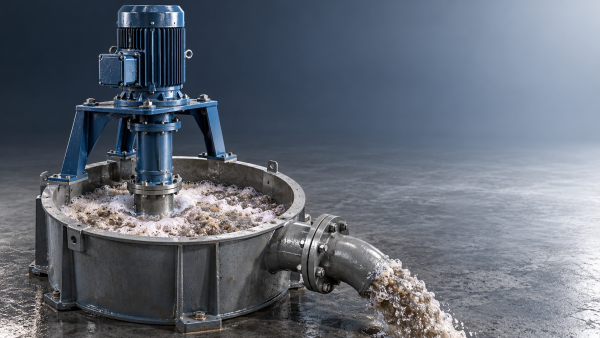
For vertical installations, the relevant checks may instead include mounting rigidity, assembly straightness, immersion conditions, and configuration-specific clearances. The supplied instructions should determine the measurements and review points.
Verify auxiliary systems and controls before starting
The seal arrangement changes the startup requirements. Packed glands, expeller arrangements, and mechanical seals cannot be commissioned using one generic instruction. Some packed glands require controlled leakage for lubrication and cooling; tightening them simply to eliminate all leakage can cause overheating and damage.
Where seal water or another support system is required, confirm the specified fluid quality, pressure, flow, and operating sequence. The correct values depend on the seal design and conditions at the seal, not merely the pressure available in a utility line. An expeller arrangement also has operating limits and may use a separate sealing arrangement when stopped.
Check lubrication, guards, electrical protection, instrumentation, and interlocks before energizing the package. Verify rotation only through a supplier-approved procedure under the site’s safety controls. Incorrect rotation can damage some pump assemblies, and an improvised dry-running check may harm the seal or other components.
Review readiness before introducing slurry
Before startup, confirm that the suction supply is available, required auxiliary services are operating, and valves are positioned according to the approved procedure. Do not apply generic clean-water pump rules to every slurry installation: discharge position, minimum-flow requirements, priming, and filling procedures depend on the equipment and system.
A water trial may be appropriate if the process and pump permit it, but it does not prove performance with slurry. Solids concentration, viscosity, and particle characteristics can change the hydraulic duty, power demand, and suction behavior. Agree with the supplier what a preliminary trial establishes and what still requires verification under process conditions.
Make commissioning evidence useful for troubleshooting
Record startup readings at identified operating conditions. Relevant observations can include suction and discharge pressure, flow, speed, motor current, vibration, bearing temperature, seal behavior, tank level, and slurry characteristics. Note gauge locations and elevations: a discharge-pressure reading alone is not a complete measurement of pump head.
Time-stamped records help the supplier distinguish a persistent installation problem from changing process conditions. For example, a pressure fluctuation that coincides with a falling feed-tank level suggests a different diagnostic path from a fluctuation at stable level and speed. Sound recordings and video can add context, but should not replace instrument readings.
If excessive vibration, rapid temperature rise, unexpected leakage, rubbing, or unstable operation occurs, follow the agreed shutdown criteria. Repeated starts without identifying the cause can turn a correctable setup issue into equipment damage. Mechanical inspection or adjustment must take place under the site’s isolation and lockout procedures, not while personnel are near moving equipment.
Recognize when remote support is no longer enough
Remote guidance has reached its limit when the available evidence cannot establish whether the installation is safe or technically acceptable. Examples include unexplained alignment changes, suspected internal damage, significant foundation movement, severe vibration, or repeated seal failures despite verified auxiliary conditions.
Hands-on assistance is also appropriate when the local team lacks the tools or competence to perform the required checks. Asking an inexperienced worker to estimate alignment or dismantle a pump during a call does not close that capability gap. The practical alternative may be a qualified local service provider working with the supplier, rather than immediately bringing an engineer from overseas.
Agree on this escalation route before commissioning. Identify who authorizes site attendance, how suitable local support will be selected, and how technical responsibility will be shared. This prevents an unresolved fault from becoming a prolonged exchange of photographs and speculative instructions.
The installation should close with a documented record of measurements, operating conditions, approved adjustments, outstanding issues, and acceptance status. Remote support is a credible way to commission a slurry pump abroad when it connects supplier expertise with competent site execution—and leaves clear evidence of what was checked, what was accepted, and what remains unresolved.
Related Information
 Oct 24, 2026
How Much Should a Froth Pump Be Oversized for Flotation Concentrate?
How much should a froth pump be oversized for flotation concentrate? Learn how inlet air, peak flow, and head affect sizing to avoid costly mistakes and select the right pump.- Oct 24, 2026
Is Higher Hardness Always Better for High-Chrome Pump Castings?
Is higher hardness always better for high chrome pump castings? Discover how toughness, carbide structure, and slurry conditions affect service life—and choose smarter to reduce downtime. - Oct 23, 2026
Which Leakage Test Should You Specify for a Zero-Leakage Knife Gate Valve?
Which leakage test should I specify when ordering a zero-leakage knife gate valve? Compare API 598 and ISO 5208, define seat leakage limits, and avoid costly purchasing mistakes. - Oct 23, 2026
Which Pump Material Lasts Longest in Limestone-Gypsum FGD Slurry?
Which pump material lasts longer in limestone-gypsum desulfurization slurry? Compare high-chrome iron, rubber and duplex steel to find the right fit, reduce downtime and extend service life.

{item.title}
Get a Quote
Please leave your information and email address, and we will contact you as soon as possible.