
Why Does a Slurry Pump Bearing Assembly Overheat After Replacement?
A slurry pump returns to service after a bearing assembly replacement, but the housing temperature climbs above its previous operating level. The most likely causes are excess or unsuitable lubricant, incorrect bearing clearance or preload, installation damage, shaft misalignment, or excessive drive-belt tension. The new assembly may be faulty, but installation and operating changes should be checked before replacing it again.
The first decision is whether the temperature is stabilizing within the pump manufacturer’s limits or continuing to rise. A modest temperature increase during initial operation does not, by itself, prove a failure. A rapid rise, abnormal vibration, grinding noise, smoke, or lubricant leakage requires a controlled shutdown. Continuing to run a distressed bearing can damage the shaft, housing, and adjacent components.
Is the bearing actually overheating?
“Too hot to touch” is not a reliable acceptance criterion. Bearing housing temperature depends on ambient conditions, pump speed, load, lubrication, and where the measurement is taken. There is no single temperature limit that applies to every slurry pump bearing assembly.
Use the pump manual, bearing arrangement specifications, and established site alarm settings to judge the temperature. A housing surface reading is not the same as the bearing’s internal temperature, and limits intended for one measurement method should not automatically be applied to another.
- Measure consistently: Use the same instrument and marked locations at the drive-end and pump-end bearing positions.
- Record the trend: Note temperature, elapsed running time, ambient temperature, speed, and operating load.
- Check measurement quality: Infrared readings can be misleading on shiny or reflective surfaces. Verify questionable readings using an appropriate contact sensor or installed temperature probe.
- Compare equivalent conditions: The previous assembly’s temperature is useful only when speed, duty, lubrication, and measurement conditions are comparable.
A temperature that levels off below the approved limit warrants a different response from one that keeps climbing. Do not keep operating solely to see whether it eventually settles when alarms, noise, or vibration indicate distress.
Start with the lubrication changed during replacement
Too much grease can create heat rather than prevent it
Overgreasing is a leading suspect when heating starts immediately after replacement or regreasing. Excess grease must be displaced and churned by the rotating components, increasing resistance and temperature. A housing filled completely with grease may be incorrect even though the bearing itself requires lubrication during assembly.
Check the specified initial bearing fill, housing fill, and replenishment quantity separately. They are not necessarily the same instruction. Also confirm whether the assembly has a grease relief arrangement and whether it is clear and correctly assembled.
Do not loosen covers, remove guards, or open relief points on running equipment unless the manufacturer provides a specific safe procedure. Correct excess fill during an isolated maintenance intervention using the approved method. Adding more grease because the housing feels hot can make the problem worse.
The lubricant may be wrong even when its label looks familiar
Confirm the required grease specification, including base-oil viscosity, thickener compatibility, consistency, and suitability for the operating speed and load. A general-purpose grease may not match the assembly requirements. Mixing greases can alter consistency and oil release; matching color or consistency grade does not establish compatibility.
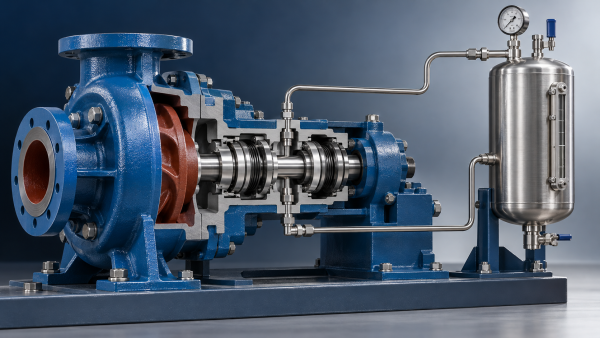
For oil-lubricated assemblies, check oil grade and level using the manufacturer’s stated stopped or running condition. Overfilling can cause churning, while underfilling can starve the bearings. Verify that any constant-level oiler, breather, circulation line, or cooling arrangement was restored correctly after the repair.
Inspect lubricant samples and accessible components for water, slurry particles, or cleaning residue. Contamination can enter during storage, installation, or through disturbed seals. Discolored lubricant alone does not identify the failure mechanism, but grit, free water, or metallic debris calls for further investigation.
Clearance, preload, and fits need verification—not guesswork
A bearing assembly can rotate by hand when cold and still run too tight after warming up. Internal clearance changes with shaft and housing fits, temperature differences, and the bearing arrangement. Excessive interference can reduce operating clearance; an incorrect adjustment can impose excessive axial preload.
First establish whether the pump uses a preset cartridge, an adjustable tapered-roller arrangement, or another locating and non-locating bearing configuration. The correct assembly procedure depends on that design. Do not apply a generic rule such as “tighten until play disappears.” Some arrangements require specified end float; others require controlled preload.
Review the replacement work for these specific errors:
- Wrong bearing designation, internal-clearance class, contact arrangement, or orientation.
- Missing, damaged, or incorrect spacers and shims.
- Locknut adjustment performed without the required end-float or preload measurement.
- Bearing rings not seated squarely against clean shoulders.
- A locating component restraining a ring that must move to accommodate thermal expansion.
Where adjustment is permitted, measure end float or preload using the specified procedure and instruments. Locknut torque alone is not a universal measurement of bearing preload. A complete factory-set assembly generally should not be readjusted unless its service instructions explicitly allow it.
Mounting damage is another possibility. Pressing through the rolling elements, striking a bearing, using uncontrolled heating, or installing onto a burred shaft can damage a new bearing before startup. Persistent roughness or abnormal vibration after external causes are corrected may justify disassembly and inspection rather than further adjustment.
Check what loads the new assembly is carrying
Replacement work often disturbs the drive, base, piping, and pump clearances. The bearing may be generating heat because those external loads changed, not because its internal assembly is incorrect.
Coupling alignment and pipe strain
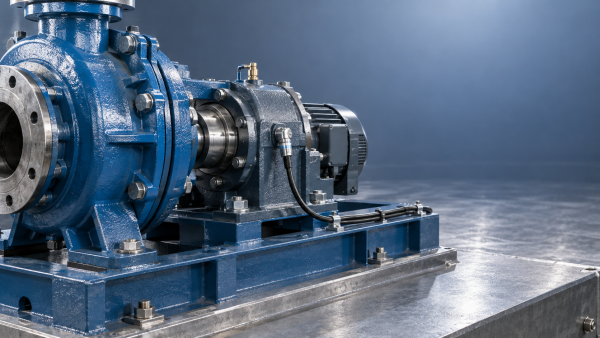
On a direct-coupled pump, check angular and offset alignment with suitable instruments. Confirm that feet are properly supported and mounting bolts are tightened correctly before accepting alignment readings. Soft foot or a distorted base can move the shaft centerline as bolts are tightened.
Piping should be independently supported rather than pulled into position with pump flange bolts. Pipe strain can distort the casing and affect alignment. Where thermal movement is significant, follow the manufacturer’s cold-alignment targets and hot-condition verification procedure.
Belt tension and pulley position
On belt-driven pumps, excessive tension increases radial bearing load. A belt that no longer slips is not necessarily tensioned correctly. Use the drive manufacturer’s tension method and check pulley alignment, groove condition, and belt matching.
Verify pulley diameter and shaft speed as well. A pulley change can increase pump speed and bearing losses. Incorrect pulley position can increase overhung loading even when belt tension is acceptable.
Impeller adjustment and hydraulic thrust
Some slurry pump maintenance procedures involve moving the bearing assembly to restore impeller clearance. Incorrect adjustment can allow rubbing between the impeller and stationary parts. That friction may heat the shaft and nearby housing, sometimes accompanied by abnormal noise or increased motor load.
Check clearances and free rotation only under the prescribed isolation procedure. Also compare the actual duty with the approved operating range. Changed slurry density, valve position, flow, or suction conditions can alter bearing loads. Heating that appears only at certain duties points toward a load-related issue, although it does not rule out marginal bearing clearance.
Use the temperature pattern to narrow the investigation
Temperature patterns help prioritize checks, but they do not prove a diagnosis. Heat travels through the shaft and housing, so the hottest accessible surface may not be the original heat source.
A practical investigation before the next restart
Before touching the assembly, isolate and lock out the pump and driver, release stored energy, and address process pressure and hazardous slurry exposure. Guards must be restored before operation. Never run a slurry pump dry simply to separate a mechanical problem from a hydraulic one unless the manufacturer explicitly permits that test configuration.
- Recover the repair details. Record the installed assembly and bearing identifiers, lubricant used, fill quantity, adjustment method, and any changes to seals, spacers, pulleys, or coupling components.
- Inspect the external installation. Check mounting, alignment or belt tension, pipe support, lubricant level, relief arrangements, and evidence of leaks or rubbing.
- Verify mechanical settings. Confirm impeller clearance and any service-adjustable bearing end float or preload against the correct model instructions. Investigate unexpected resistance during safe manual rotation.
- Correct documented discrepancies. Avoid changing lubricant, belt tension, and bearing adjustment together without recording the original conditions. Otherwise, the cause becomes harder to establish.
- Restart under an approved monitoring plan. Establish required lubrication, priming, seal services, and process conditions first. Monitor temperature trend, vibration, sound, motor current, and duty, with defined shutdown criteria.
A stable housing temperature alone does not clear the assembly for service if vibration, leakage, or noise remains abnormal. Likewise, normal motor current does not exclude a bearing problem: localized friction may develop before the additional load is obvious electrically.
Questions that affect the repair decision
Can a new bearing run warmer during its initial operating period?
Yes. Lubricant redistribution and seal contact can produce an initial temperature rise. Whether that is acceptable depends on the assembly instructions, temperature limit, and trend. “Running in” is not a reason to tolerate continuing temperature rise, roughness, or abnormal vibration.
Should the replacement assembly be returned as defective?
Preserve the evidence before deciding. Keep installation records, temperature and vibration trends, lubricant details, and photographs of relevant components. A supplier assessment is more useful when it can distinguish manufacturing defects from incorrect fits, contamination, transport damage, or external loading. Avoid altering a preset assembly before checking the applicable inspection requirements.
When is internal inspection justified?
Internal inspection becomes appropriate when verified lubrication and external installation corrections do not resolve the heating, or when metallic debris, rough rotation, abnormal vibration, or suspected mounting damage is present. If the assembly exceeded its allowable conditions, have its serviceability assessed before returning it to duty; correcting the original cause does not reverse damage already sustained.
Related Information
 Oct 30, 2026
Do Slurry Pumps Handling Flammable Hydrocarbons Need Double Seals?
Does a slurry pump handling flammable hydrocarbons need a double mechanical seal? Explore leakage risks, seal options, and barrier systems to choose safer, more reliable containment.- Oct 30, 2026
How Can You Tell When a Slurry Pump Liner Needs Replacing?
How do I tell when a slurry pump liner needs replacing? Learn key wear signs, thickness limits, and inspection tips to plan replacement, protect your pump, and avoid costly downtime. - Oct 29, 2026
Should You Choose an Open or Closed Impeller for Coarse Slurry?
Should I choose an open or closed impeller for coarse slurry? Compare solids passage, wear, efficiency, and maintenance to find the right slurry pump and reduce costly downtime. - Oct 29, 2026
Why Does a Slurry Pump Bearing Assembly Overheat After Replacement?
Why does my slurry pump bearing assembly overheat after replacement? Discover common lubrication, preload, and alignment issues, plus practical checks to reduce downtime.

{item.title}
Get a Quote
Please leave your information and email address, and we will contact you as soon as possible.