
Which Pump Is Best for Abrasive Cement Slurry?
Which pump is best for abrasive cement slurry? The answer depends on the slurry’s solids concentration, particle size, flow rate, and required pressure.
For many applications, heavy-duty centrifugal slurry pumps with wear-resistant liners and impellers provide a practical balance of performance and maintenance.
However, positive displacement pumps may be better suited to high-density mixtures or demanding pressure requirements. Understanding these differences can help you select a pump that reduces wear, limits downtime, and keeps cement slurry moving efficiently.
Which Pump Should You Choose First?
Start with a heavy-duty centrifugal slurry pump when the mixture is reasonably flowable, the required pressure is moderate, and continuous operation is the priority.
Consider a positive displacement pump when high viscosity, high solids loading, or substantial discharge pressure makes a centrifugal pump inefficient or unable to meet duty.
Neither category is automatically best. The correct choice depends on measured slurry properties and the complete pumping system, including pipework, elevation, and operating variations.
If the material can settle or harden during shutdown, maintenance access and a reliable flushing procedure deserve as much attention as the initial pump selection.
Centrifugal vs. Positive Displacement Pumps: What Matters?
A centrifugal slurry pump uses a rotating impeller to transfer energy to the mixture. Its delivered flow changes with system resistance and impeller speed.
Heavy-duty designs typically use thicker wear parts, larger internal passages, and replaceable liners. These features help them handle abrasive solids more effectively than standard water pumps.
Centrifugal pumps are often attractive for continuous, higher-flow duties. Their simpler operating arrangement can also make routine inspection and replacement relatively straightforward.
Their limitations become more significant as viscosity and solids concentration rise. Actual performance may fall below water-based pump curves, so slurry corrections are essential.
Positive displacement pumps move a defined volume per cycle or revolution. They can maintain flow against changing pressure within their design and drive limits.
Depending on the design, they can handle viscous or dense mixtures and higher pressures. Examples include piston diaphragm, hose, and progressive cavity pumps.
However, these pumps require careful pressure protection, and their wear components can be expensive. Pulsation control may also be necessary for some designs.
For a final comparison, ask suppliers to quote expected energy use, wear-part life, maintenance labor, and downtime under the same stated operating conditions.
When Is a Centrifugal Slurry Pump the Better Choice?
Choose a centrifugal slurry pump for a flowable mixture when the required flow and pressure fall within the manufacturer’s verified slurry performance range.
Typical duties include transferring cement-bearing water, handling abrasive process slurry, and recirculating mixtures where solids remain suspended and the pipeline is appropriately sized.
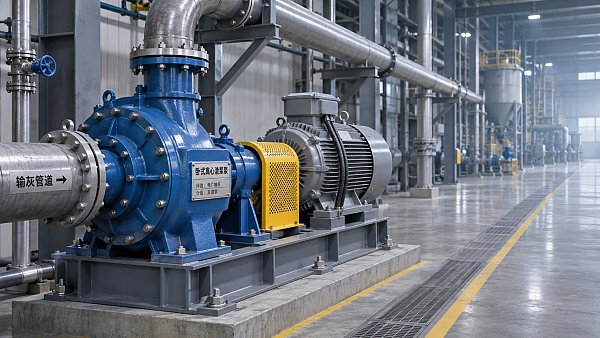
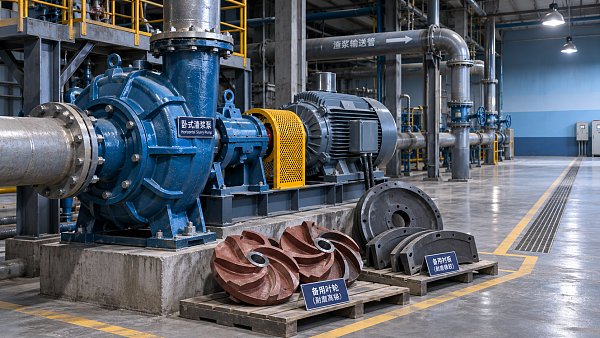
A horizontal pump with replaceable liners and a suitable impeller can be a practical choice when the installation allows easy access for maintenance.
Vertical sump pumps may suit collection pits or sumps, provided the chosen design can handle the solids, liquid level range, and available submergence.
Ask for a pump curve adjusted for the actual slurry. A model selected solely from a clean-water curve may deliver less flow than expected.
Also check the operating range during startup, normal production, and reduced throughput. Sustained operation far from the recommended range can accelerate wear and vibration.
When Is a Positive Displacement Pump Worth Considering?
Consider positive displacement equipment when the slurry becomes too viscous or concentrated for a centrifugal pump to maintain the required flow efficiently.
It can also be appropriate for long pipelines, significant elevation changes, or other duties requiring pressure beyond a practical centrifugal pump arrangement.
Piston diaphragm pumps can serve demanding high-pressure slurry duties. Their suitability depends on particle characteristics, valve design, diaphragm arrangement, and the specified operating conditions.
Hose pumps isolate the slurry from most moving pump components, but hose life depends heavily on pressure, speed, temperature, abrasiveness, and operating practice.
Progressive cavity pumps can provide steady flow for suitable mixtures. Abrasive particles and dry running can damage the rotor and stator, so application testing matters.
Install pressure protection appropriate to the pump and system, such as a correctly sized relief arrangement. A blocked discharge can otherwise cause dangerous pressure buildup.
Because these pumps may continue developing pressure against a restriction, confirm maximum allowable pressure for the pump, hose, piping, valves, and all connected equipment.
How Do You Size a Pump for Cement Slurry?
Begin with the required operating flow, including normal and maximum demand. Identify whether the pump must run continuously, intermittently, or across varying production rates.
Measure the slurry rather than relying on its name. Cement slurry can range from relatively thin cement-bearing water to a dense mixture containing abrasive aggregate.
Provide solids concentration by weight or volume, and state which basis you are using. Include slurry density, temperature, and representative viscosity data where available.
Describe particle size distribution, particle shape, hardness, and the largest expected particles. These details influence passage size, wear rates, settling behavior, and pump selection.
Calculate the total system head or pressure using elevation change, discharge pressure, and losses through pipes, bends, valves, and other fittings at the required flow.
Slurry friction losses can differ substantially from water losses. Ask an experienced supplier or engineer to account for the mixture and the proposed pipeline arrangement.
Check the pump’s suction conditions, including liquid level, suction pipe losses, and available net positive suction head. Inadequate suction can cause cavitation and rapid damage.
Allow for realistic operating changes, but avoid adding arbitrary safety margins at every stage. Excessive oversizing can increase energy use, wear, and control difficulties.
Finally, confirm that the motor, drive, and starting arrangement can handle the expected load, including dense slurry and the conditions present during startup.
Which Materials and Wear Parts Last Longer?
For abrasive cement slurry, select wear materials according to particle size, particle shape, impact conditions, and chemistry. There is no universally best liner material.
High-chrome white iron is commonly used for abrasive service and can suit many hard-particle duties. Its suitability still depends on impact and corrosion conditions.
Elastomer liners may perform well with certain fine-particle slurries and can be replaceable. Confirm compatibility with sharp particles, temperature, and any chemicals present.
Review the impeller, casing, liners, throatbush, and other exposed components together. A durable liner alone cannot compensate for a vulnerable impeller or unsuitable seal.
Seal selection also matters. Depending on the design and site constraints, options may include gland packing, a mechanical seal, or an expeller arrangement.
Ask whether seal water is required, how much the system consumes, and whether added water affects the process. Confirm available water quality and pressure.
Request a list of recommended spare parts, replacement intervals based on comparable duties, and lead times. Treat predicted wear life as an estimate, not a guarantee.
How Can You Prevent Settling, Blockages, and Hardening?
A pump must work with the pipeline, not just the slurry. If velocity is too low, settling solids can accumulate and eventually block the line.
The minimum suitable velocity depends on particle properties, concentration, pipe diameter, and flow behavior. Have it assessed for the actual mixture and operating range.
Excessively high velocity can increase friction losses and accelerate pipe and pump wear. The practical target balances solids transport, energy consumption, and component life.
Keep suction piping short and appropriately sized where possible. Limit unnecessary bends and restrictions, and make sure the pump receives a stable slurry supply.
For cementitious mixtures that can set, define a flushing procedure before commissioning. Include the flushing medium, connection points, discharge destination, and required shutdown sequence.
Plan for unplanned stoppages as well as routine shutdowns. Operators should know how quickly the mixture may stiffen and how to clear the system safely.
Monitor flow, pressure, power draw, vibration, and seal condition. Changes from a known operating baseline can reveal wear, blockage, or an unstable process.
What Should You Compare Before Buying?
Compare pumps against a documented duty point and a realistic operating envelope. Quotes based on different assumptions about density or pressure are difficult to evaluate.
Ask each supplier to identify the pump model, operating speed, predicted efficiency, motor rating, wear materials, seal arrangement, and required auxiliary equipment.
Compare installed cost alongside energy, flushing water, replacement parts, labor, and lost production. A lower purchase price may not produce the lowest operating cost.
For a critical process, consider spare-parts availability and repair turnaround. A standby pump may be justified when a single failure would stop production.
Where wear rates or slurry behavior are uncertain, request a trial, test data, or evidence from a comparable application. Document the limits of any performance estimate.
Final Recommendation
A heavy-duty centrifugal slurry pump is a strong starting point for flowable, abrasive cement mixtures requiring moderate pressure and continuous transfer.
Evaluate a suitable positive displacement pump when density, viscosity, or pressure makes the centrifugal option impractical. Confirm pressure protection and wear-part requirements before purchase.
The best choice is the pump that meets the measured duty, keeps solids moving, and can be maintained economically throughout the expected operating cycle.
Related Information
 Nov 27, 2026
What Affects Ash Slurry Pump Prices for Power Plants?
Power plant ash slurry pump price depends on materials, flow, head, and operating conditions. Learn how to compare quotes and reduce lifetime costs.- Nov 27, 2026
How to Evaluate Steel Mill Scale Slurry Pump Suppliers
Compare steel mill scale slurry pump suppliers with confidence. Learn how to assess pump selection, wear resistance, maintenance, support, and lifecycle costs. - Nov 26, 2026
How to Read a Slurry Pump Performance Test Report
Learn how to read a slurry pump performance test report, assess flow, head, power and NPSH, and avoid costly acceptance mistakes. - Nov 26, 2026
What Affects the Price of an Abrasive Slurry Knife Gate Valve?
Abrasive slurry knife gate valve price depends on size, materials, wear protection, and actuation. Learn how to compare quotes and reduce long-term costs.

{item.title}
Get a Quote
Please leave your information and email address, and we will contact you as soon as possible.