
What Determines the Cost of a Corrosion-Resistant Slurry Pump?
The corrosion resistant slurry pump cost is determined by much more than the purchase price. The liquid’s chemistry, the size and hardness of the solids, the required flow and pressure, and the way the pump is maintained all influence what a facility ultimately spends.
A pump selected for chemical compatibility alone may wear quickly in an abrasive slurry. One chosen mainly for wear resistance may corrode when the process temperature or chloride concentration changes. The most useful comparison therefore starts with the duty and follows the money through installation, energy use, replacement parts, and downtime.
What are you paying for when comparing pump quotations?
Two quotations can look similar while covering different equipment. One supplier may include a motor, baseplate, seal flush system, and commissioning support; another may price only the pump. Before comparing totals, establish a common scope.
Ask suppliers to separate optional items from essential equipment. A low initial price is not necessarily a low installed cost, and a longer wear-life claim is only useful if it refers to a comparable slurry and operating duty.
Material selection: corrosion resistance is not the same as slurry resistance
Wetted materials are often a major cost differentiator. Their suitability depends on the combined effects of liquid chemistry and solid-particle wear, rather than on a single material property.
For example, an alloy with good resistance to a particular acid may still suffer rapid erosion when coarse particles strike the impeller. Conversely, a hard wear-resistant metal is not automatically suitable for a chemically aggressive solution. Corrosion and erosion can also interact, so a material’s performance in clean liquid may not predict its life in a slurry.
Metallic pumps versus lined pumps
This is a screening comparison, not a material-selection chart. Check the complete wetted assembly, including seals, gaskets, shaft sleeves, and any exposed joints. A resistant casing does not compensate for an incompatible elastomer or vulnerable metal insert.
Compatibility also depends on concentration and temperature. Use supplier data for the actual chemical mixture, and request evidence relevant to the service where consequences of failure are significant. ASTM G31 provides guidance for laboratory immersion corrosion testing, while ASTM G119 addresses the erosion-corrosion relationship. Neither standard replaces evaluation of the complete pump in its intended duty. Sources: ASTM G31, https://www.astm.org/g0031; ASTM G119, https://www.astm.org/g0119.
How slurry properties change the cost of a pump
A useful specification describes the solids as carefully as the liquid. “Acid slurry” or “abrasive sludge” leaves too much uncertainty for a dependable selection.
- Particle size and distribution: Large particles can affect passage size and impeller selection; fine particles may behave differently but can still cause wear.
- Solids concentration: State whether the figure is by weight or volume. Concentration affects slurry density, flow behavior, and power requirements.
- Particle hardness and shape: Hard, angular solids may create more severe wear than softer or rounded particles under otherwise comparable conditions.
- Settling tendency: Settling solids can accumulate in piping or the pump during low-flow operation and shutdown.
- Liquid chemistry: Identify pH, chemical species, concentrations, and foreseeable process variations—not just the normal operating condition.
- Temperature and variability: Give normal and maximum temperatures, plus expected changes during cleaning, startup, and upset conditions.
If the process changes seasonally or between batches, provide a range rather than a single average. A cheaper material selected against the average may be a false economy if occasional excursions dominate its service life.
Pump size, operating point, and efficiency
Flow rate and total dynamic head shape the hydraulic selection and motor requirement. Larger equipment generally involves more material and a larger drive, but oversizing is not a reliable way to buy protection. The pump must also operate appropriately against the system curve across the expected range of duties.
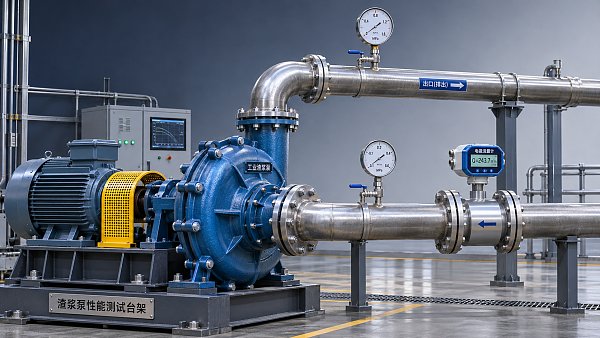
Ask each supplier for the proposed operating point and pump curve, along with the assumptions used to account for slurry properties. A water-based performance curve should not be treated as a complete prediction of slurry performance without the supplier’s explanation of its corrections and limitations.
Compare absorbed power at the expected operating conditions, not motor nameplate size alone. Annual energy cost can be estimated as operating power in kilowatts multiplied by annual operating hours and electricity cost per kilowatt-hour. For variable production, calculate each operating period separately and add the results.
For example, if one proposal draws less power at the actual duty but costs more to buy, the energy calculation helps determine whether that premium is justified. It should also account for any changes in speed or flow that the facility expects to make.
The U.S. Department of Energy’s pump-system guidance discusses system curves, operating points, and opportunities to reduce energy use: https://www.energy.gov/eere/amo/pump-systems.
Seals, flushing, and maintainability can shift the comparison
Shaft sealing deserves its own line in the quotation. Depending on the application, suppliers may propose packing, a mechanical seal, or another arrangement. Each has different implications for leakage control, maintenance, and access to a suitable flush or barrier fluid.
Do not compare seal prices without checking their support requirements. A flush system may require clean liquid, piping, controls, drainage, and ongoing consumption. Introducing flush liquid can also affect the process or downstream treatment, so confirm both its quality and its acceptability.
Maintenance design matters just as much. Replaceable liners and wear parts can reduce the scope of a repair, but only if technicians can reach them safely and the parts are available when needed. Ask how the impeller, casing, liner, and seal are removed, and whether the design allows service without disturbing major pipework. Verify these features on the proposed model rather than assuming they are standard.
Downtime is a cost, even when it is hard to price
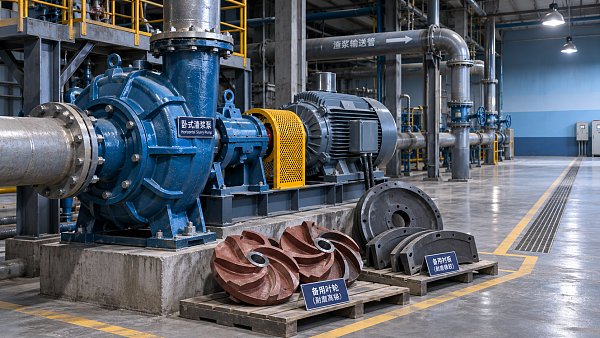
A spare impeller may be inexpensive compared with the interruption caused by waiting for one. Conversely, stocking every possible component can tie up unnecessary capital. Consider the consequences of pump failure, replacement lead times, whether a standby pump exists, and the facility’s ability to carry out repairs.
For critical duties, request a recommended spare-parts list with quoted lead times. Separate routine consumables from long-lead components, and agree on the assumptions behind any recommended stockholding.
How to compare corrosion resistant slurry pump costs fairly
Use the same design basis for every bidder, then normalize each proposal before deciding. The following process exposes differences that a purchase-price comparison can miss.
- Define the duty. Supply flow, head, operating hours, suction conditions, slurry characteristics, chemistry, and normal and maximum temperatures.
- Identify operating scenarios. Include startup, shutdown, low-flow periods, cleaning chemicals, and credible process excursions.
- Standardize the supply scope. List the pump, motor, baseplate, coupling, guards, seals, instrumentation, spares, documentation, and services required.
- Request material details. Obtain a component-by-component materials list and the basis for chemical and wear suitability.
- Compare performance at duty. Review the proposed curve, absorbed power, speed, and any slurry correction assumptions.
- Estimate installed and ownership costs. Add site work, utilities, energy, planned replacements, service, and an appropriate allowance for downtime.
- Resolve uncertainty. Ask what information could change the selection or price, and whether testing or inspection is warranted before commitment.
A practical comparison period should match the facility’s planning horizon. Use consistent energy prices, operating hours, maintenance labor rates, and assumptions about wear life across bids. If a wear-life estimate is uncertain, compare more than one scenario rather than presenting it as a guaranteed result.
A simplified calculation is:
Total evaluated cost = purchase and installation + energy + maintenance and parts + downtime − residual value.
For a longer planning period, a discounted cash-flow calculation can account for when costs occur. Keep assumptions visible: the result is a decision aid, not a promise of future spending.
Questions to ask before placing an order
Is the most expensive alloy the safest choice?
Not necessarily. An expensive alloy may offer strong corrosion resistance in the specified liquid but still be unsuitable for the slurry’s abrasion, temperature, or localized corrosion risks. Select materials for the whole duty and verify vulnerable components as well as the main casing and impeller.
Can a standard pump be more economical than a custom design?
It can, when a standard hydraulic design and available materials meet the duty. Customization may be justified when standard options cannot handle the required chemistry, solids passage, temperature, or installation constraints. Compare not only the quoted premium but also replacement-part availability and lead time.
What information most improves a supplier’s quotation?
A representative slurry description and a reliable flow-and-head requirement are especially valuable. Include solids concentration and particle data, liquid composition, temperature range, suction conditions, operating hours, and known wear or corrosion history. Where measurements are uncertain, label them as estimates and discuss how that uncertainty affects selection.
The right purchase is the one whose materials, hydraulics, and service arrangements fit the actual process—not simply the lowest quote or the most elaborate specification. A transparent comparison makes the trade-offs visible before they become maintenance problems.
Related Information
 Nov 27, 2026
What Affects Ash Slurry Pump Prices for Power Plants?
Power plant ash slurry pump price depends on materials, flow, head, and operating conditions. Learn how to compare quotes and reduce lifetime costs.- Nov 27, 2026
How to Evaluate Steel Mill Scale Slurry Pump Suppliers
Compare steel mill scale slurry pump suppliers with confidence. Learn how to assess pump selection, wear resistance, maintenance, support, and lifecycle costs. - Nov 26, 2026
How to Read a Slurry Pump Performance Test Report
Learn how to read a slurry pump performance test report, assess flow, head, power and NPSH, and avoid costly acceptance mistakes. - Nov 26, 2026
What Affects the Price of an Abrasive Slurry Knife Gate Valve?
Abrasive slurry knife gate valve price depends on size, materials, wear protection, and actuation. Learn how to compare quotes and reduce long-term costs.

{item.title}
Get a Quote
Please leave your information and email address, and we will contact you as soon as possible.