
What Affects Ash Slurry Pump Prices for Power Plants?
The power plant ash slurry pump price depends on more than the pump’s capacity or purchase cost. Abrasive ash, solids concentration, required flow rate, and operating conditions all influence the materials and design needed for reliable performance.
For power plant operators and procurement teams, understanding these factors makes it easier to compare quotations, control maintenance expenses, and select a pump that delivers long-term value.
This guide examines the main pricing considerations and what to look for when evaluating suppliers.
What Determines the Price You Should Expect to Pay?
There is no dependable universal price for an ash slurry pump. A meaningful budget depends on the duty point, slurry properties, pump construction, and quotation scope.
A small pump handling diluted ash over a short distance will generally cost less than a large, high-head unit designed for continuous, abrasive service.
Price also changes with the equipment included. One quotation may cover only the bare pump, while another includes a motor, baseplate, drive, instrumentation, and spare parts.
Before using any online price as a budget benchmark, confirm whether it covers a comparable application and package. Otherwise, the apparent saving may disappear during procurement.
The most useful question is therefore not simply “How much does the pump cost?” but “What equipment and operating life does this price buy?”
How Do Flow Rate and Total Head Affect Pump Price?
Flow rate determines how much slurry the system must move. Higher required flow generally calls for a larger pump, motor, piping, and associated electrical equipment.
Total dynamic head represents the energy needed to move slurry through the system. It includes elevation differences, pressure requirements, and friction losses across the operating route.
A long discharge line, multiple bends, or a high delivery elevation can increase head requirements. The resulting selection may need a larger drive or multiple pumping stages.
Suppliers should size the pump for the intended operating point and expected variations, not just the maximum flow written on a preliminary equipment list.
Oversizing can increase purchase price and energy consumption. It may also move the pump away from its efficient operating region, depending on the system and control strategy.
Undersizing creates a different risk: insufficient delivery pressure or flow. Ask suppliers to show the pump curve, efficiency, and power demand at the specified duty.
Why Do Ash Properties Change the Quotation?
Ash slurry is not a single, uniform material. Particle size, hardness, shape, solids concentration, and chemistry influence wear, hydraulic performance, and material selection.
Coarse bottom ash can present different handling challenges from finer fly ash. Actual behavior also depends on how the ash is collected, mixed, and transported.
Higher solids concentration can increase slurry density and, in some cases, viscosity or settling risk. These changes affect pump selection and the power needed for transport.
Suppliers need to know whether concentration is expressed by weight or volume. Confusing the two can lead to materially different assumptions and an unsuitable quotation.
Particle size distribution matters as well as the largest particle. It helps suppliers assess passage requirements, wear patterns, and the likelihood of solids settling in the pipeline.
Water chemistry and temperature can limit material choices. Chlorides, acidity, alkalinity, or other site conditions may require corrosion resistance in addition to abrasion resistance.
When laboratory data is unavailable, provide representative operating records and identify assumptions. Request a revised selection once actual slurry properties have been confirmed.
Which Pump Materials Offer the Best Value?
Wear-resistant materials often raise the initial power plant ash slurry pump price, but they can reduce replacement frequency when matched to the actual slurry.
High-chrome iron is commonly considered for abrasive slurry duties. Its suitability depends on the particles, operating conditions, and the supplier’s material specification.
Rubber-lined pumps can be appropriate for certain fine-particle applications and may offer advantages in some corrosive environments. They are not automatically suitable for every ash mixture.
Particle shape, size, temperature, and chemical compatibility can affect liner performance. Ask the supplier to explain why its proposed material fits your specific duty.
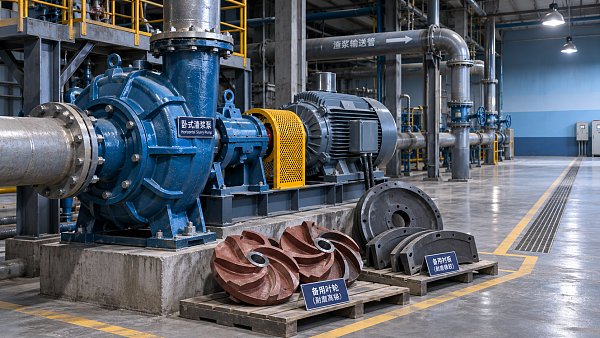
Compare the expected life and replacement cost of impellers, liners, throat bushes, and other wetted parts. A lower pump price can be offset by expensive consumables.
Also check whether wear parts are replaceable individually and how readily they can be sourced. Inventory requirements matter when an outage cannot wait for delivery.
How Do Pump Design and Operating Conditions Affect Cost?
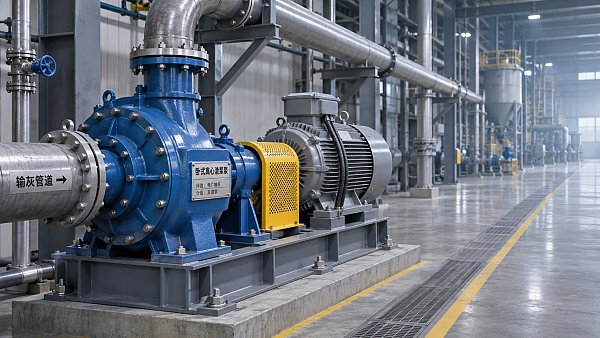
Horizontal centrifugal slurry pumps are widely used for ash transport, but the best configuration depends on the installation, suction arrangement, maintenance access, and operating duty.
Vertical sump pumps may suit certain collection pits or flooded locations. Their cost should be assessed alongside sump depth, support arrangements, and access for removal.
Continuous operation can justify a more robust design than intermittent service. Suppliers should know the expected annual running hours and whether standby equipment is available.
Suction conditions are equally important. Poor inlet arrangements or insufficient available net positive suction head can contribute to cavitation, reduced performance, and premature damage.
Ask suppliers to state the required suction conditions and compare them with the site’s available conditions across the expected operating range, including low tank levels.
If the ash handling system cannot tolerate interruptions, redundancy may be necessary. The cost comparison should then include standby equipment, controls, and maintenance arrangements.
What Extra Equipment May Be Missing From a Pump Quote?
A pump quotation is only comparable when its supply boundaries are clear. Request an itemized list showing what is included, excluded, and offered as an option.
For example, the motor may be priced separately from the pump. Confirm its power rating, efficiency specification, voltage, enclosure, and suitability for the site environment.
Depending on the package, additional costs can include a coupling, belt drive, guards, baseplate, seals, flushing equipment, valves, and variable-frequency drive.
Seal selection deserves attention because some arrangements need a reliable supply of clean flush water. Include that infrastructure and its operating cost in the comparison.
Installation, electrical work, freight, duties, commissioning, and operator training may also sit outside the equipment price. Clarify responsibility for each item before approval.
For replacement projects, check dimensional and connection compatibility. A low-priced pump may require expensive piping, foundation, or electrical modifications to fit the existing system.
How Should You Compare Total Cost of Ownership?
Purchase price is visible immediately; energy, wear parts, labor, and lost production accumulate over time. A lifecycle comparison brings those costs into one decision.
Start with the installed cost, then estimate annual electricity consumption using expected operating hours, power demand at the duty point, and the applicable electricity rate.
Add expected wear-part replacements, maintenance labor, seal support, and planned downtime. Use site records where possible and label supplier estimates that have not been verified.
For illustration, a pump drawing five kilowatts less at the actual duty saves approximately 40,000 kilowatt-hours over 8,000 operating hours, assuming the difference remains constant.
At an illustrative electricity rate of $0.10 per kilowatt-hour, that is $4,000 per year. Actual savings depend on load, operating hours, and local tariffs.
Now consider wear costs. If one option saves $3,000 annually in parts and labor, its combined illustrative annual advantage would be approximately $7,000.
If that option costs $21,000 more to install, the simple payback is roughly three years. This example excludes financing, changing energy prices, and downtime costs.
Downtime can dominate the calculation, but only include a production-loss estimate when the connection between pump failure and lost output is credible for your plant.
Run a sensitivity check on wear life and electricity rates. If a small change reverses the result, seek better operating data before choosing the higher-priced option.
What Information Should You Give Suppliers?
A consistent request for quotation helps suppliers select comparable equipment and reduces the risk of costly revisions. Include the following information wherever available:
- Required flow rate and total dynamic head, including minimum, normal, and maximum operating conditions.
- Ash source, solids concentration by weight or volume, slurry density, particle size distribution, and maximum particle size.
- Slurry temperature, pH, relevant chemical composition, and any known corrosion or wear issues.
- Pipeline length, diameter, elevation profile, fittings, discharge pressure, and expected operating pattern.
- Suction arrangement, available net positive suction head, sump levels, and any limitations on installation space.
- Site power supply, motor requirements, control method, required redundancy, and preferred maintenance arrangements.
- Required scope, delivery location, documentation, commissioning support, spare parts, and applicable site standards.
If the total head has not been calculated, share the pipeline details and ask suppliers to state their assumptions. Have the final system calculation independently checked.
For a replacement pump, include the existing pump curve, motor data, failure history, photographs, and connection dimensions. These details can expose recurring problems.
How Can You Tell Whether a Supplier’s Quote Is Reliable?
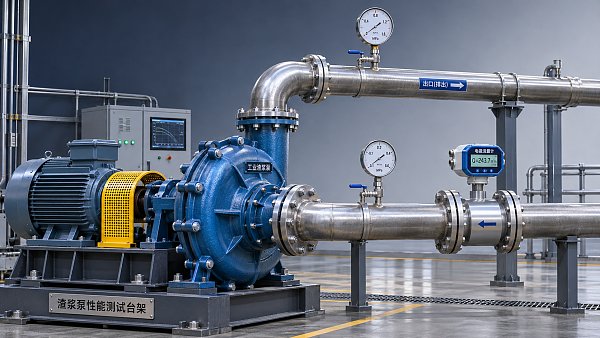
Ask each supplier for a performance curve showing the proposed duty point, efficiency, power, operating speed, and required net positive suction head.
Review the proposed materials by component, rather than accepting a general claim such as “wear resistant.” The impeller, casing, liners, and seals may differ.
Request evidence from comparable ash applications, including the duty conditions and service period where available. References are most useful when operating conditions resemble yours.
Check the warranty terms, exclusions, response times, and local service capability. Confirm who will diagnose problems and supply parts after the equipment is commissioned.
Lead time matters for both the original pump and replacement components. Ask which parts are stocked locally and which require manufacturing or international shipment.
Finally, compare quotations using the same duty, equipment scope, operating period, and cost assumptions. Record deviations so that a lower headline price is properly understood.
Choosing the Right Pump for Your Budget
The right power plant ash slurry pump price is the price attached to a suitable duty, a clearly defined package, and credible operating costs.
Start with reliable slurry and system data, then compare materials, efficiency, maintenance access, and supplier support. Evaluate purchase price alongside the costs of ownership.
Where performance or wear life remains uncertain, make the assumptions visible and test their effect on the business case. That approach supports a defensible purchasing decision.
Related Information
 Nov 27, 2026
What Affects Ash Slurry Pump Prices for Power Plants?
Power plant ash slurry pump price depends on materials, flow, head, and operating conditions. Learn how to compare quotes and reduce lifetime costs.- Nov 27, 2026
How to Evaluate Steel Mill Scale Slurry Pump Suppliers
Compare steel mill scale slurry pump suppliers with confidence. Learn how to assess pump selection, wear resistance, maintenance, support, and lifecycle costs. - Nov 26, 2026
How to Read a Slurry Pump Performance Test Report
Learn how to read a slurry pump performance test report, assess flow, head, power and NPSH, and avoid costly acceptance mistakes. - Nov 26, 2026
What Affects the Price of an Abrasive Slurry Knife Gate Valve?
Abrasive slurry knife gate valve price depends on size, materials, wear protection, and actuation. Learn how to compare quotes and reduce long-term costs.

{item.title}
Get a Quote
Please leave your information and email address, and we will contact you as soon as possible.