
A settling pump liner should be replaced when wear begins to affect pump clearance, hydraulic performance, containment, or the protection of the metal casing—not simply because a fixed number of calendar months has passed. In wastewater plants, liner life can vary widely because settled solids differ in grit content, particle size, chemical exposure, solids concentration, and operating hours.
The question, “How often should settling pump liners be replaced in wastewater plants,” is therefore best answered with an inspection-based schedule. A liner serving relatively smooth biological sludge may remain serviceable for a long period, while one handling grit-laden primary sludge or abrasive thickened solids may require attention much sooner. Waiting until the liner wears through can turn a planned maintenance task into a casing, impeller, shaft seal, or downtime problem.
Use condition and performance trends to set the replacement interval
There is no universal replacement interval that suits every settling pump. A practical program starts with regular inspections and uses the pump’s own wear history to establish a site-specific replacement point. The first few liner changes are especially useful because they show how quickly a particular slurry stream removes material from the wetted parts.
For pumps exposed to abrasive solids, inspections should be more frequent during the early period after a new liner is installed. This allows maintenance staff to identify the active wear pattern before the liner reaches a critical condition. Once the wear rate is understood, the inspection interval can be adjusted to match the process rather than relying on a generic service calendar.
Replacement is usually justified when one or more of the following conditions appear:
- Wall thickness has been reduced close to the manufacturer’s allowable minimum.
- Deep grooves, localized holes, cracking, delamination, or soft areas are found in the liner.
- Wear has enlarged the clearance between the impeller and liner enough to reduce pumping efficiency.
- The pump requires more speed, power, or run time to maintain the former flow or discharge pressure.
- Vibration, recirculation noise, unstable discharge, or repeated seal-related issues begin after process conditions have been checked.
- The liner no longer seats correctly against its support surfaces or sealing interfaces.
- The casing is at risk of direct exposure because the sacrificial liner is becoming thin or displaced.
A liner does not need to be completely perforated to warrant replacement. In many cases, performance loss and increased internal turbulence become important before a visible hole develops. Replacing the liner at that stage can protect the more expensive components around it.
Why liners in settling service wear at different rates
Settling operations often create a difficult pumping environment. Solids may settle by design, but the material drawn into a pump can still contain sand, grit, mineral particles, fibrous debris, scale, and concentrated sludge. Abrasion is not determined by solids content alone. Hard, angular particles can cause rapid erosion even where the overall solids percentage appears moderate.
The position of the pump in the treatment process also matters. A pump transferring primary sludge from a settling basin may encounter more mineral grit than one moving stabilized sludge downstream. A unit handling underflow from a grit-prone zone may experience concentrated abrasive wear at the liner throat, suction eye, cutwater region, or discharge side. Where solids are poorly mixed before pumping, intermittent slugging can create localized damage that is more severe than steady, uniform abrasion.
Operating point is another major influence. A pump working far from its best efficiency region may develop internal recirculation. That recirculation can keep abrasive particles moving repeatedly through the same high-velocity areas, accelerating liner erosion. Running too slowly can allow solids to settle or accumulate in the system, while running too fast can increase velocity and impact wear. The correct response is not always to fit a harder liner; the operating condition should be reviewed first.
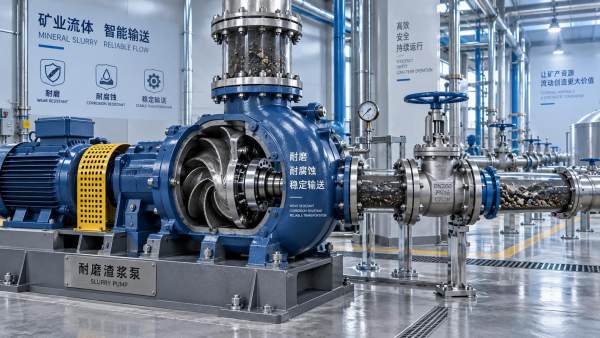
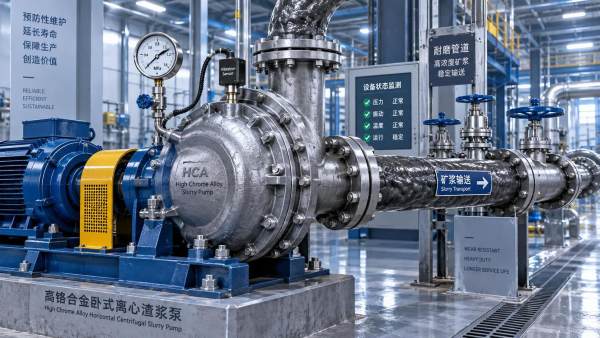
Liner material affects the wear pattern but does not eliminate the need for inspection. Elastomer liners can resist certain types of particle impact and may tolerate some slurry applications well, while hard metal liners may be selected for more aggressive abrasive service. Chemical conditions, temperature, particle characteristics, and the pump design determine which material is appropriate. A liner material that performs well against abrasion may not be suitable for swelling, corrosion, or elevated-temperature exposure.
Inspect the pump before deciding that the liner is the problem
Reduced discharge capacity is often the first operational complaint, but it should not automatically be blamed on liner wear. Blocked suction lines, air entry, changing sludge characteristics, clogged strainers, damaged impellers, valve restrictions, and incorrect speed control can produce similar symptoms. A focused inspection prevents unnecessary liner replacement and avoids missing the root cause.
Review the operating record
Compare current flow, discharge pressure, pump speed, motor load, and run time with the pump’s normal operating record. A gradual decline while speed and suction conditions remain comparable can indicate increasing internal clearance from liner or impeller wear. A sudden change is more likely to point to blockage, foreign material, a process upset, mechanical damage, or an operating change.
Maintenance records should also capture the slurry source, process condition, hours since the last liner installation, and any abnormal events such as grit carryover, basin cleaning, or extended dry-running risk. These notes are more useful than a simple replacement date because they explain why two liners of the same material may have very different service lives.
Check the wet end systematically
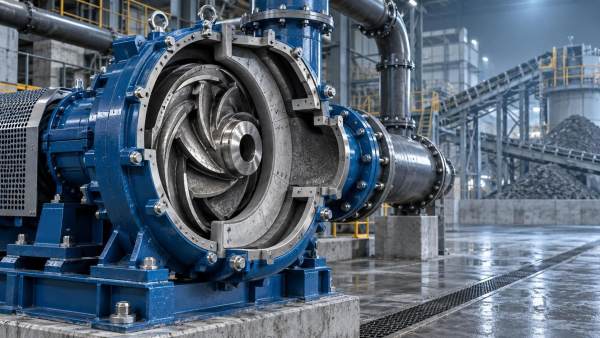
After isolating, draining, and making the pump safe for maintenance, inspect the liner together with the impeller and relevant wear surfaces. Look beyond the most obvious groove. A liner may appear acceptable at the inlet while the throat section has thinned substantially. Conversely, a localized damaged area may be caused by a loose component, trapped debris, or misalignment rather than normal abrasion.
Measure liner thickness at repeatable locations whenever the design permits. Marking or documenting the measuring points makes future inspections comparable. Visual assessment alone can be unreliable, particularly with elastomer liners that may appear intact even when the profile has changed enough to affect clearance. Record the condition of backing surfaces, fasteners, gaskets, and clamping features as well. A new liner cannot perform properly if its support structure is corroded, distorted, or contaminated with hardened solids.
Replace before the casing becomes the wear part
The liner is intended to be a sacrificial component. Its purpose is defeated when maintenance is delayed until abrasive slurry reaches the pump casing or structural wet-end parts. Once the casing is exposed, repair options may become more complex, and pump geometry can be altered in ways that affect future performance even after a new liner is fitted.
Planned replacement is also preferable when the pump is part of a critical settling or sludge-transfer duty. A failing liner can increase the chance of emergency isolation, difficult cleanout work, and disruption to upstream or downstream operations. The decision should account for the operational consequence of failure, not just the visible liner condition. A moderately worn liner in a standby pump may be monitored differently from a similar liner in a duty pump with limited redundancy.
Where practical, align liner replacement with inspection of the impeller, shaft sleeve, mechanical seal area, fasteners, and valve condition. This does not mean replacing every component at once. It means using the opened pump as an opportunity to identify related wear and avoid reinstalling a new liner against a damaged mating surface.
A workable inspection and replacement routine
An effective routine is based on repeatable observations rather than assumptions. After installing a new liner, document its material, installation date, pump hours, measured thickness at selected points, impeller clearance where applicable, and baseline operating readings. Early follow-up inspections reveal whether the expected wear is uniform or concentrated in one area.
- Establish baseline performance after installation under normal operating conditions.
- Inspect more closely during the initial service period, especially on pumps handling grit or variable settled solids.
- Trend thickness loss, flow stability, pressure, energy demand, and clearance changes over subsequent inspections.
- Set a planned change point before the liner reaches its minimum safe thickness or causes unacceptable performance loss.
- Investigate unexpected wear-rate changes instead of merely shortening the replacement interval.
A useful maintenance trigger is not “replace every fixed number of months,” but “replace when measured wear and performance trend indicate that the liner will reach its limit before the next safe maintenance window.” This approach allows planned work to be coordinated with plant operations while reducing the chance of casing damage.
Installation details that affect liner life
A replacement liner can fail early if installation conditions are poor. Clean all mating surfaces thoroughly; compacted sludge, scale, or corrosion beneath a liner can prevent proper seating and create concentrated stress. Confirm that the liner is oriented correctly, that the impeller-to-liner relationship is restored as intended, and that bolts or clamps are tightened according to the pump design. Uneven tightening can distort some liner types or allow movement during operation.
Before returning the pump to duty, verify that the suction path is clear, valves are in the intended position, and the pump is properly primed where required. Avoid prolonged operation without adequate slurry or liquid, since dry running and excessive heat can damage certain liner materials and seals. After startup, compare readings with the pre-maintenance baseline rather than assuming that a new liner alone has corrected every performance issue.
Do not overlook isolation valves during abrasive-slurry maintenance
Liner work often requires reliable isolation of slurry lines. A valve that does not close cleanly can leave maintenance crews dealing with residual solids, leakage, or difficult dewatering around the pump. In abrasive wastewater service, the valve’s ability to maintain shutoff and resist wear is part of the maintenance strategy, particularly where solids must be isolated before opening pump casings.
For applications that need a robust isolation component alongside wear-management work, the Leak-free Heavy-duty Wear-resistant Knife Gate Valve(Heavy-duty Type) may be considered as part of the line-isolation arrangement. Selection should still match the slurry characteristics, pressure conditions, installation orientation, and the plant’s established isolation procedure.
 Sep 15, 2026When custom slurry pumps make sense for unusual duty conditionsCustom Slurry Pumps deliver reliable performance in abrasive, corrosive, high-temperature, and variable-duty applications. Learn when customization reduces downtime and lifecycle costs.
- Sep 14, 2026How slurry pumping solutions can lower unplanned downtimeSlurry Pumping Solutions help manufacturers cut unplanned downtime through smarter pump selection, condition monitoring, wear control, and lifecycle-focused maintenance strategies.
- Sep 13, 2026When mining slurry pumps need thicker wear-resistant componentsMining Slurry Pumps need thicker wear-resistant components when wear rates disrupt planned maintenance. Learn how to select liners, impellers, and materials for reliable uptime.
- Sep 12, 2026What coal washing pumps need to handle dense magnetite mediaCoal Washing Pumps for dense magnetite media: learn how hydraulic design, wear materials, sealing, and suction stability protect pressure, uptime, and coal recovery.

Get a Quote
Please leave your information and email address, and we will contact you as soon as possible.