
What Determines the Service Life of a Corrosion-Resistant Slurry Pump?
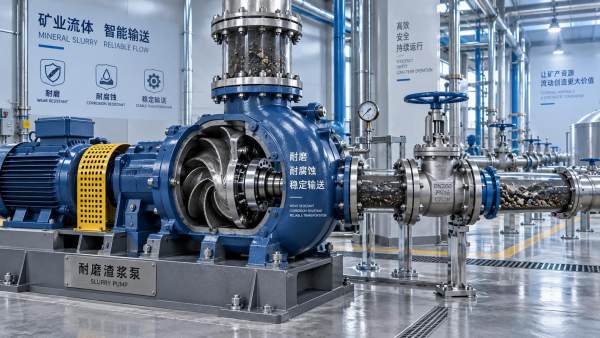
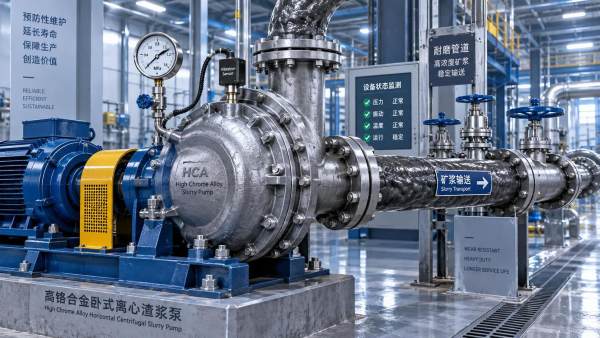
A corrosion-resistant slurry pump rarely reaches the end of its useful life for one simple reason. In most industrial systems, the wet-end components, shaft seal, bearings, and drive train age at different rates. A pump may still produce acceptable flow while losing efficiency through impeller wear. Another may have sound hydraulic parts but become unreliable because its seal support arrangement does not match the process conditions.
For that reason, what is the expected service life of a corrosion resistant slurry pump cannot be answered with a single number. A pump handling mildly abrasive neutral slurry in a controlled duty can remain serviceable for a long time with routine component replacement. The same model exposed to acidic, solids-laden slurry, repeated dry-running events, or frequent off-design operation may need wet-end attention much earlier. The practical question is not “How many years will the pump last?” but “Which parts will wear first, why, and how predictable is that wear?”
Technical evaluators should therefore assess expected service life as a combination of material compatibility, particle behavior, hydraulic duty, mechanical design, installation quality, and maintenance discipline. A corrosion-resistant alloy by itself is not a guarantee of long service.
Corrosion and abrasion usually act together
The phrase “corrosion-resistant” can create a misleading sense of security. In slurry service, chemical attack and mechanical erosion often occur at the same time. A liquid may be chemically manageable for a given alloy under static laboratory conditions, yet become much more aggressive inside a pump because solids continually remove the passive surface film that normally protects the metal.
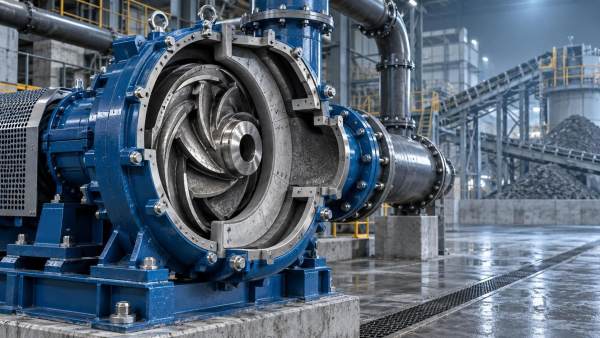
This is particularly relevant around the impeller leading edges, throatbush, volute cutwater, suction liner, and seal chamber. These areas can see high local velocity, turbulence, and repeated particle impact. The wear pattern is not always uniform. Fine solids may create broad erosive wear, while larger angular particles can produce localized gouging and rapid dimensional loss. Once clearances increase, internal recirculation rises, efficiency falls, and the hydraulic load on other components may change as well.
Material selection needs to consider more than the slurry’s stated pH. Evaluators should request process information covering chloride content, oxidizing or reducing conditions, dissolved gases, temperature range, solids concentration, particle size distribution, hardness, and particle shape. Even that is only a starting point. The chemical condition may change during cleaning, batch transitions, upset conditions, or shutdown periods, when stagnant liquid can be more damaging than normal operation.
Metal alloys, elastomer linings, ceramics, and composite wet-end materials each have trade-offs. Elastomers can perform well against certain fine-particle slurries but may not tolerate high temperatures, hydrocarbons, sharp coarse solids, or incompatible chemicals. Hard metals can resist abrasion effectively in some duties but may not provide sufficient resistance to the chemical environment. Ceramic-based parts can offer excellent hardness while requiring careful attention to brittleness, assembly practices, and impact loading. There is no universally best material; there is only a material system that fits the actual duty.
The operating point has a direct effect on wear rate
A slurry pump should not be selected only by matching a nominal flow rate and head. Where it operates on its performance curve matters. Sustained operation far from the pump’s best efficiency region can increase recirculation, vibration, radial loading, temperature, and uneven wear. In abrasive service, those effects tend to become visible sooner than they would in clean-water pumping.
Oversizing is a common source of avoidable damage. If a large pump is throttled heavily to meet a lower process flow, the energy lost across the control valve does not disappear from the system. The pump may operate in a low-flow zone where internal circulation becomes severe. On the other hand, running too close to the end of the curve can increase velocity through the wet end, drive higher wear, and make the pump more sensitive to small changes in slurry density or pipe resistance.
Variable-speed control can help when the process demand changes, but it is not automatically a cure. The speed range must remain compatible with minimum-flow needs, net positive suction head requirements, motor torque, and slurry settling risk in the pipework. A good evaluation reviews the expected duty envelope rather than treating one design point as the entire operating reality.
Velocity is useful, but too much is expensive
Slurry transport requires enough line velocity to keep solids suspended and prevent deposition. Yet higher velocity generally increases erosive energy at surfaces, bends, valves, and pump passages. The target is not the highest velocity that the piping can tolerate; it is the lowest stable transport velocity that still suits the solids and process conditions. That balance is one reason a pump cannot be assessed independently from the piping system.
A change in upstream classification, grinding condition, filtration performance, or reagent addition can alter the slurry without anyone changing the pump. If the particle size becomes coarser or the concentration rises, a previously acceptable pump may begin consuming liners or impellers at a noticeably faster rate. For critical duties, process changes should trigger a review of pump duty rather than being treated as a production issue only.
Seal life is often the first practical limit
In many corrosion-resistant slurry applications, the seal arrangement determines whether the pump is considered reliable in daily operation. Mechanical seals can provide controlled leakage and clean installation conditions, but they require the right faces, elastomers, flush plan, pressure margin, and operating environment. They are not interchangeable components that can be selected after the pump has been chosen.
A seal exposed directly to solids may suffer face damage, spring blockage, heat generation, or loss of lubrication. Depending on the process, an expeller arrangement, packed gland, double mechanical seal, or external flush system may be more appropriate. Each option has consequences. A flush can protect seal faces, for example, but it introduces dilution, water consumption, and a possible contamination path. Packing is tolerant in some heavy slurry duties but requires controlled adjustment and accepts a level of leakage. A technical review should make these trade-offs explicit.
Seal failures also need careful diagnosis. Replacing a seal without checking shaft runout, bearing condition, suction stability, seal-water pressure, thermal distortion, and dry-running history often produces a repeat failure. In practice, the seal is sometimes the messenger rather than the root cause.
Mechanical condition matters after the wet end begins to wear
As a slurry pump wears, its hydraulic behavior changes. Internal clearances increase, leakage paths grow, and the pump may need more speed or a different impeller adjustment to maintain duty. If this process is not monitored, operators may compensate by opening valves, increasing speed, or changing control settings without recognizing that the pump is losing its designed margin.
The resulting condition can place extra load on the shaft, bearings, coupling, and motor. Bearing life is strongly affected by lubrication quality, contamination, alignment, vibration, and actual radial and axial loads. Poor baseplate stiffness or pipe strain can create problems that look like a bearing defect but originate at installation level. A corrosion-resistant wet end cannot offset a distorted suction spool or unsupported discharge piping.
For evaluations involving continuous or difficult-to-access service, it is worth checking whether the pump layout allows practical inspection and replacement of consumable parts. A technically capable pump can become a poor lifecycle choice if changing the liner, impeller, seal, or bearing cartridge requires major disassembly or prolonged isolation of the process.
Suction conditions can shorten life before obvious cavitation appears
Cavitation is often associated with noise, vibration, and visible pitting, but slurry duties can make the warning signs less obvious. Solids may mask the sound, while fluctuating suction conditions produce intermittent damage. A pump can operate acceptably during one part of a batch and experience poor suction margin when tank level, temperature, viscosity, or solids loading changes.
The suction side deserves the same engineering attention as the pump itself. Short, properly sized suction piping, controlled inlet geometry, minimal air entrainment, and sufficient available suction head are basic requirements. High points that trap gas, partially closed suction valves, blocked strainers, or vortexing at a tank outlet can cause unstable operation. In corrosive slurry service, the damage can be compounded: cavitation disrupts protective material surfaces while erosion attacks the newly exposed areas.
A useful commissioning practice is to record baseline suction and discharge pressure, motor load, vibration condition, seal behavior, and control position when the pump is known to be operating correctly. Those records are more valuable later than a generic service interval because they provide a real reference for that specific installation.
Maintenance intervals should follow condition, not calendar habits alone
Calendar-based maintenance has a place, especially for lubrication and routine inspections, but slurry pump wear is driven by duty severity. Two identical pumps on the same site may have very different component lives if one handles startup slurry, recirculation duty, or a more concentrated stream. Treating both with the same overhaul interval can either waste usable components or invite unexpected failure.
Condition-based monitoring does not have to be complicated. Trends in flow, discharge pressure, power draw, vibration, bearing temperature, seal leakage, and impeller clearance can reveal deterioration early. Visual inspection of removed parts is equally useful when the observations are documented. The shape and location of wear often point to the underlying issue: uniform abrasion, localized turbulence, chemical attack, cavitation, oversize particles, or a clearance problem leave different clues.
Spare-parts strategy also affects real service life. If a critical liner or seal kit has a long lead time, the pump may remain in service beyond a sensible wear limit. That increases the chance of collateral damage to more expensive parts. Evaluators should distinguish between the life of a replaceable wet-end component and the usable life of the complete pump assembly. A pump designed for repeatable refurbishment can deliver better availability than one that appears less expensive at purchase.
A practical way to estimate expected life
The most defensible estimate begins with a duty profile, not a catalogue promise. Gather the normal, minimum, maximum, and upset conditions; identify the chemical composition and solids characteristics; confirm the required flow and head range; then review suction conditions, seal support, material options, and maintenance access. If past operating records exist for a comparable slurry, use them carefully. Comparable means genuinely similar in solids, chemistry, speed, geometry, and operating pattern—not merely the same industry.
It is also useful to ask suppliers how they define service life. They may mean the anticipated life of the impeller, the interval between planned wet-end replacements, bearing life under stated loading, or the expected operating period before a major overhaul. These are different measures. A clear technical specification should separate them and state the assumptions behind each one.
For metallurgy-related duties, this review should include process variability, because feed characteristics and chemical conditions may not remain constant over an operating campaign. Equipment selection for the Metallurgy Industry should therefore focus on a maintainable pump-and-system arrangement, with materials and sealing selected for the credible worst operating condition rather than only the ideal design slurry.
The expected life of a corrosion-resistant slurry pump is ultimately a managed outcome. Correct material selection matters, but it must be supported by stable hydraulics, adequate suction conditions, suitable sealing, disciplined inspection, and a willingness to act when operating trends begin to move. That is the difference between replacing parts on a planned basis and discovering the limits of the pump during an unplanned shutdown.
 Sep 15, 2026When custom slurry pumps make sense for unusual duty conditionsCustom Slurry Pumps deliver reliable performance in abrasive, corrosive, high-temperature, and variable-duty applications. Learn when customization reduces downtime and lifecycle costs.
- Sep 14, 2026How slurry pumping solutions can lower unplanned downtimeSlurry Pumping Solutions help manufacturers cut unplanned downtime through smarter pump selection, condition monitoring, wear control, and lifecycle-focused maintenance strategies.
- Sep 13, 2026When mining slurry pumps need thicker wear-resistant componentsMining Slurry Pumps need thicker wear-resistant components when wear rates disrupt planned maintenance. Learn how to select liners, impellers, and materials for reliable uptime.
- Sep 12, 2026What coal washing pumps need to handle dense magnetite mediaCoal Washing Pumps for dense magnetite media: learn how hydraulic design, wear materials, sealing, and suction stability protect pressure, uptime, and coal recovery.

Get a Quote
Please leave your information and email address, and we will contact you as soon as possible.