
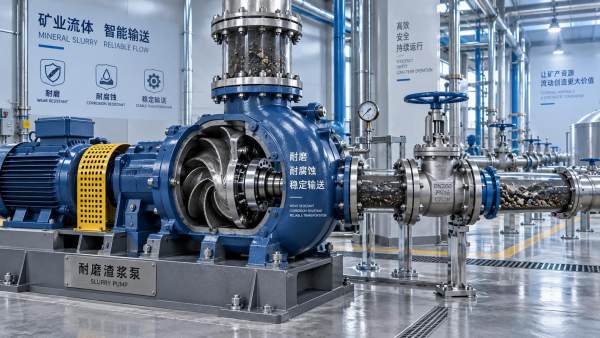
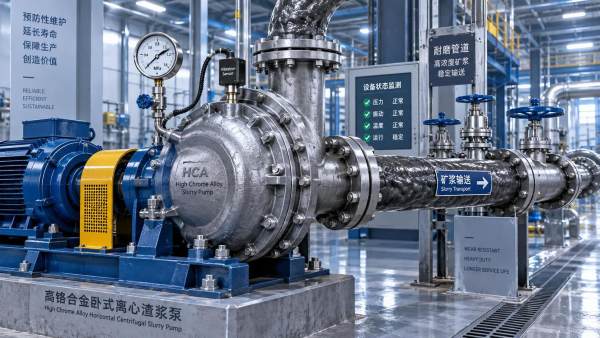
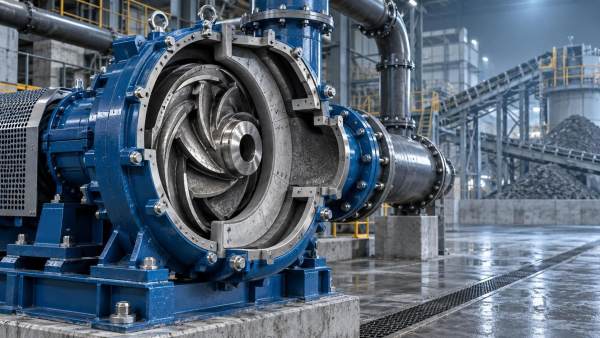
A slurry line can appear to be functioning until the maintenance crew starts replacing liners, impellers, seals, or complete pump assemblies far more often than planned. The immediate expense is visible in spare parts and labor, but the larger cost often comes from lost production time, emergency purchasing, cleanup work, and process instability after a failure. In these conditions, Wear Resistant Slurry Pumps lower replacement costs when their higher initial specification prevents repeated premature wear in components that conventional pumps were never designed to protect.
The decision is usually justified when solids are abrasive, operating hours are high, flow conditions fluctuate, or the pump is being treated as a disposable maintenance item. A wear-resistant model does not automatically reduce costs in every slurry application. It becomes economical when the reduction in replacement frequency, downtime exposure, and maintenance intervention outweighs the difference in purchase price over the pump’s working life.
The first sign is not always a failed pump
Replacement costs often begin rising before a pump stops moving slurry. Operators may notice that discharge pressure gradually falls, the motor draws different power than usual, capacity becomes harder to maintain, or the pump needs more frequent adjustment. These changes can indicate wear in the impeller, throatbush, casing, liner, or sealing area. As clearances increase, slurry recirculates internally instead of being transferred efficiently through the system.
A conventional water pump or light-duty process pump may survive for a period in a mild slurry service. The problem becomes clear when abrasive particles continuously strike wetted surfaces at high velocity. Fine mineral particles, ash, sand, slag, metal fines, and other hard solids can remove material gradually. Larger particles may produce localized impact damage, especially at the impeller inlet, leading edges, and volute tongue.
When a pump is replaced only after it loses performance, the cost record may understate the problem. By that stage, production may already have been restricted, upstream equipment may have been forced to wait, and the maintenance team may be responding to an urgent failure rather than using a planned shutdown window. The best time to evaluate a wear-resistant design is often when wear patterns are becoming predictable but disruptive.
Conditions that make wear-resistant construction worth paying for
The case for upgraded materials and replaceable wear parts becomes stronger as the pump duty moves away from a clean, steady liquid service. Several operating conditions deserve close attention during procurement.
Abrasive solids are present at meaningful concentration
Solids concentration affects both the amount of material passing through the pump and the way particles interact with internal surfaces. A low-concentration slurry with soft particles may not need the same construction as a dense stream containing angular, hard material. Procurement teams should ask for the solids content by weight or volume, but that figure alone is not enough. Particle hardness, shape, size distribution, and settling behavior can change wear rates dramatically.
Hard, angular particles usually create more aggressive cutting and sliding wear than rounded or softer particles. Coarse particles can also create impact wear. A pump selected only around flow rate and head may meet the hydraulic duty while suffering rapid mechanical deterioration.
The system runs for long or uninterrupted periods
Continuous-duty applications often justify a more durable pump even where each individual hour of wear appears modest. A pump operating intermittently can be inspected and repaired between batches. One that runs through shifts, weekends, or critical production cycles has fewer opportunities for maintenance. A component failure may then force an unplanned stoppage at the least convenient time.
Long-run duties also make service intervals more valuable. Extending the usable life of liners or impellers can allow maintenance to be aligned with scheduled plant outages rather than emergency callouts. That scheduling benefit can be more important than the direct value of the replaced part.
Corrosion and abrasion occur together
Corrosive fluid chemistry can weaken a material surface while solids remove the protective layer. This combined mechanism is frequently more damaging than either corrosion or abrasion considered separately. A material that resists abrasive particles well may not be suitable for a chemically aggressive slurry, while a corrosion-resistant material may not tolerate severe particle impact.
Selection should therefore begin with the actual slurry chemistry, including pH range, dissolved salts, oxidizing conditions, temperature, and any chemical additions used upstream. “Corrosive” and “abrasive” are not enough as purchasing descriptions. Material compatibility needs to be checked against the expected duty rather than assumed from a general pump category.
Operating conditions are unstable
A pump may be exposed to more wear when it repeatedly operates away from its preferred flow range. Low-flow operation can increase recirculation, vibration, and localized turbulence. Excessive flow can raise internal velocity and accelerate erosion. Frequent starts and stops, changing solids concentration, blocked suction conditions, and valve throttling can further shorten component life.
A wear-resistant pump can tolerate harsh service better, but it cannot correct a poorly controlled system. If the pump is routinely operating far from its intended duty point, replacement costs may remain high regardless of liner material. Hydraulic selection and process control must be reviewed alongside wear resistance.
Separate the purchase price from the replacement-cost problem
A common purchasing mistake is to compare only the price of a new pump against the price of a more robust alternative. That comparison misses the cost of keeping each option in service. The relevant question is not “Which pump is cheaper to buy?” but “Which option creates the lower cost of sustained operation at this duty?”
This review does not require invented precision. Even a practical comparison based on maintenance records can reveal whether a pump is being consumed too quickly. Look at how often wear parts are changed, what triggered each intervention, whether the work was planned, and whether the replacement restored the expected process performance. If records show repeated unplanned work on the same wetted components, the application may be under-specified.
Material selection matters, but serviceability matters too
Wear-resistant slurry pumps are often specified with high-chrome alloys, elastomer linings, or other material systems selected for the slurry. Each approach has a working range. Hard metallic materials are commonly considered where abrasion and impact are significant. Elastomer-lined components may be appropriate for certain fine-particle duties, depending on particle size, temperature, fluid chemistry, and mechanical conditions. There is no universal “best” material because the damage mechanism determines the material choice.
For example, a hard alloy may resist cutting wear effectively but may not be the preferred answer for every corrosive chemical environment. An elastomer may absorb particle impact in a suitable duty but can be limited by temperature, oil exposure, chemical compatibility, or coarse sharp solids. The procurement specification should identify the slurry rather than simply request “wear-resistant” construction.
Serviceability should be evaluated at the same time. A pump with replaceable liners, accessible wear components, standardized fastening arrangements, and practical clearance adjustment can lower total replacement expense even when individual parts are not inexpensive. The goal is to replace the worn item without discarding serviceable structural components or creating a lengthy rebuild process.
Use wear patterns to identify the real cause
Before changing pump type, inspect the parts that are being removed. Their condition can indicate whether the problem is material wear, hydraulic mismatch, cavitation, solids handling, seal failure, or mechanical alignment.
- Uniform thinning on liners or casings may point to sustained abrasive flow and a need for more suitable wetted materials or thicker replaceable wear sections.
- Severe erosion at the impeller eye or leading edges can indicate high inlet velocity, poor suction conditions, recirculation, or aggressive particles entering the pump.
- Pitted, irregular surface damage may suggest cavitation or corrosive attack rather than simple abrasion.
- Localized damage near the volute tongue can result from operating too far from the intended hydraulic range or from an impeller-to-casing clearance issue.
- Repeated seal failures without severe wet-end wear may point to shaft movement, bearing condition, pressure conditions, dry running, seal-water problems, or unsuitable sealing arrangements.
This inspection step prevents an expensive but ineffective upgrade. A tougher casing will not solve a suction line restriction. Similarly, changing to a harder impeller will not correct a duty point that causes damaging recirculation. The pump, piping, process conditions, and maintenance method must be considered as one operating system.
When a standard pump may still be the sensible choice
Not every solids-handling duty requires a specialized wear-resistant design. A conventional pump may remain appropriate when solids are low in concentration, soft, non-abrasive, and consistently sized; when the fluid chemistry is compatible with standard materials; or when operating hours are limited and planned maintenance is easy to schedule. It can also be reasonable where a standby unit is available and interruption has little effect on operations.
The decision changes when maintenance frequency begins to dictate production planning. If a pump must be removed repeatedly because of worn wet-end parts, the lower purchase price may be creating a false economy. The same is true when a replacement requires changing the full pump rather than renewing selected wear components.
Questions to settle before issuing a purchase order
A useful specification starts with the duty rather than a catalog label. Confirm the required flow range, total head, fluid temperature, density, solids concentration, particle size range, particle hardness where known, chemical conditions, and expected operating schedule. Also identify the suction arrangement, available net positive suction head, pipe diameter, valve behavior, and whether the pump will see variable process conditions.
Ask how the selected design handles wear parts: which components are replaceable, how wear clearances are maintained, what inspection access is required, and which spares should be held for the intended duty. It is also sensible to review whether the drive and motor have adequate margin as slurry density or operating conditions change. A pump that is mechanically durable but regularly overloaded will not deliver the expected lifecycle benefit.
Where the slurry duty is particularly severe or uncertain, a technical review should compare the proposed materials and hydraulic selection against actual process samples or reliable operating data. This is especially important where abrasion, corrosion, elevated temperature, and variable solids occur together.
A practical decision point for cost control
Wear-resistant construction lowers replacement costs when it addresses a documented failure mechanism and allows the pump to remain efficient and maintainable for longer. The strongest justification is not simply that the pump uses harder materials. It is that the equipment reduces the number of disruptive interventions required to keep a critical slurry process running.
For operations connected to demanding utility and plant-service duties, the broader application context can also shape pump selection, maintenance access, and continuity requirements. Review relevant operating considerations for the Power Generation Industry when assessing how slurry handling equipment fits into the surrounding process.
 Sep 15, 2026When custom slurry pumps make sense for unusual duty conditionsCustom Slurry Pumps deliver reliable performance in abrasive, corrosive, high-temperature, and variable-duty applications. Learn when customization reduces downtime and lifecycle costs.
- Sep 14, 2026How slurry pumping solutions can lower unplanned downtimeSlurry Pumping Solutions help manufacturers cut unplanned downtime through smarter pump selection, condition monitoring, wear control, and lifecycle-focused maintenance strategies.
- Sep 13, 2026When mining slurry pumps need thicker wear-resistant componentsMining Slurry Pumps need thicker wear-resistant components when wear rates disrupt planned maintenance. Learn how to select liners, impellers, and materials for reliable uptime.
- Sep 12, 2026What coal washing pumps need to handle dense magnetite mediaCoal Washing Pumps for dense magnetite media: learn how hydraulic design, wear materials, sealing, and suction stability protect pressure, uptime, and coal recovery.

Get a Quote
Please leave your information and email address, and we will contact you as soon as possible.