
Is Stainless Steel Worth the Extra Cost for Chloride Slurry?
Is stainless steel worth the extra cost for chloride-bearing slurry? Often, but not automatically. The purchase price of a pump, valve, pipe, or other wetted component is only one part of the decision. Chlorides can cause localized corrosion, while abrasive solids remove material and may disrupt the protective surface film that normally helps stainless steel resist attack.
The better question is whether a particular stainless grade can survive the actual slurry conditions long enough to justify its premium. In some duties, it reduces replacement work and unplanned shutdowns. In others, a rubber lining, a different alloy, or a replaceable wear part may offer better value.
Why chloride slurry is harder on equipment than it looks
A slurry combines a liquid with suspended solids. Each phase can damage equipment in a different way: the liquid may promote corrosion, while the particles strike, slide across, or settle against the surface. When both mechanisms act together, the resulting damage can be more severe than either would cause alone.
Stainless steel relies on a thin passive film for corrosion resistance. That film can reform when damaged under suitable conditions, but chloride ions can interfere with its stability and promote pitting corrosion. Pits are small, localized cavities that may penetrate a wall even when the surrounding surface appears sound.
Crevices present another risk. Deposits, gasket interfaces, lap joints, and areas beneath settled solids can create restricted spaces where local chemistry becomes more aggressive than the bulk liquid. A pump casing that looks acceptable in an open flow path may still suffer damage under a deposit or near a seal.
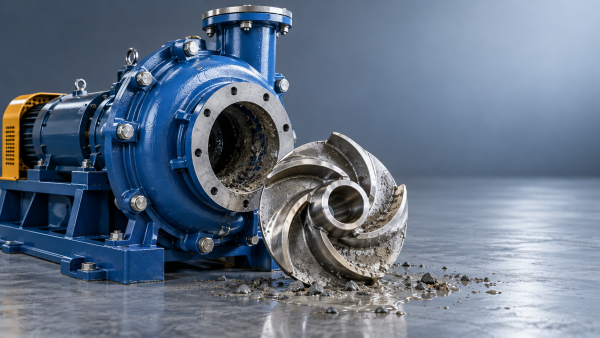
Abrasion complicates matters further. At an impeller inlet, elbow, valve seat, or discharge area, particle impact may wear away metal and repeatedly disturb the passive film. This combined action is commonly called erosion-corrosion. Selecting material on corrosion resistance alone—or hardness alone—can leave an important part of the problem unresolved.
Start with the slurry, not the material catalog
Before comparing stainless steel with a lower-cost option, describe the duty as it actually operates. Average process values are useful, but equipment often fails because of excursions, shutdown conditions, or localized flow that an average does not capture.
- Chloride concentration: Determine the concentration in the liquid phase and how much it varies. Evaporation, recirculation, or process upsets can increase local concentrations.
- Temperature and pH: Higher temperature generally increases the risk of chloride attack. Acidity and chemical additions can also change material compatibility.
- Solids properties: Record particle size, shape, hardness, concentration, and settling tendency. Angular particles and high-impact flow can be especially damaging.
- Flow conditions: Identify velocity, turbulence, directional changes, and areas where particles strike surfaces directly.
- Operating pattern: Note continuous duty, idle periods, flushing practices, and whether solids remain in the equipment during shutdown.
- Failure history: Examine where and how existing parts fail. Uniform thinning, isolated pits, cracking, and worn edges point toward different mechanisms.
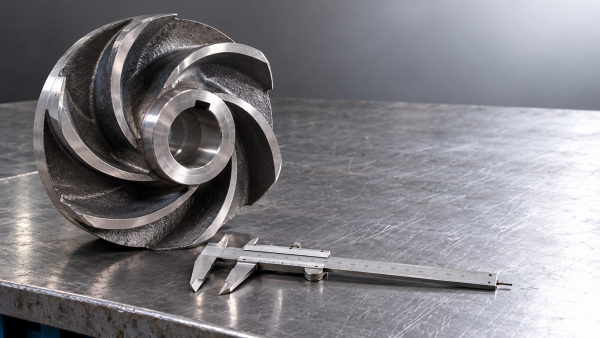
A sample of the failed component can be more informative than a description such as “the pump wore out.” Broad, smooth material loss may suggest abrasive wear, while deep pits beneath a deposit suggest a localized corrosion problem. Both can occur on the same part, so a formal failure analysis is worthwhile when the consequences are significant.
Which stainless steel grades deserve consideration?
“Stainless steel” is a family of alloys, not a single level of protection. The grade, product form, weld quality, surface condition, and specific operating environment all influence performance. The following comparison is a starting point for discussion with a materials specialist, not a compatibility guarantee.
One common mistake is treating 316 as a universal answer to chlorides. It can be a sensible upgrade from 304, but deposits, elevated temperature, low pH, and concentrated chlorides may still push it beyond acceptable service conditions. Likewise, a stronger duplex alloy is not necessarily the best wear material for every slurry.
Also check the material of individual components. An assembly described as stainless may contain different alloys in the shaft, fasteners, weld filler, valve trim, or wear rings. A vulnerable crevice or incompatible component can limit the life of the whole assembly.
How to decide whether the premium pays back
Compare options over a defined operating period rather than stopping at the equipment quote. For each realistic material choice, estimate the costs that change because of the material decision:
- Installed cost: Include the component, fabrication, installation, and any changes needed to fit or support it.
- Expected replacement and repair: Use site history, comparable duty data, or supplier-supported estimates. Show the range if service life is uncertain.
- Shutdown impact: Account for labor, access, lost production, cleaning, and restart—not just the price of a spare part.
- Inspection requirements: Include the effort needed to monitor wall thickness, deposits, leakage, or cracks.
- Failure consequences: Consider containment, safety, and environmental exposure where relevant.
A simple comparison is: total ownership cost = installed cost + expected maintenance and replacement costs + expected downtime and failure costs. For a longer evaluation period, the timing of future costs may also matter. Keep the assumptions visible so that a convenient service-life estimate does not become an unsupported promise.
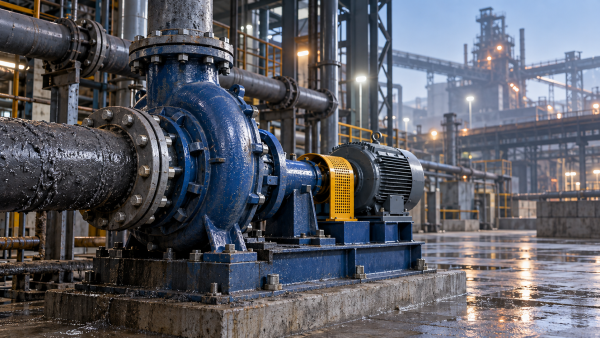
Consider a transfer pump that is inexpensive to replace but located in a line that is difficult to isolate. Even a moderate increase in component life could be valuable if it reduces disruptive shutdowns. Conversely, an accessible wear sleeve replaced during planned maintenance may not justify a costly alloy if abrasion—not corrosion—is driving its replacement interval.
If the result changes dramatically with a small adjustment to assumed service life, the decision is uncertain. That is a good reason to request evidence from a comparable process, run a controlled material trial, or inspect a test component before committing to a full installation.
When an alternative may be the better investment
Stainless steel can provide corrosion resistance and structural strength in one component, but it is not the only way to manage chloride-bearing slurry. Depending on pressure, temperature, particle impact, and compatibility with the liquid, alternatives may include:
- Rubber-lined components: Often considered for abrasive slurry duties, provided the liner is compatible with the chemicals and operating temperature. Liner damage and penetration at edges or joints must be assessed.
- Polymer-lined or polymer components: May provide useful chemical resistance in appropriate services, but pressure, temperature, mechanical strength, and abrasion limits matter.
- Hard wear alloys: Can be useful where particle abrasion dominates, although hardness alone does not ensure resistance to chloride corrosion.
- Ceramic wear parts: May suit selected high-wear locations, but impact, thermal shock, and joining requirements need review.
- Replaceable liners, sleeves, or inserts: Concentrate wear in parts designed for maintenance rather than requiring replacement of an entire casing or valve body.
Hybrid construction is often worth investigating. A component may use one material for structural support, another for corrosion protection, and a replaceable part at the highest-wear location. The interfaces are critical: a lining is only useful if it remains intact and prevents the slurry from reaching a vulnerable substrate.
What operating changes can protect the investment?
Material selection does not happen in isolation. Flow design and maintenance practices can influence how long any material lasts.
Avoid unnecessary turbulence and direct particle impact where the equipment layout allows it. At the same time, do not reduce flow so far that solids settle and create deposits or blockages. The right velocity is application-specific: it must balance solids transport against wear.
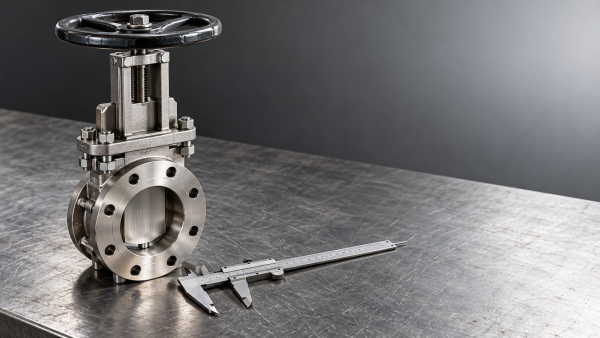
Pay attention to shutdowns. If slurry settles inside a casing or valve, the resulting deposit can create a crevice and hold concentrated liquid against the metal. An appropriate flushing procedure may reduce that risk, provided the flushing fluid and process are compatible with the equipment. Drainage and access for cleaning also deserve consideration during design.
For welded stainless assemblies, specify suitable fabrication and post-fabrication treatment where required. Poor weld quality, surface contamination, and untreated heat tint can compromise corrosion performance. The material supplier and fabricator should understand the intended chloride exposure, not just the nominal grade.
Questions to settle before placing an order
Ask the equipment supplier to identify every slurry-wetted material, including welds, trim, fasteners, liners, and seals. Share the process temperature range, liquid chemistry, solids characteristics, cleaning chemicals, and expected operating cycles. If the recommendation relies on a comparable installation, check how closely its conditions match yours.
Then agree on an inspection plan. Accessible points for thickness measurement, removable wear parts, and a record of where deposits accumulate can make the difference between a controlled replacement and an unexpected failure. Inspection intervals should reflect the risk and observed condition rather than an assumed universal schedule.
Stainless steel is worth the extra cost for chloride slurry when the selected grade and design address the actual corrosion mechanisms, and the expected reduction in downtime or replacement cost outweighs the premium. When particle wear dominates, or when aggressive chemistry defeats the proposed grade, another material or a replaceable lining may be the more practical choice. The strongest decision is the one supported by process data, a realistic cost comparison, and a plan to verify performance in service.
Related Information
 Nov 02, 2026
Is Stainless Steel Worth the Extra Cost for Chloride Slurry?
Is stainless steel worth the extra cost for chloride-bearing slurry? Compare grades, wear risks, and lifecycle costs to find the best-value solution.- Nov 02, 2026
How to Check Aftermarket Slurry Pump Parts for Fit
How can I check whether aftermarket slurry pump parts will fit my existing pump? Discover the key dimensions, interfaces and materials to verify before ordering. - Nov 01, 2026
What Dimensions Should You Confirm for a Custom Knife Gate Valve?
What dimensions must I confirm before ordering a custom knife gate valve? Explore flange, port, face-to-face and clearance requirements to avoid costly fit issues. - Nov 01, 2026
Can a Chinese Slurry Pump Replace an Imported One in a Steel Plant?
Can a Chinese-made slurry pump replace an imported unit in a steel plant? Discover how to assess performance, fit, wear and costs before making the switch.

{item.title}
Get a Quote
Please leave your information and email address, and we will contact you as soon as possible.