
What to Expect in Delin’s OEM Slurry Pump Custom Order Process
What to Expect in Delin’s OEM Slurry Pump Custom Order Process
A custom slurry pump order is rarely a simple matter of selecting a model, confirming a price, and waiting for shipment. In mining, mineral processing, dredging, power generation, metallurgy, chemical processing, and wastewater applications, the pump is expected to handle a specific slurry under specific operating conditions. A unit that appears suitable on a general curve may still create problems if the solids characteristics, suction conditions, material compatibility, sealing arrangement, or maintenance constraints are not fully addressed.
For this reason, the Delin OEM slurry pump custom order process should be understood as an engineering and procurement workflow rather than a standard catalog transaction. The objective is not merely to obtain a pump with requested dimensions. It is to establish a technically workable configuration, clarify commercial boundaries early, and reduce the risk of changes after manufacturing has started.
The process typically moves from duty clarification to design confirmation, component selection, manufacturing, inspection, and delivery coordination. At each point, the quality of the information exchanged affects cost, lead time, spare-parts planning, and the likelihood that the equipment will fit the actual system.
The order begins with the operating duty, not the pump nameplate
The first technical discussion should focus on what the pump must do in the process. Flow rate and head are essential, but they are not enough for slurry service. The supplier will normally need to understand whether the quoted duty is continuous, intermittent, variable, or based on a future expansion case. A pump selected only for one nominal point can be difficult to operate efficiently when plant conditions move away from that point.
Slurry details matter just as much. Useful inputs include solids concentration, particle size distribution, particle shape, specific gravity, abrasiveness, pH, temperature, and whether solids settle during shutdown. Coarse, angular material behaves differently from fine tailings, even where the stated solids percentage is similar. Corrosive slurry may also require a different material strategy from an abrasive but chemically neutral slurry. When process data is incomplete, that should be identified openly rather than replaced with assumptions that later become design commitments.
System-side information is equally important: suction tank level, pipe diameter and routing, static lift, discharge pressure, valve arrangement, available motor power, site voltage, installation altitude, and local environmental conditions. These details help determine whether the proposed pump can operate with adequate suction conditions and whether the drive package matches the plant interface.
A well-prepared request for quotation should therefore include process drawings where available, the required operating points, a description of the slurry, expected annual running hours, and any constraints on footprint or maintenance access. This preparation can shorten the clarification cycle and make quotes from different suppliers more comparable.
Hydraulic selection is a trade-off between duty, wear, and operating margin
Once the duty is defined, hydraulic selection determines the basic pump size, impeller diameter, speed, and expected operating range. Procurement reviews sometimes focus narrowly on the quoted flow and head, but the more useful question is whether the selected duty falls within a sensible part of the pump curve. Operation too far from the preferred range can increase vibration, recirculation, wear, heat generation, and energy use. The acceptable range depends on the pump design and the actual service, so it should be discussed against the manufacturer’s curve rather than treated as a universal rule.
There may also be a choice between a pump operating at higher speed with a smaller hydraulic end and a larger unit at lower speed. Neither option is automatically less expensive over the equipment’s life. A smaller initial package can be attractive in a capital budget, while lower-speed operation may be preferable where abrasive wear and maintenance interruption are major concerns. The right comparison includes the expected wear environment, power demand, maintenance labor, stockholding requirements, and the consequences of unplanned downtime.
At this stage, a buyer may review a configuration such as the DHE Slurry Pump in relation to the required duty rather than treating a product family name as proof of suitability. The relevant questions remain practical: which wet-end materials are proposed, what drive arrangement is included, how is sealing handled, and which components are expected to be consumable in the stated service?
Material and sealing choices should be tied to the actual failure mechanism
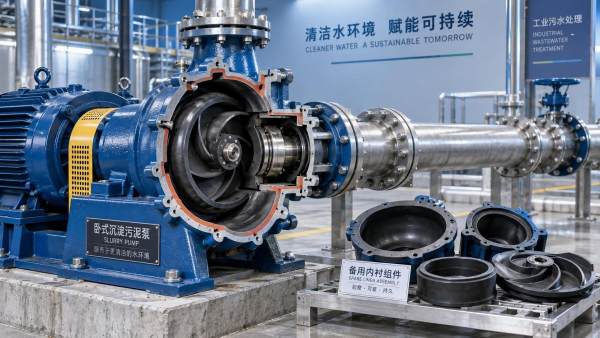
Custom slurry pump discussions often become most important at the wet end. Liners, impellers, throatbushes, frame plates, and other slurry-contact components may be supplied in wear-resistant metal, elastomer, or other materials suited to the application. The best selection depends on the dominant damage mechanism. Abrasion, corrosion, erosion velocity, particle impact, temperature, and chemical exposure do not affect materials in the same way.
It is risky to request a particular alloy or rubber simply because it performed well in another plant. The earlier application may have had different solids, temperature, or chemistry. Instead, the order review should record why a material is being recommended and what operating assumptions support that recommendation. If laboratory analysis of slurry chemistry is unavailable, that limitation should be noted. It is more useful to identify uncertainty before release than to discover it after wet-end parts show unexpected wear.
Seal selection deserves the same attention. Depending on the application, the arrangement may involve packing, an expeller-based system, mechanical sealing, or another configuration. The decision is linked to leakage tolerance, gland-water availability, suction conditions, operating pressure, environmental rules at the site, and maintenance capability. A more complex seal arrangement may reduce one operating concern while adding support-system requirements. The commercial quote should clearly state what is supplied with the seal system and what remains the responsibility of the package integrator or end user.
What should be confirmed before a custom order is released
The most costly misunderstandings often arise after a purchase order has been issued but before production is complete. A formal technical confirmation step is therefore valuable. It should convert earlier discussions into a controlled specification that identifies the exact scope and prevents a quotation from being interpreted too broadly.
- Pump model, hydraulic configuration, impeller diameter, rotational speed, and quoted duty point.
- Wet-end and structural materials, including any requested alternatives for corrosive or abrasive service.
- Drive scope: motor rating, voltage, frequency, enclosure requirements, coupling, belts, gearbox, baseplate, and guards where applicable.
- Seal arrangement, auxiliary water or flushing requirements, and any piping or instruments included in supply.
- Connection sizes, flange drilling, orientation, dimensions, lifting provisions, and installation limitations.
- Documentation, inspection hold points, testing requirements, packing method, spare parts, and shipment terms.
This is also the time to distinguish between “included,” “available as an option,” and “to be supplied by others.” For example, a pump assembly, motor, base, control panel, instrumentation, and field piping may be discussed in the same meeting but not necessarily belong to the same contractual scope. Clear boundaries are more valuable than a low initial quote that later accumulates exclusions.
Cost evaluation should extend beyond the purchase price
A custom order can look expensive or economical depending on what is included in the comparison. Procurement decisions should separate the equipment price from the ownership factors that vary by project. These may include energy consumption, expected wet-end replacement frequency, availability of local or site-held spares, planned shutdown windows, seal support needs, transport packaging, and commissioning resources.
The cheapest hydraulic configuration is not always the lowest-cost operating choice. Conversely, an elaborate material or seal specification is not automatically justified if the process is mild and maintenance access is easy. A useful review asks which proposed features address a documented risk and which are simply precautionary additions. This helps prevent both under-specification and unnecessary cost escalation.
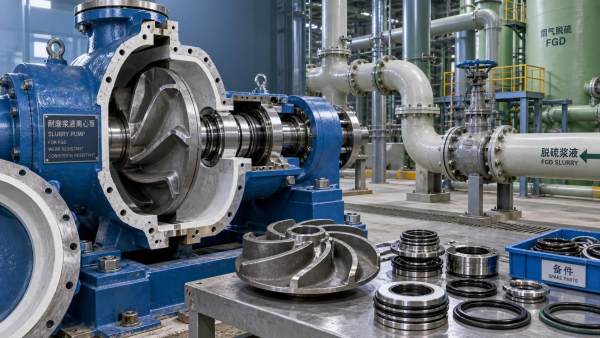
Spare parts require particular discipline. A recommended start-up or two-year spare package should be examined part by part. Wear components, bearings, seals, gaskets, and critical rotating parts do not carry the same consequence of failure. The sensible stock level depends on delivery lead time, plant criticality, storage conditions, and whether multiple installed pumps share common parts. Requesting an interchangeable-parts list can be more useful than ordering a generic spare package without considering the installed fleet.
Manufacturing visibility and quality inspection need agreed checkpoints
After technical release, the order moves into manufacturing planning and procurement of materials and bought-out components. Lead time may be influenced by casting schedules, selected material grades, motor availability, special seal components, machining capacity, and required inspection activities. A realistic schedule should identify the point at which design changes will affect cost or delivery. Late requests for a different motor standard, flange arrangement, or material can have consequences beyond the affected component.
Inspection expectations should be agreed in advance rather than raised immediately before shipment. Depending on the project and contract, buyers may request dimensional checks, material documentation where specified, assembly inspection, performance testing, witness arrangements, or photographs of packing. The appropriate level of oversight depends on application criticality and contractual requirements. Not every pump order needs the same inspection plan, but every order benefits from knowing what evidence will be available at handover.
Where testing is requested, the test conditions should be understood carefully. Water-based performance testing, for example, is not identical to operation with a particular abrasive slurry. It can confirm aspects of hydraulic performance under the agreed test method, but slurry behavior still depends on the site process. The documentation should make that distinction clear.
Delivery planning starts before the equipment is ready to ship
Shipping coordination is more than arranging freight. The receiving site may need overall dimensions, weights, center-of-gravity information, packing lists, preservation requirements, and lifting instructions before the equipment arrives. For international orders, document requirements and transport terms should be aligned early with the purchasing contract and destination requirements. If a pump will remain in storage before installation, preservation procedures and the recommended checks before commissioning should be requested with the final document package.
Commissioning problems are often traced to installation conditions rather than pump manufacture. Pipe strain, an inadequately supported suction line, incorrect rotation, blocked flush lines, poor alignment, or a system curve different from the original design basis can all affect performance. It is sensible to retain the approved data sheet, outline drawing, operating curve, and installation instructions with the project records. Those documents are also useful when future replacements or capacity changes are considered.
A controlled process creates a more usable purchasing decision
The Delin OEM slurry pump custom order process is most effective when technical and commercial decisions develop together. A reliable order is not defined only by a confirmed model number. It is defined by an agreed duty basis, a material and seal rationale, clear supply scope, realistic inspection requirements, and a delivery plan that fits the installation schedule.
Before releasing a purchase order, it is worth checking one final point: can every major line item in the quotation be traced back to an operating need, interface requirement, or documented project constraint? If the answer is unclear, further clarification is usually less costly than resolving a mismatch after the pump has entered production or reached site.
Related Information
 Oct 04, 2026
When custom slurry pumps make sense for nonstandard process duty
Custom Slurry Pumps reduce wear, blockage, downtime, and lifecycle costs in demanding nonstandard process duties. Learn when tailored pump engineering delivers measurable value.- Oct 03, 2026
Selecting pumps for flue gas desulfurization systems with gypsum slurry
Flue Gas Desulfurization Systems pump selection guide: optimize gypsum slurry handling with wear-resistant materials, reliable sealing, and lower lifecycle costs. - Oct 02, 2026
How abrasive slurry handling reduces premature impeller wear
Abrasive Slurry Handling reduces premature impeller wear through optimized velocity, material selection, suction control, and inspection strategies. Discover practical maintenance tips. - Oct 01, 2026
How mining slurry pumps affect downtime in high-wear circuits
Mining Slurry Pumps can make or break uptime in high-wear circuits. Learn how smarter selection, wear materials, and maintenance reduce failures and lifecycle costs.


Get a Quote
Please leave your information and email address, and we will contact you as soon as possible.