
Planning a River Sediment Removal Project: How to Size a Dredging Pump
Planning a River Sediment Removal Project: How to Size a Dredging Pump
Planning a river sediment removal project requires more than estimating excavation volume. Project managers must match pump capacity, solids handling, pipeline resistance, and operating conditions before mobilization.
The central decision is not simply choosing the largest available unit. A properly sized dredging pump moves the required sediment volume reliably while controlling fuel use, wear, downtime, and schedule risk.
For most projects, pump sizing should begin with production targets, sediment characteristics, discharge distance, and elevation changes. These inputs establish a defensible technical basis for equipment selection and budgeting.
Start With the Project Outcome, Not the Pump Catalog
Before comparing equipment models, define the removal objective in measurable terms. Confirm whether the project aims to restore navigation depth, improve flood conveyance, remove contamination, or protect infrastructure.
Each objective affects acceptable production rates, environmental controls, working windows, and disposal requirements. A navigation project may prioritize fast volume removal, while contaminated sediment work demands tighter slurry management.
Calculate the total in-situ sediment volume using survey data, cross sections, and design elevations. Then distinguish between in-situ cubic meters and the larger slurry volume transported through the pipeline.
Production targets should reflect the actual construction calendar rather than ideal pump capacity. Account for weather delays, environmental restrictions, maintenance periods, crew shifts, and equipment repositioning between dredging areas.
A useful planning question is: how many cubic meters of settled sediment must leave the river each operating hour? This becomes the required solids production rate.
For example, a project removing 30,000 cubic meters over 30 effective production days needs approximately 1,000 cubic meters per day. The hourly requirement depends on planned operating hours.
Do not assume twenty-four-hour production unless permits, staffing, access, noise limits, and disposal operations support it. Many river projects achieve their planned output during shorter effective shifts.
Once the solids target is known, engineers can estimate the required slurry flow rate. This connects the construction schedule directly to pump capacity and pipeline design.
Understand the Sediment Before Selecting Capacity
Sediment type is often the largest source of sizing error. Fine silt, sand, gravel, clay, organic debris, and mixed material behave very differently inside a dredging system.
Collect representative samples from multiple river locations and depths. Historical data is useful, but recent sampling is essential because riverbed deposits can vary significantly across short distances.
Particle size distribution determines whether a pump can pass solids safely and whether the pipeline velocity will prevent deposition. Coarse particles require larger clearances and greater energy.
Fine silt may appear easy to pump, yet cohesive material can create operational problems. Clay-rich sediment may resist agitation, form plugs, or require cutterhead and water management adjustments.
Identify the maximum particle size, not only the average size. Occasional cobbles, branches, trash, and construction debris can cause blockage, impeller damage, or unacceptable maintenance interruptions.
Solids concentration is equally important. Pumping too much water reduces production efficiency, while overly dense slurry can overload the pump, increase pipe wear, and create unstable flow.
Projects commonly express slurry concentration by volume or weight. The selected measure must remain consistent throughout calculations, equipment discussions, and contractor performance requirements.
For planning purposes, estimate a realistic operating concentration rather than a laboratory maximum. Field conditions, dredge operator skill, suction depth, and sediment consistency all affect delivered concentration.
When sediment data remains uncertain, build a conservative range into the procurement specification. This reduces the risk of selecting equipment that performs well only under favorable conditions.
Convert Required Solids Production Into Slurry Flow
A dredging pump for river sediment removal project must deliver enough slurry flow to meet the solids production target at a concentration that remains pumpable and pipeline-stable.
The basic relationship is straightforward: solids production equals slurry flow multiplied by the volumetric solids concentration. However, applying the relationship requires realistic assumptions about operational efficiency and material behavior.
Suppose a project needs 125 cubic meters of sediment per hour. At a planned twenty percent volumetric solids concentration, the system requires roughly 625 cubic meters of slurry per hour.
That theoretical result should not become the final pump duty point. Add an appropriate operating margin for density variations, production fluctuations, pipeline wear, and unavoidable field inefficiencies.
Oversizing is not automatically beneficial. Excessive flow can increase turbulence, fuel use, erosion, and disposal water handling requirements while providing little additional sediment production.
Undersizing has more visible consequences. The project may miss production targets, require longer shifts, create contractor disputes, or need expensive supplemental equipment after mobilization.
Specify the required flow as an operating range, not a single number. A range gives the contractor flexibility to adjust to changing sediment conditions without losing control of performance expectations.
Also define the expected slurry density range and solids throughput separately. Flow alone can be misleading because a high-volume water stream may show impressive pump output without removing enough sediment.
Calculate Total Dynamic Head Across the Entire System
Flow capacity is only half of pump sizing. The pump must also generate sufficient total dynamic head to overcome elevation, pipeline friction, fittings, discharge conditions, and system losses.
Static head is the vertical difference between the dredging water level and the final discharge point. It may be modest in flat river projects but substantial at elevated disposal sites.
Friction head comes from moving slurry through the discharge pipeline. It rises with pipeline length, flow rate, pipe roughness, slurry density, and the number of bends or restrictions.
Pipeline diameter must be considered together with pump flow. A smaller pipe increases velocity and friction, while an oversized pipe can allow solids to settle when velocity falls too low.
Use slurry-specific hydraulic calculations rather than clean-water assumptions. Sediment changes friction behavior, and clean-water curves can substantially understate the head required for actual dredging operations.
Include losses from hose sections, valves, reducers, elbows, floating pipeline joints, booster stations, and discharge structures. Seemingly minor components can materially affect the final duty point.
Pipeline routing should be established early. A route that avoids one environmental buffer but adds several hundred meters of pipe may require a different pump or additional booster capacity.
Confirm whether discharge elevation changes during operation. Disposal cells can rise as they fill, and river water levels may fluctuate, changing the pump head requirement over the project duration.
Develop a system curve showing head requirements at different flow rates. Then compare it with the pump performance curve to identify stable, efficient, and achievable operating zones.
The preferred operating point should not sit at the extreme end of the curve. Allow headroom for wear, slurry variability, longer temporary pipeline sections, and modest changes in operating conditions.
Check Pipe Velocity, Suction Conditions, and Booster Needs
Pipeline velocity must remain high enough to keep solids suspended. If velocity drops below the critical deposition threshold, sediment can settle and create costly blockages or pipeline cleaning work.
The required velocity depends on particle size, density, concentration, and pipe diameter. Coarse sand and gravel generally require higher transport velocity than fine silt or organic material.
Higher velocity is not always safer. It raises friction losses, accelerates pipe wear, consumes more power, and can increase operating costs across long-distance discharge systems.
Balance transport reliability against energy consumption through hydraulic modeling and field experience. The right operating range is usually more valuable than a single maximum-performance pump rating.
Suction conditions deserve equal attention. Excessive suction lift, poor submergence, air entrainment, or restrictive suction piping can reduce pump performance and contribute to cavitation damage.
Review net positive suction head requirements with the manufacturer and compare them against site conditions. Cavitation can destroy impellers and liners while reducing production before failure becomes obvious.
Booster pumps become necessary when the main dredge pump cannot maintain the required flow at total system head. They are common on long pipelines or elevated disposal routes.
Adding boosters should be evaluated as a system decision, not a last-minute remedy. Their location, power source, control logic, access, and maintenance requirements affect project cost and reliability.
A properly engineered booster arrangement can reduce strain on the primary pump and stabilize production. A poorly coordinated arrangement can cause pressure surges, uneven loading, and operational confusion.
Select a Pump Built for Actual River Conditions
After establishing the flow and head range, select equipment based on solids-handling capability, wear resistance, maintainability, and compatibility with the planned dredging method.
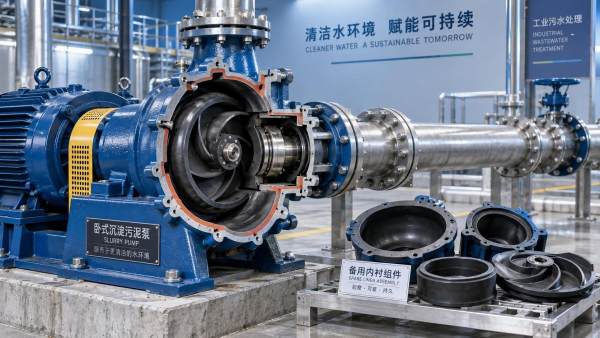
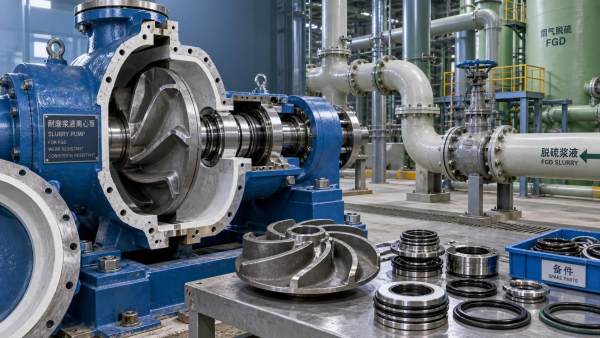
Open impeller design, passage size, casing construction, liner material, and shaft sealing arrangements all influence how the pump handles abrasive sediment and intermittent debris.
Abrasion resistance matters most when the sediment contains sand, gravel, or angular particles. Wear components should be accessible, available locally where possible, and predictable in replacement cost.
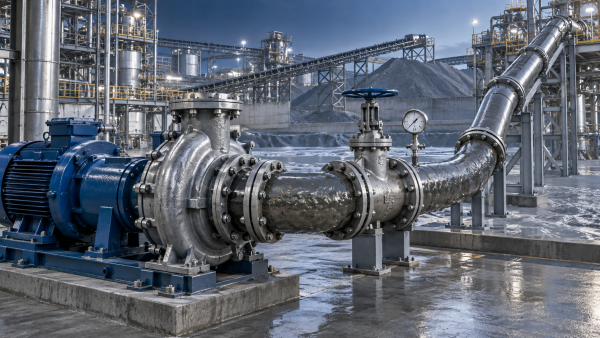
For many river applications, a purpose-built unit such as the Type DG dredge pump should be evaluated against the project duty point, particle size, and maintenance plan.
Do not select a pump solely by inlet diameter or motor rating. Two pumps with similar physical dimensions can deliver very different results depending on impeller geometry and hydraulic design.
Ask suppliers for performance curves covering the anticipated slurry conditions. Confirm whether published figures represent water testing or slurry service, and request assumptions used for correction factors.
Review the available power source early. Diesel-driven systems offer mobility, while electric systems may reduce operating costs where grid capacity, cable routing, and site infrastructure are available.
Consider equipment access for inspection and replacement. A pump that meets performance requirements but requires difficult lifting, long shutdowns, or specialized service can undermine the schedule.
Spare parts strategy should be defined before mobilization. Critical spares may include impellers, liners, seals, bearings, gaskets, and tools needed for planned wear-component replacement.
Build Operating Costs and Risk Into the Decision
Project managers should compare alternatives using total operating cost, not purchase price alone. Fuel or electricity, labor, wear parts, pipeline replacement, maintenance, and downtime can dominate lifecycle cost.
A lower-cost pump may be attractive in an initial budget, yet become expensive if it operates far from its efficient range or requires frequent unplanned maintenance.
Estimate energy consumption at the expected duty point rather than using nameplate power. Actual power draw varies with flow, head, slurry density, impeller wear, and operating practices.
Wear costs should be linked to sediment abrasiveness and expected operating hours. Request historical wear data from comparable applications, but verify that the material conditions are genuinely similar.
Schedule risk also has a financial value. Missing an environmental work window, delaying navigation reopening, or extending river access restrictions can cost more than upgrading pumping capacity.
Set practical acceptance criteria in contracts. These may include minimum solids production, maximum pipeline blockage frequency, acceptable fuel use, maintenance response times, and reporting requirements.
Instrumentation improves control and dispute avoidance. Flow meters, pressure gauges, density monitoring, engine data, and production logs provide evidence of actual operating conditions.
Real-time pressure trends can identify developing blockages, excessive wear, or altered pipeline conditions. This allows operators to correct issues before a full shutdown occurs.
Environmental controls must be included in the operating plan. Turbidity limits, fish windows, noise restrictions, spill prevention, and disposal-water treatment may constrain pump operation and production rates.
Use a Practical Sizing Workflow Before Procurement
Begin with bathymetric survey data and a verified sediment volume. Divide the work into zones when sediment composition, access, depth, or discharge routing changes across the project area.
For each zone, define the required solids production rate based on realistic effective operating hours. Include weather allowances and permitted work periods in the construction schedule.
Obtain sediment samples and characterize particle size, density, abrasiveness, debris content, and cohesiveness. Treat uncertain or variable deposits as a range, not a fixed material description.
Develop preliminary slurry concentration assumptions with input from experienced operators or dredging engineers. Then calculate the slurry flow range needed to achieve the solids production target.
Lay out the complete discharge pipeline, including floating sections, shore crossings, bends, valves, elevation changes, booster locations, and the final discharge arrangement.
Calculate total dynamic head at several flow rates and sediment conditions. Review minimum and maximum operating cases rather than relying exclusively on a single design scenario.
Match the required duty range to pump curves and verify that the selected unit operates efficiently. Confirm pipe velocity, suction conditions, driver power, and available maintenance access.
Ask equipment suppliers to document their assumptions, recommended operating range, wear-part expectations, and required auxiliaries. This makes proposals comparable and strengthens procurement decisions.
Before final award, conduct a risk review covering debris, changing river levels, pipeline damage, disposal constraints, spare parts, permitting, and contingency equipment availability.
Common Sizing Mistakes That Put River Projects Behind Schedule
The most common mistake is basing selection on sediment volume alone. Volume does not reveal whether the material can be pumped at the desired concentration or through the proposed pipeline.
Another frequent error is using clean-water pump curves without applying slurry corrections. This can result in insufficient head, reduced flow, and disappointing production after startup.
Some teams underestimate pipeline length because temporary routing details are unresolved. Every added bend, crossing, elevation change, and discharge extension should be included before selection.
Ignoring debris risk is equally costly. Rivers often contain branches, trash, wire, stones, and legacy construction material that can damage equipment or obstruct suction systems.
Projects also fail when they specify peak theoretical production as the contractual baseline. Effective production must account for setup, repositioning, inspections, maintenance, and normal operating interruptions.
Finally, avoid treating pump selection as an isolated mechanical purchase. The dredge, pipeline, power source, discharge site, monitoring system, and crew must function as one coordinated system.
Conclusion: Size for Reliable Production, Not Maximum Flow
The best dredging pump for river sediment removal project is the one that meets required solids production across actual sediment, pipeline, and site conditions with manageable operating risk.
Project managers should begin with the removal schedule, convert solids targets into realistic slurry flow, calculate total dynamic head, and verify transport velocity and suction performance.
Equipment selection should then consider abrasion resistance, maintainability, power availability, spare parts, and lifecycle cost. This approach produces clearer procurement decisions and more reliable field performance.
When hydraulic calculations, sediment data, and operating constraints are aligned early, the dredging system becomes easier to manage, less prone to downtime, and more likely to complete on schedule.
Related Information
 Oct 04, 2026
When custom slurry pumps make sense for nonstandard process duty
Custom Slurry Pumps reduce wear, blockage, downtime, and lifecycle costs in demanding nonstandard process duties. Learn when tailored pump engineering delivers measurable value.- Oct 03, 2026
Selecting pumps for flue gas desulfurization systems with gypsum slurry
Flue Gas Desulfurization Systems pump selection guide: optimize gypsum slurry handling with wear-resistant materials, reliable sealing, and lower lifecycle costs. - Oct 02, 2026
How abrasive slurry handling reduces premature impeller wear
Abrasive Slurry Handling reduces premature impeller wear through optimized velocity, material selection, suction control, and inspection strategies. Discover practical maintenance tips. - Oct 01, 2026
How mining slurry pumps affect downtime in high-wear circuits
Mining Slurry Pumps can make or break uptime in high-wear circuits. Learn how smarter selection, wear materials, and maintenance reduce failures and lifecycle costs.

Get a Quote
Please leave your information and email address, and we will contact you as soon as possible.