
Corrosion-Resistant Pumps for Acid Mine Drainage: Materials That Last
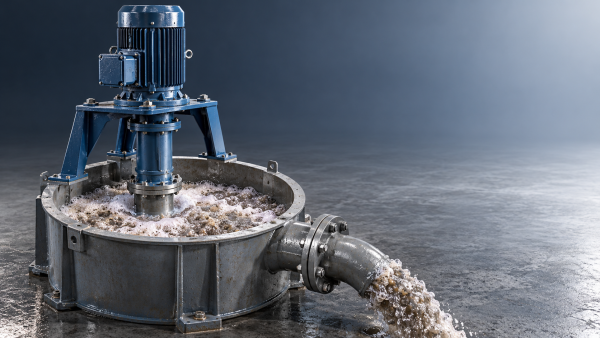
Acid mine drainage can combine very low pH with suspended mineral particles, dissolved iron, sulfates, chlorides, and other metal-bearing compounds. A pump that performs acceptably in clean acidic water may fail quickly when abrasive solids and chemical attack occur together. Material selection therefore has to consider the entire wetted path, including the casing, impeller, wear liners, shaft sleeve, fasteners, seal faces, elastomers, cable entries, and any exposed lifting hardware.
A corrosion resistant pump for acid mine drainage should be specified from representative liquid chemistry and solids data rather than from pH alone. Two streams with similar pH can behave very differently: one may contain chlorides that challenge certain stainless alloys, while another may carry sharp silica particles that rapidly remove protective coatings and erode soft polymer surfaces. Temperature, oxidation-reduction conditions, dissolved oxygen, flow velocity, and periods of stagnant exposure also affect service life.
Start with the Actual Drainage Chemistry
Water sampling should distinguish between dissolved and total metal concentrations, because solids loading influences both wear rate and pump hydraulic behavior. Field samples taken only from a calm surface can understate the solids concentration reaching a sump pump during rainfall, dewatering activity, or sediment disturbance. Samples should be collected during representative operating conditions and analyzed promptly where oxidation-sensitive constituents are involved.
Useful specification inputs include pH, temperature range, conductivity, chloride concentration, sulfate concentration, total dissolved solids, suspended solids concentration, particle size distribution, density, and settling behavior. The presence of ferric iron deserves particular attention. Ferric-bearing acidic liquids can be strongly oxidizing and may form deposits as conditions change. These deposits can block narrow passages, interfere with seal flushing arrangements, and upset float or level-sensing devices.
Acid strength alone does not define corrosion severity. Dilute sulfuric acid, for example, can be compatible with some materials within limited temperature and concentration ranges, yet entrained solids may destroy a lining before chemical compatibility becomes the limiting factor. Conversely, a hard alloy may resist abrasion but show poor resistance to a particular chloride-bearing liquor. The selected material system must withstand the combined duty.
Wetted Materials and Their Limits
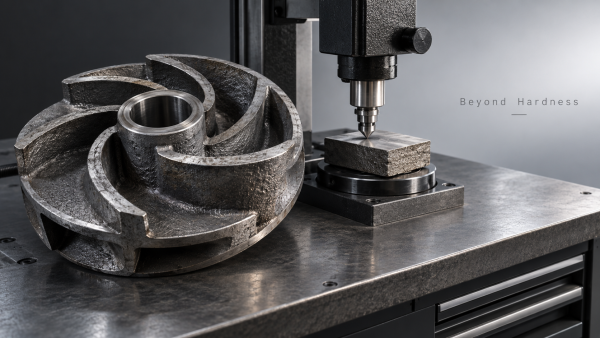
High-chromium white iron is widely used where abrasive slurry wear dominates. Its hard carbide structure can give strong resistance to particle erosion in impellers, liners, and casings. However, it is not a universal answer for acidic mine drainage. In aggressively acidic or oxidizing liquid, corrosion can undermine the matrix around the carbides, causing material loss that may be mistaken for purely abrasive wear. It is generally more suitable where chemistry is controlled or where the acidic exposure is less severe than the solids duty.
Duplex and super duplex stainless steels may offer useful resistance in some chloride-containing waters, but alloy choice must be verified against the actual acid chemistry, temperature, and crevice conditions. Stainless steel relies on a passive surface film. Deposits, stagnant pockets, low oxygen availability, chloride contamination, and dissimilar-metal contact can disturb that protection. A generic statement that a component is “stainless” is not enough to establish suitability.
Nickel-based alloys can be considered for demanding corrosive conditions, particularly where conventional stainless steels are vulnerable. Their application still requires a defined corrosion basis, because individual alloys differ in response to sulfuric acid, chlorides, reducing conditions, oxidizing conditions, and mixed contaminants. Costly alloy upgrades applied only to a casing can also be ineffective if the shaft sleeve, seal hardware, bolts, or discharge connection remain vulnerable.
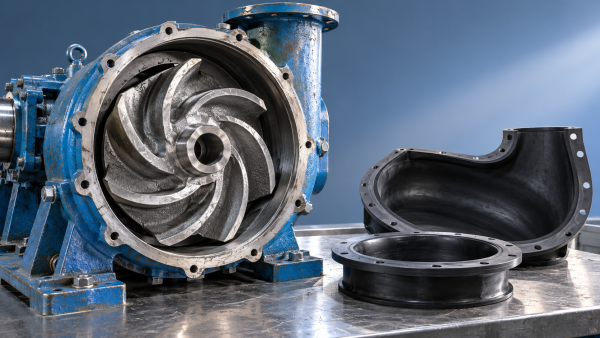
Rubber-lined and elastomer-lined pumps can perform well in certain acidic slurry services because the lining isolates the metal structure and can absorb particle impact. Natural rubber is often selected for fine abrasive slurries, while synthetic elastomers may be needed when chemical exposure, temperature, or oil contamination exceeds natural rubber limits. The lining must be evaluated for permeation, swelling, blistering, adhesion, and damage at edges. A small cut near an impeller eye or liner joint can allow liquid to reach the backing metal and initiate concealed corrosion.
Thermoplastics such as polyethylene, polypropylene, PVDF, and fluoropolymer-based materials are useful in selected low-solids acid duties. Their corrosion resistance can be excellent, yet they have mechanical limits that matter in mining installations. Temperature, pressure, shaft support, abrasion, impact resistance, and dimensional stability need careful review. A material that is chemically compatible in a static tank may not be appropriate for a high-velocity slurry pump passage.
Abrasion Changes the Material Decision
Particle size, hardness, shape, and concentration often matter as much as total solids concentration. Fine clay-rich material may increase viscosity and reduce hydraulic efficiency without causing severe cutting wear. Coarse angular silica can erode impeller vanes, throatbushes, bends, and valve seats rapidly. Particles that settle during shutdown create another risk: restarting against a compacted bed can overload the drive or prevent a submerged impeller from rotating freely.
Pump geometry should accommodate the largest credible particle and avoid unnecessary restrictions. Tight clearances can support hydraulic efficiency in clean liquid, but they are vulnerable in abrasive, scaling, or crystallizing service. Open or recessed impeller designs may tolerate solids better, though they can require greater power margin and may have lower efficiency at a given duty point. The acceptable trade-off depends on whether blockage, wear, corrosion, or energy use is the dominant operational exposure.
Wear is rarely uniform. The impeller eye, leading edges of vanes, suction liners, throat areas, and high-turbulence discharge regions often require the closest inspection. A pump may retain flow initially while head falls due to internal recirculation caused by wear. Tracking discharge pressure, flow where metering is available, current draw, vibration, and elapsed operating time can reveal deterioration before the unit loses the required duty point.
Sealing, Shafts, and Interfaces
Mechanical seals are often the most sensitive part of a corrosion-resistant pumping arrangement. Acidic solids can enter the seal chamber, scratch seal faces, crystallize during intermittent operation, or accumulate around springs and secondary elastomers. Seal face pairs, elastomer compounds, metal components, barrier or flush fluid, and seal plan must be compatible with the actual liquid. A seal selected only by pump size or pressure rating may be unsuitable.
Where the installation permits, a sealless magnetic-drive configuration can eliminate a conventional dynamic shaft seal. Its suitability depends on solids concentration, particle size, internal bearing materials, dry-running risk, and the possibility of magnetic coupling damage from accumulated metallic debris. For slurry-bearing acid mine drainage, a conventional slurry pump with a carefully designed seal arrangement or a submerged configuration may be more practical than forcing a sealless design into a solids service.
Submersible pumps remove some external suction and priming concerns, but their cable system, motor chamber, mechanical seals, and cooling arrangement become part of the chemical-resistance assessment. A unit such as the DS Series Submersible Slurry Pump should be assessed against liquid depth, solids characteristics, allowable temperature, motor protection arrangement, cable-jacket compatibility, and the consequences of a blocked discharge line. “Submersible” does not automatically mean suitable for continuous immersion in every acidic slurry.
Dissimilar-metal interfaces deserve attention in both pump construction and installation hardware. Bolts, washers, lifting chains, baseplates, guide rails, and pipe supports can create galvanic or crevice-corrosion sites when moisture and conductive acidic liquid are present. Isolating materials may reduce galvanic effects, but the isolation components themselves must retain strength and chemical resistance over time. Exposed carbon-steel fasteners can become a maintenance hazard even when the main wetted components are appropriate.
Hydraulic Duty Must Remain Inside the Stable Range
Corrosion-resistant materials cannot compensate for poor hydraulic selection. Operation far to the left of the pump’s preferred range can increase recirculation, local heating, vibration, radial loads, and wear near the impeller eye. Running too far to the right can reduce developed head, increase power demand, and accelerate velocity-related erosion. The system curve should include expected changes caused by pipe scaling, liner wear, valve position, liquid-level variation, and solids concentration.
Net positive suction head must be considered for surface-mounted equipment. Acid mine drainage sumps can have variable liquid levels, floating debris, air entrainment, and vortex formation. Cavitation damages metal surfaces and can remove protective linings, leaving the underlying material exposed. A larger suction line alone may not correct a poor sump layout. Submergence, inlet velocity, anti-vortex measures, sump geometry, and sediment control all affect suction conditions.
For a submersible arrangement, discharge piping still needs a clear assessment of static head, friction loss, slurry deposition, surge, and backflow. Check valves that are acceptable in clean water can jam or leak when solids settle on seating surfaces. Long horizontal discharge runs may require adequate velocity to limit deposition, balanced against erosion in bends and reducers. Abrupt diameter changes can create local turbulence and concentrated wear.
Fabrication Details That Determine Durability
Material grade on a purchase document is only one part of the finished condition. Cast components require sound metallurgy, controlled wall thickness, and inspection of areas prone to shrinkage or porosity. For lined components, adhesion preparation, lining thickness, joint detailing, curing, and edge protection affect resistance under slurry impact. Machined surfaces around seal chambers and liner fits need dimensional control because poor alignment can accelerate leakage or fretting.
Welded pipework and fabricated bases need appropriate weld procedures and post-fabrication cleaning. Surface contamination from carbon-steel tools can initiate rusting on stainless components. Crevices at lap joints, unsealed supports, and poorly drained structural pockets can hold acidic liquid after washdown or overflow. Drain paths and accessible inspection points are practical design features, particularly where deposits may conceal corrosion.
Coatings can be useful on external surfaces, concrete interfaces, and selected internal low-abrasion zones. They should not be treated as a substitute for a compatible base material in a severe abrasive acid stream. Coating specifications need preparation requirements, dry-film thickness, cure conditions, repair methods, and inspection criteria. Holiday testing may be appropriate for linings or coatings where a discontinuity would expose metal to conductive liquid, provided the test method does not damage the system.
Inspection Evidence and Change Control
Baseline documentation should record wetted materials, elastomer grades, seal configuration, impeller and liner clearances, performance duty, motor current, vibration condition, and the liquid data used for selection. This information makes later findings interpretable. Without a baseline, reduced capacity may be attributed to corrosion when the cause is a partially blocked line, altered system head, a worn valve, or a changed solids concentration.
During planned shutdowns, inspect components in the direction of flow. Look for localized thinning, under-lining corrosion, pitting near deposits, impeller eye damage, cracked linings, swollen elastomers, loss of fastener section, and scoring of seal-related parts. Remove deposits carefully enough to identify the surface condition beneath them. A thick iron-rich scale can hide attack, while aggressive mechanical cleaning can obscure the original failure mechanism.
- Record wall-thickness readings at repeatable locations on casings, elbows, and high-velocity pipe sections rather than relying only on visual appearance.
- Compare impeller diameter and vane condition with the original dimensional record when reduced head or increased running time is observed.
- Examine cable entries, lifting points, guide systems, and external fasteners after any overflow, sump upset, or prolonged exposure to acidic spray.
- Investigate chemistry changes before substituting a new alloy or lining; a change in drainage source can invalidate the original material basis.
Replacement parts should preserve the intended material system. An apparently equivalent seal elastomer, bolt grade, liner compound, or shaft sleeve can alter compatibility substantially. Part identification, material certificates where required by the project specification, and controlled interchangeability reduce the chance that a temporary repair introduces a hidden weak point.
Reliable acid mine drainage pumping comes from matching materials, hydraulic design, sealing, fabrication quality, and inspection evidence to the actual stream. When those elements are reviewed together, corrosion and abrasion become measurable engineering conditions rather than unexplained recurring failures.
Related Information
 Oct 24, 2026
How Much Should a Froth Pump Be Oversized for Flotation Concentrate?
How much should a froth pump be oversized for flotation concentrate? Learn how inlet air, peak flow, and head affect sizing to avoid costly mistakes and select the right pump.- Oct 24, 2026
Is Higher Hardness Always Better for High-Chrome Pump Castings?
Is higher hardness always better for high chrome pump castings? Discover how toughness, carbide structure, and slurry conditions affect service life—and choose smarter to reduce downtime. - Oct 23, 2026
Which Leakage Test Should You Specify for a Zero-Leakage Knife Gate Valve?
Which leakage test should I specify when ordering a zero-leakage knife gate valve? Compare API 598 and ISO 5208, define seat leakage limits, and avoid costly purchasing mistakes. - Oct 23, 2026
Which Pump Material Lasts Longest in Limestone-Gypsum FGD Slurry?
Which pump material lasts longer in limestone-gypsum desulfurization slurry? Compare high-chrome iron, rubber and duplex steel to find the right fit, reduce downtime and extend service life.

{item.title}
Get a Quote
Please leave your information and email address, and we will contact you as soon as possible.