
Should You Request a Factory Test Before Buying a Slurry Pump?
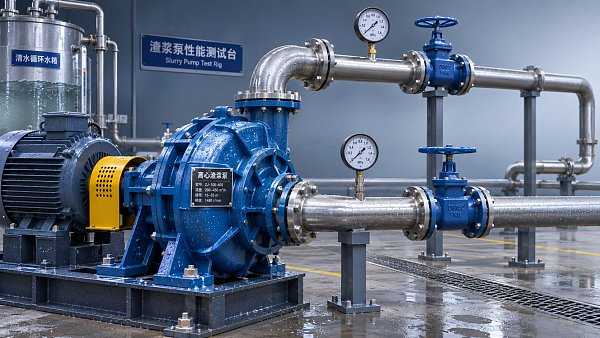
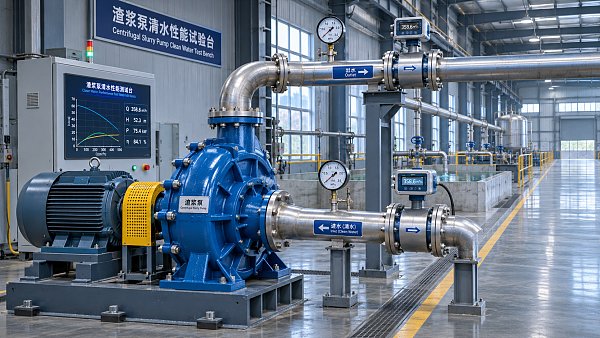
Yes—request a factory performance test when the pump’s duty is critical, the operating point is difficult to achieve, or a performance shortfall would be expensive to correct after installation. A witnessed test can be especially valuable for a large slurry pump serving a process with little spare capacity. For a small, readily replaceable pump on a well-understood duty, the cost and schedule impact may outweigh the benefit.
The decision depends on what the test is expected to prove. A factory test can check hydraulic performance and reveal some assembly problems before shipment. It cannot, by itself, establish how long the pump will resist wear or guarantee that it will perform identically with the site’s slurry. Buyers get the most value when they agree on the test conditions, acceptance criteria, and response to a failure before placing the order.
When is a factory test worth requesting?
A performance test is most useful when uncertainty about pump output carries a meaningful consequence. Consider a pump feeding a process that depends on a narrow flow range: if the pump cannot deliver the required flow at the installed system head, production may be limited or the system may need costly changes. Testing provides an opportunity to identify a hydraulic shortfall while the pump is still at the manufacturer’s facility.
The case becomes stronger when several of the following conditions apply:
- Downtime is expensive. The pump is central to production, and a standby unit cannot cover a prolonged failure or modification.
- The duty is demanding or uncertain. The specified flow, head, suction conditions, or slurry properties leave little room for a selection error.
- The equipment is large or customized. Replacing an impeller or changing the drive after shipment would be difficult, costly, or slow.
- The purchase involves a new design or supplier. A documented test can provide evidence of the assembled pump’s performance against the purchase specification.
- The project has a formal acceptance requirement. The owner, engineering contractor, or financing agreement may require witnessed testing or a defined performance record.
By contrast, a standard pump replacing an identical unit in a stable service may need less extensive testing. If the buyer has reliable operating data, the duty is forgiving, and a spare pump is available, a manufacturer’s routine test report or another agreed inspection may provide enough confidence. That choice should still be explicit: a report for a similar model does not necessarily demonstrate the performance of the particular unit being purchased.
Cost is only one part of the decision. A witnessed test can require additional scheduling, travel, test-bed preparation, and time to resolve any discrepancy. Ask for those effects in the quotation, including whether a retest is included and who bears the cost if the pump fails to meet the agreed criteria.
Compare the types of evidence before choosing a test
Buyers do not always need the same level of verification. The useful comparison is between the evidence each option provides and the consequences of accepting uncertainty.
A witnessed factory test and a site test answer different questions. The factory can offer controlled conditions and access to the pump before shipment. Site commissioning shows how the equipment behaves with the installed piping, drive, controls, and process fluid. Where the duty is critical, the two can complement each other; neither should be described as a complete substitute for the other.
What should the factory test measure?
The foundation is the agreed duty point: the required flow rate and total dynamic head at a specified pump speed and configuration. The test should establish whether the pump meets the contractual requirement at that point, using an agreed method and tolerance. A single flow reading or a discharge-pressure reading on its own is not enough to establish pump performance.
Ask for readings at several operating points around the duty point, where the test setup permits. Together, these produce a performance curve and show how head changes with flow. A curve is more informative than one isolated point because the installed operating point depends on where the pump curve intersects the system curve. If the system resistance differs from the design assumption, the pump may operate at a different flow even though it passed the factory test.
The report should identify the measured flow, suction and discharge conditions used to determine head, pump speed, and power input at the defined measurement point. Efficiency can then be assessed if it is part of the purchase requirement and the necessary measurements are available. The parties should agree whether power is measured at the pump shaft, motor terminals, or another location: those values are not interchangeable without accounting for losses.
Configuration matters as much as the readings. Record the pump identification, impeller diameter, rotational speed, test liquid, and any relevant settings. If the factory uses a test motor or drive different from the one supplied, the report should say so. A result obtained at a different speed or impeller diameter requires an agreed method of comparison; it should not be presented as though it were a direct measurement at the ordered configuration.
Buyers may also want the procedure to include checks for leakage, abnormal noise, bearing temperature, or vibration. These can help identify assembly or running problems, but they need defined measurement locations, operating conditions, and acceptance limits to become contractual pass-or-fail checks. A brief observation that the pump “ran satisfactorily” provides much less information.
Agree on the rules before the pump reaches the test bed
A useful test specification names the applicable procedure or standard, its edition where relevant, the acceptance grade or tolerances, the instruments and calibration requirements, and the points to be tested. If a recognized pump test standard is used, confirm that its scope and acceptance provisions suit the purchase; citing a standard without agreeing on the relevant grade can leave room for disagreement.
Also settle practical questions: Will readings be taken after conditions stabilize? How will instrument uncertainty be handled? Can the manufacturer adjust the impeller or operating speed between attempts? Who reviews the calculations? Most importantly, define what happens if the pump falls outside tolerance, including corrective work, retesting, schedule consequences, and whether shipment can proceed.
What a water test cannot tell you about slurry service
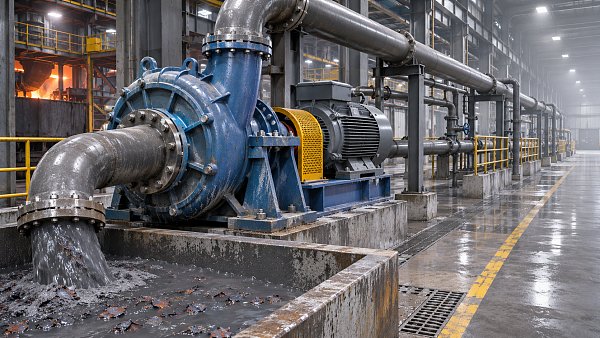
Many factory performance tests use water. This can give a useful, repeatable check of the pump’s hydraulic performance under the agreed conditions, but slurry can behave differently. Solids concentration, particle size and shape, settling behavior, and the liquid’s properties can affect performance and wear. A water-test curve should therefore be assessed alongside the selection method used for the specified slurry duty.
For example, a pump that meets its water duty point may still fall short in service if the selection did not account adequately for the properties of the mixture or if the actual slurry differs from the design basis. The test also cannot verify that the site’s pipelines will remain free of settling or that the available suction conditions are adequate during every operating state.
Some projects may consider testing with a representative slurry, but that introduces practical questions about sourcing and controlling the mixture, handling solids, cleaning the test loop, and measuring repeatable results. The value depends on whether the test fluid and circuit can meaningfully represent the intended service. A poorly controlled slurry test may be difficult to interpret, even if it sounds closer to field conditions.
Wear life is a separate limitation. A short factory run cannot establish how quickly an impeller or liner will wear over months of abrasive service. Material selection, particle characteristics, operating point, and maintenance practices all matter. Similarly, a successful hydraulic test does not prove that seals, bearings, and ancillary equipment will achieve a particular service life.
Use the results to make a release decision
Before accepting the pump, compare the measured curve and the agreed tolerance with the contractual duty. Review any deviations in speed, impeller diameter, liquid, or configuration, along with the calculations used to relate the result to the specified point. If power was guaranteed, check it at the agreed operating condition and measurement location rather than assuming that adequate head and flow settle the question.
If the result is marginal, ask what correction is proposed and how it affects the rest of the duty. Increasing speed, for instance, can change head, flow, and power demand; it may also affect the suitability of the motor and other components. A change that makes one test point acceptable should be checked against the full operating range and the supplied equipment.
A test failure is easier to resolve when the contract already defines the next step. Depending on the cause and agreement, the manufacturer may adjust the pump, replace a component, or retest. The buyer should receive the revised configuration and final results before authorizing release. A passing result should likewise be retained with the pump records, so commissioning personnel can distinguish the factory baseline from performance influenced by the installed system.
For a critical slurry duty, requesting a factory test is often a sound way to reduce procurement uncertainty—provided the specification makes clear what will be measured and what a pass means. For a straightforward replacement with low consequences of underperformance, a documented routine test may be proportionate. The decision rests on the value of the evidence for that particular duty and the cost of discovering a problem after delivery.
Related Information
 Nov 19, 2026
Can a Water Test Accurately Predict Slurry Pump Performance?
Can a water test predict slurry pump performance accurately? Discover its limits, key correction factors, and how to select the right pump for your duty.- Nov 19, 2026
Should You Request a Factory Test Before Buying a Slurry Pump?
Should I request a factory performance test before buying a slurry pump? Discover when testing pays off, what to measure, and how to reduce costly procurement risks. - Nov 18, 2026
Which Pump Can Handle Abrasive Mill Scale Slurry?
Which pump can handle abrasive mill scale slurry? Compare centrifugal, vortex, submersible and positive displacement pumps to find the right fit for your operation. - Nov 18, 2026
Which Pump Is Best for Fly Ash Slurry?
Which pump is best for fly ash slurry? Compare centrifugal and positive displacement pumps, wear materials, and key selection factors to find the right fit.

{item.title}
Get a Quote
Please leave your information and email address, and we will contact you as soon as possible.