
Do High-Chrome Pump Parts Resist Coarse, Sharp Particles?
Will high chrome pump parts resist wear from coarse, sharp particles? In many slurry pumping applications, the answer is yes. High-chrome white iron is widely used for impellers, liners, and other wetted components because its hard microstructure offers substantial resistance to abrasive solids. That makes it a common choice in mining, mineral processing, and other duties where ordinary pump materials may wear too quickly.
But “wear resistant” does not mean wearproof. A part that lasts well in one abrasive slurry may chip, crack, or wear rapidly in another. Particle size and shape matter, as do slurry velocity, impact angle, solids concentration, and the way the pump operates. The most useful question is not simply whether high chrome is hard enough, but whether its balance of hardness and toughness suits the actual duty.
Why does high-chrome material resist abrasive particles?
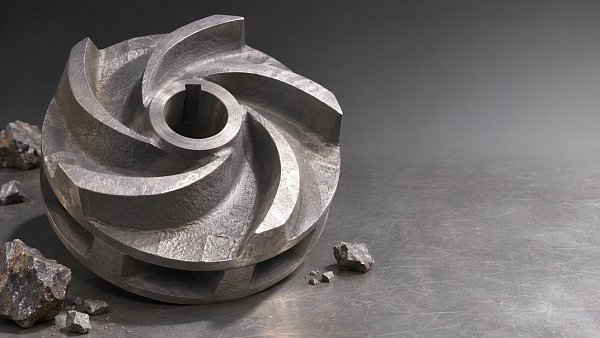
High-chrome white irons contain hard chromium-rich carbides within a metallic matrix. These carbides help resist the cutting and scratching action of hard particles moving across a pump surface. The surrounding matrix supports the carbides, while its properties depend on the alloy composition, casting process, and heat treatment.
In a slurry pump, abrasive particles can slide along a surface, strike it, or become trapped between moving and stationary parts. High-chrome materials are often effective where repeated abrasion and erosion are the main sources of damage. They are commonly considered for:
- Impellers that transfer energy to the slurry.
- Volute liners or casings exposed to solids moving through the pump.
- Side liners, throat bushes, and other wear plates near the impeller.
Not every high-chrome casting performs alike. Two parts described with the same broad material name may differ in hardness, toughness, corrosion behavior, and manufacturing quality. A material designation and its applicable specification are more useful than the phrase “high chrome” alone.
Are coarse, sharp particles always a good match for high chrome?
No. Sharp particles often make a strong case for a hard wear surface, but their size and impact energy complicate the decision. Fine or moderately sized angular solids may produce severe cutting wear that high-chrome iron handles well. Larger particles can strike a component with enough force to cause localized chipping or fracture, particularly at thin edges or vulnerable sections.
Consider the difference between grit sweeping along a liner and a large rock repeatedly hitting an impeller vane. Both contain abrasive solids, but the second duty places much greater emphasis on impact tolerance. High-chrome iron is relatively hard and can be brittle compared with tougher materials. If impact is dominant, a more resilient lining or another material may provide better service, even if it is softer.
The distinction matters when comparing replacement parts. A harder component may resist scratching in a sample test yet fail prematurely if the installed geometry exposes it to heavy impacts. Particle size distribution, including occasional oversized solids, deserves attention—not just the average particle size.
What causes high-chrome pump parts to wear?
Wear in a slurry pump is rarely caused by one factor in isolation. The following conditions often explain why a part wears faster than expected:
- Particle hardness and shape: Hard, angular particles are generally more aggressive than softer, rounded particles because they can cut and gouge the surface more readily.
- Slurry velocity: Higher relative velocity can increase the energy of particle impacts and accelerate erosion. Local velocity inside a pump may differ from the average velocity in the pipe.
- Impact angle: Shallow impacts tend to promote cutting and sliding wear, while more direct impacts may encourage indentation, surface damage, or fracture. The dominant mechanism depends on the material and operating conditions.
- Solids concentration: More solids can increase particle contact with wetted surfaces, although particle interaction and flow behavior make the relationship more complicated than a simple proportional increase.
- Flow pattern: Recirculation, turbulence, and uneven solids distribution can focus damage on a small area rather than spreading it across the component.
- Corrosion and chemistry: Chemical attack can weaken the surface and interact with abrasion. A high chromium content does not automatically make a casting suitable for every corrosive slurry.
Operating away from the pump’s recommended range can make these effects worse. For example, sustained operation at an unsuitable flow rate may create internal recirculation and localized wear. A material change alone will not necessarily solve a hydraulic problem.
Which pump parts are most exposed to coarse abrasive solids?
The answer depends on the pump design and flow conditions, but wear patterns often provide useful clues. Impeller vane leading edges can be damaged where solids enter and strike the rotating passages. The outer portions of the impeller may see high relative velocities, while side areas can wear as particles circulate through clearances.
In the casing or volute, damage may concentrate where the flow changes direction or where particles repeatedly strike the wall. Liners and throat bushes can also experience localized erosion around the suction side and impeller clearances. If one small area wears much faster than the rest, investigate the flow path, solids distribution, and component alignment rather than assuming that the entire casting material is unsuitable.
Wear location matters economically as well. A replaceable liner may be a practical way to protect a more expensive housing, but only if its material and geometry match the duty. Inspection records should identify the specific component and wear location instead of recording only that “the pump wore out.”
How does high chrome compare with rubber and other wear materials?
High chrome is one option among several, and the better choice depends on the damage mechanism. The comparison below is a starting point, not a substitute for a material recommendation based on the actual slurry.
Rubber is not automatically better for large particles, just as high chrome is not automatically better for every sharp slurry. A large, sharp solid may cut an elastomer or damage a hard casting on impact. Pump design, liner support, temperature, and particle velocity all influence the result.
Can a harder high-chrome part last longer?
It can, particularly when abrasive cutting is the main problem. Yet hardness on its own is an incomplete purchasing criterion. Increasing hardness may involve trade-offs in toughness, and a component must also withstand installation stresses, hydraulic loads, and particle impacts.
Ask for the exact material grade and the applicable hardness range or acceptance criteria, rather than choosing solely by the highest advertised number. It is also sensible to confirm how hardness is measured and where measurements are taken, since casting geometry and test methods affect interpretation.
Dimensional accuracy matters too. A wear-resistant impeller that does not fit correctly, runs with improper clearances, or changes the intended hydraulic profile can create operational problems. Material quality, casting integrity, machining, and fit need to work together.
How can you judge whether high chrome suits your slurry?
Start with the operating conditions, then compare them with the wear actually observed. If you are replacing parts repeatedly, the removed components are evidence: their worn surfaces may reveal more than a general description such as “abrasive slurry.”
- Describe the solids. Identify the material being pumped, its approximate hardness if known, particle shape, particle size distribution, and any occasional oversized pieces.
- Record the slurry conditions. Gather solids concentration, fluid chemistry, temperature, and any relevant corrosion concerns. Specify whether concentration is expressed by mass or volume.
- Review the pump duty. Note flow rate, head, speed, operating hours, and whether the pump regularly runs outside its recommended operating range.
- Examine the wear pattern. Look for broad thinning, directional grooves, isolated impact marks, chipped edges, or cracking. Photograph and measure repeatable locations where practical.
- Compare options on the same basis. Review the material grade, part geometry, fit, replacement interval, and maintenance effort—not just the purchase price or claimed hardness.
If records are limited, begin collecting them with the next installation. A consistent inspection interval and a few measurements at known locations can make later comparisons much more reliable. Avoid attributing a change in service life to the material alone if pump speed, slurry composition, or operating hours also changed.
Does replacing worn parts solve a rapid-wear problem?
Replacement restores the pump, but it may not address the reason the previous parts failed. If high-chrome components wear unusually quickly, check whether the slurry has changed or whether the pump is operating differently from the conditions used for its original selection.
Useful checks include suction conditions, impeller clearances, alignment, flow stability, and evidence of recirculation. Where appropriate, review whether screening or upstream process changes could reduce oversized solids. Changes to pump speed or operating point should be assessed against the full system requirements; reducing wear in one location must not create settling or another problem elsewhere.
Also distinguish normal abrasive thinning from cracking, corrosion, or damage associated with poor fit. These may require different corrective actions. A harder replacement is unlikely to be a complete answer if the underlying cause is repeated impact or an unsuitable flow pattern.
What information should you request before ordering replacement parts?
Provide the pump model and component identification, then confirm the proposed material grade and dimensional compatibility. Share the slurry description and operating history, especially if the current parts have failed through chipping or cracking rather than gradual wear.
It is reasonable to ask how the proposed casting is specified, what inspection or quality documentation is available, and whether the material has limitations relevant to the application. If a supplier recommends a different grade or liner material, ask what wear mechanism that change is intended to address.
For coarse, sharp particles, high-chrome pump parts are often a sound choice when abrasion and erosion dominate. Their value is less certain when heavy impacts, chemical attack, or hydraulic problems control service life. Matching the material to the slurry—and checking the evidence left on worn parts—gives a much stronger basis for selection than hardness alone.
Related Information
 Nov 09, 2026
How Do You Replace a Slurry Pump Bearing Assembly?
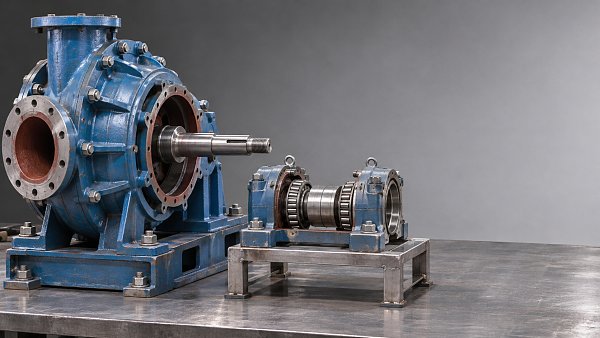
Slurry pump bearing assembly replacement made clear: explore safe removal, installation, alignment, lubrication, and restart checks to help reduce downtime.- Nov 09, 2026
Do High-Chrome Pump Parts Resist Coarse, Sharp Particles?
Will high chrome pump parts resist wear from coarse, sharp particles? Explore their abrasion resistance, impact limits, and how to select the right material for your slurry. - Oct 31, 2026
Why Does a Non-Clog Slurry Pump Still Get Blocked?
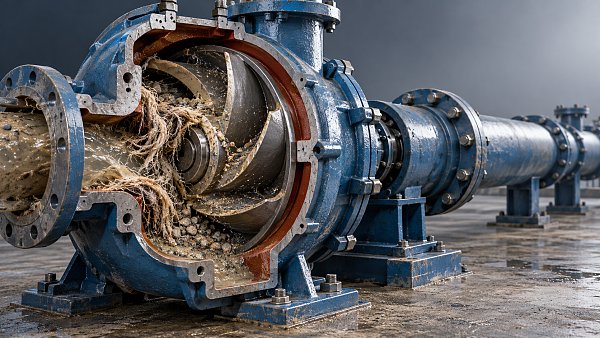
Why does my non-clog slurry pump still block up? Discover how debris, settling, low flow, and wear cause blockages—and find practical fixes to reduce downtime. - Oct 31, 2026
Can a Standard Slurry Pump Run Continuously at 120°C?
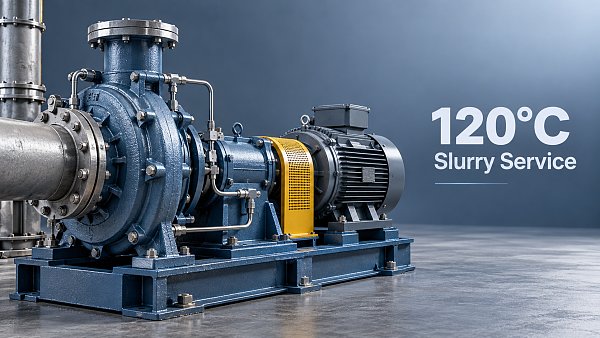
Can a standard slurry pump run continuously at 120°C? Discover critical seal, material, and suction requirements—and learn what to verify before approving continuous hot-slurry service.

{item.title}
Get a Quote
Please leave your information and email address, and we will contact you as soon as possible.