
Can a Foundry Make a Slurry Pump Casting From a Sample?
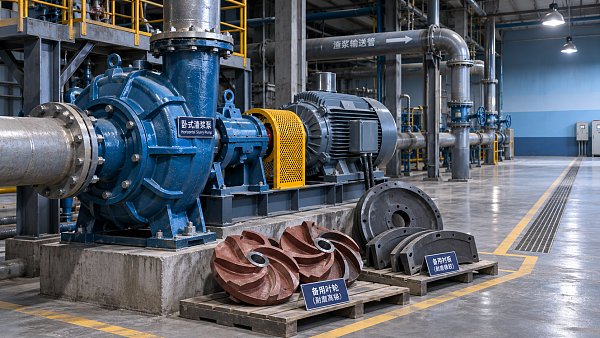
Can a foundry make a slurry pump casting from a sample? In many cases, yes—even when the original drawings are unavailable. By measuring and evaluating an existing component, a foundry can develop the tooling and manufacturing instructions needed to produce a replacement. The harder question is whether the sample contains enough reliable information to make a part that fits, seals, and survives in service. Wear, material composition, tolerances, and machining requirements can all affect the answer.
A clean, unused spare is a very different starting point from an impeller pulled out of a pump after months of abrasive duty. Both may be useful, but they do not carry the same level of certainty. Before asking for a price, it helps to understand what the foundry can measure, what it must infer, and which decisions still belong to the pump owner.
Making a casting from a sample is not the same as copying it
The basic route is reverse engineering: inspect the sample, capture its geometry, establish the intended dimensions, select a material, design tooling, cast the part, and machine and inspect the critical features. Depending on the component, the work may also include heat treatment, balancing, or pressure testing.
The distinction between the measured shape and the intended shape matters. A foundry that reproduces every surface of a worn impeller exactly may reproduce the damage as well. Conversely, rebuilding missing metal by guesswork can alter clearances or flow passages. A scan is a record of what exists; it is not automatically a drawing of what the original manufacturer designed.
A replacement can be developed from a sample without being identical in every manufacturing detail to the original. The important question is whether the differences have been identified, agreed upon, and shown to be acceptable for the application.
How the starting sample changes the job
A damaged sample is not necessarily a dead end. A second, less-worn part, mating components, assembly drawings, or maintenance records can help establish the missing details. When a blade tip or liner surface has disappeared, however, someone must decide what profile to restore. That decision should be visible in the approved drawing or model, not buried in the foundry’s tooling work.
Also consider whether the sample can be cut. Sectioning can reveal wall thickness and internal geometry that are difficult to measure from outside, but it destroys part of the reference. If it is the only spare on site, agree on that trade-off before shipping it.
Where measurements matter most
Not every surface needs the same attention. For a casing, flange faces, bolt patterns, spigot fits, and sealing surfaces may determine whether the pump can be assembled. For an impeller, the shaft connection, axial position, and running clearances can be just as important as the external diameter. A liner must fit its housing and maintain the intended relationship with adjacent wear parts.
Hand measurement can work well for accessible features; optical scanning can capture complex external forms; and other inspection methods may be needed for hidden passages. The choice depends on the geometry and the accuracy required. Shiny surfaces, deep cavities, damage, and residual buildup can all complicate the measurement. Cleaning the sample helps, but aggressive cleaning can remove evidence of wear or damage that the engineer needs to see.
Ideally, the foundry establishes datums from functional surfaces rather than treating every scanned point as equally important. It should then identify which dimensions will be left as cast and which will be machined. A casting drawing without clear machining and inspection requirements may be enough to make a shape, but not enough to guarantee interchangeability.
Mating parts are especially useful when the sample has worn or distorted at a fit. If sending a shaft, housing, or cover is impractical, provide verified interface dimensions and explain how they were measured. Do not assume the foundry can infer the required clearance from the old component alone.
Material matching: a close analysis is not the whole specification
Slurry pump parts face combinations of abrasion, impact, corrosion, and sometimes elevated temperature. A material that works for a hard, relatively mild slurry may not be the best choice where larger particles strike the surface or where the liquid is chemically aggressive. “High chrome” can be a useful starting description, but it is not a complete purchase specification.
Chemical analysis of the sample can help identify its alloy family, particularly if a clean, representative area is available. Surface contamination, coatings, corrosion, and local wear can affect what is tested. Depending on the decision being made, hardness testing and metallographic examination may provide additional evidence about the material condition.
Even a good chemistry match does not by itself establish equivalent performance. Microstructure, section thickness, casting practice, and heat treatment also influence properties. If the original grade is unknown, the sensible outcome may be an agreed replacement material suited to the duty—not an unsupported claim that the original alloy has been duplicated.
Share what is known about the solids, liquid chemistry, operating temperature, and failure history. A part that wore thin may call for a different discussion from one that cracked after impact. If there is no reliable service history, say so; that uncertainty belongs in the material-selection decision.
Casting only, or a finished replacement part?
This is one of the most consequential comparisons in a quotation. A foundry may offer a raw casting, a casting with rough machining allowance, or a finished component ready for assembly. These are not interchangeable scopes, even if all three are described as a replacement pump part.
A raw casting can make sense when the buyer has a capable machine shop and reliable drawings. It also leaves the buyer responsible for locating datums, holding final tolerances, and dealing with any machining-related problems. A finished part transfers more of that coordination to the supplier, but only if the order defines the final dimensions, inspection method, and acceptance criteria.
Ask whether the quoted scope includes patternmaking, cores, heat treatment, machining, material verification, dimensional reports, and any duty-specific tests. For rotating parts, clarify whether balancing is required and to what agreed criterion. For a pressure-containing casing, discuss the applicable pressure-test requirements and acceptance basis before production. Avoid treating a generic inspection certificate as proof that every functional requirement has been checked.
Tooling cost and lead time depend on more than part size
A one-off casting can require substantial preparation: engineering time, a pattern, core boxes where needed, and possibly fixtures for machining or inspection. Complex internal passages and difficult-to-access surfaces can make a modestly sized part more demanding than a larger, simpler one.
For a single urgent replacement, the buyer should compare the complete route with other available options, including an original spare or an existing compatible part. Sample-based production may be worthwhile when the original is unavailable, when future spares are expected, or when the component’s condition justifies engineering a replacement. It is not automatically the fastest or least expensive path.
For repeat orders, clarify who owns the pattern, CAD model, drawings, and inspection records, as well as where the tooling will be stored. Tooling ownership and permission to use a design are separate questions. Where proprietary designs or other rights may be involved, buyers should check their contractual and legal position before commissioning reproduction.
What to settle before approving production
The most useful quotation request is not necessarily the longest. It gives the foundry enough information to identify unknowns and separate firm requirements from assumptions. Send clear photographs before dispatching the sample, note any damaged areas, and identify the surfaces that must fit existing equipment.
Before tooling begins, review the proposed model or drawing together. Pay particular attention to reconstructed wear surfaces, minimum wall sections, interfaces, machining allowances, material specification, and inspection points. Agree on what will happen if the first casting does not meet a dimension or if a hidden feature cannot be verified from the sample.
A trial fit can be valuable when the consequences of an incorrect interface are high, provided the parties agree on how it will be carried out and what constitutes acceptance. It does not replace material verification or prove wear life, but it can expose an assembly problem before additional parts are ordered.
A foundry can often turn a sample into a usable slurry pump casting. The stronger projects are those where the sample is treated as evidence rather than a complete specification: measure what can be measured, document what must be inferred, and settle the fit, material, and inspection requirements before the pattern is made.
Related Information
 Nov 27, 2026
What Affects Ash Slurry Pump Prices for Power Plants?
Power plant ash slurry pump price depends on materials, flow, head, and operating conditions. Learn how to compare quotes and reduce lifetime costs.- Nov 27, 2026
How to Evaluate Steel Mill Scale Slurry Pump Suppliers
Compare steel mill scale slurry pump suppliers with confidence. Learn how to assess pump selection, wear resistance, maintenance, support, and lifecycle costs. - Nov 26, 2026
How to Read a Slurry Pump Performance Test Report
Learn how to read a slurry pump performance test report, assess flow, head, power and NPSH, and avoid costly acceptance mistakes. - Nov 26, 2026
What Affects the Price of an Abrasive Slurry Knife Gate Valve?
Abrasive slurry knife gate valve price depends on size, materials, wear protection, and actuation. Learn how to compare quotes and reduce long-term costs.

{item.title}
Get a Quote
Please leave your information and email address, and we will contact you as soon as possible.