
When custom slurry pumps justify a higher project budget
A higher project budget for Custom Slurry Pumps is justified only when it removes a cost that a standard pump is unlikely to control. That cost may be repeated wet-end replacement, unplanned shutdowns, process instability, seal failures, excessive energy use, or lost production caused by a pump operating outside its practical range.
The purchase price difference matters, but it is rarely the full decision. A standard slurry pump can be the right choice for a stable duty with known slurry properties, moderate wear, and readily available spare parts. A custom design becomes more defensible when the process itself creates conditions that standard catalog equipment cannot accommodate without compromise.
The useful question is not, “Is the custom pump better?” It is, “What operating cost or production risk will this design change reduce, and can that reduction be measured over the equipment’s working life?” If the supplier cannot connect the proposed customization to a specific operating problem, the higher budget may be difficult to support.
Start with the failure cost, not the pump price
Slurry handling is unusually sensitive to real operating conditions. A pump moving water can tolerate a broad range of design choices. A pump moving abrasive solids, corrosive liquids, fibrous material, dense mineral slurry, tailings, ash, sand, or process residue has much less room for error. Small mismatches in material selection, impeller geometry, speed, seal arrangement, or pipe conditions can accelerate wear and reduce stable operation.
That is why a low initial equipment cost can become expensive after installation. The purchase order may look favorable, while the operation absorbs the larger expense through maintenance labor, spare parts, emergency freight, cleanup, lost throughput, and schedule disruption.
A custom pump budget is easier to justify when the project team can identify a recurring issue and assign it to a likely technical cause. For example:
- Wet-end components wear out quickly because the alloy or elastomer does not suit the particle size, hardness, or chemical conditions.
- The pump runs far from its best operating range because actual flow and head differ from the original design assumptions.
- Seal failures occur because suction conditions, pressure fluctuations, solids concentration, or shaft movement exceed the limits of the selected sealing arrangement.
- Frequent blockage or unstable flow is linked to particle settling, oversized solids, fibrous content, or unsuitable passage geometry.
- Production losses occur because there is no practical standby arrangement, no reliable wear monitoring approach, or no ability to maintain the pump within planned shutdown windows.
In each case, the decision should compare the additional capital cost with the cost of allowing the existing problem to continue. The comparison does not need artificial precision. A disciplined estimate of replacement frequency, labor, downtime exposure, critical spares, and production consequences is more useful than selecting equipment solely by the lowest quoted price.
When a standard slurry pump is still the sensible option
Custom equipment should not be treated as a default upgrade. It can add engineering time, longer procurement lead times, more documentation review, and sometimes greater dependence on one supplier for parts or technical support. Where the duty is conventional and well understood, a standard model with the correct materials and size often offers the best balance of price, availability, and maintainability.
A standard unit is usually the stronger procurement choice when slurry composition is stable, flow demand does not move widely, pipework is proven, maintenance intervals are acceptable, and replacement parts can be sourced without creating operational exposure. It is also appropriate for non-critical duties where a temporary outage has limited process impact or where a spare pump can take over easily.
The mistake is assuming that a catalog pump is automatically “standard risk.” It may be standard equipment, but it can still be a poor fit for a non-standard duty. The key distinction is between a standard pump applied within its intended operating envelope and one adapted to a demanding service through compromises.
Conditions that make customization economically credible
Custom slurry pumps tend to earn their additional cost when the process contains a condition that cannot be solved through ordinary sizing alone. The value comes from matching the pump to the duty, not from adding features for their own sake.
Abrasive wear dominates maintenance cost
Wear is often the first reason to consider a tailored solution. Slurry pumps face erosion at the impeller, throatbush, liners, casing, and other wetted components. The pattern depends on particle hardness, particle shape, size distribution, solids concentration, velocity, and impact angle. A material that performs adequately with fine, rounded particles may wear rapidly with angular coarse solids.
A custom design may use a more suitable wet-end material, different liner arrangement, altered impeller profile, thicker wear sections, or a geometry intended to reduce high-velocity wear zones. These changes are worth funding when they extend planned maintenance intervals or make wear behavior more predictable. Predictability is valuable because maintenance can be scheduled around production rather than triggered by failure.
However, expensive materials alone are not a complete answer. A premium alloy will not correct a pump that is oversized, operating at excessive speed, or repeatedly exposed to conditions outside its hydraulic design. Material selection and hydraulic selection need to be evaluated together.
The duty varies more than the original specification suggests
Many projects specify a nominal flow rate and head, then discover that operating conditions change by shift, batch, ore source, weather, upstream process state, or pipeline configuration. A pump selected only for one nominal point may spend much of its time operating inefficiently or unstably.
Customization can address this through an impeller diameter selected for the real duty range, a hydraulic design suited to changing flows, appropriate variable-speed operation, or a casing and impeller combination that provides usable adjustment without forcing the pump into damaging conditions. The benefit is not simply energy reduction. Stable operation can also reduce vibration, recirculation, seal stress, and irregular wear.
Before approving a custom solution for variable duty, establish whether the variation is genuine and recurring. If it is caused by poor process control that can be corrected upstream, redesigning the pump around an avoidable condition may preserve the wrong problem. If the variation is inherent to the operation, a broader operating envelope can have lasting value.
Seal and leakage risk has operational consequences
Mechanical seals, packing arrangements, expellers, and auxiliary sealing systems are often treated as secondary details during procurement. In difficult slurry service, they can determine whether the pump is maintainable or repeatedly disruptive.
The right sealing arrangement depends on process pressure, suction conditions, solids behavior, leakage tolerance, availability of flush water or barrier fluid, dry-run exposure, and access for maintenance. A custom arrangement may be justified where a conventional seal repeatedly fails, where dilution from flush water is unacceptable, or where leakage creates cleanup, safety, environmental, or product-quality consequences.
This does not mean the most complex seal is always preferable. Extra systems introduce their own failure points and operating requirements. The better choice is the simplest configuration that can reliably manage the actual service conditions and that site personnel can maintain correctly.
The pump is production-critical
A pump that can be taken offline without affecting output deserves a different level of investment from a pump that controls a major process bottleneck. When a slurry pump supports continuous production, the budget should reflect the cost of interrupted flow rather than the cost of the pump alone.
Customization may include a maintainable cartridge-style wet end, a design that allows liner changes with less disassembly, heavier bearing arrangements, condition-monitoring provisions, or a duty/standby configuration designed around the maintenance plan. These features are not automatically economical. They become reasonable when the avoided interruption is more costly than the added capital and spare-parts commitment.
Compare lifecycle cost in a way that exposes tradeoffs
A lifecycle review should be practical enough to use during approval, not a theoretical exercise requiring perfect data. Separate the decision into visible cost categories and ask how each option changes them.
Do not count the same benefit twice. For instance, reduced downtime may already include some labor savings, and a higher spare-parts stock may improve availability while increasing working capital. The purpose is to expose the tradeoff clearly, not to make every line favorable to the custom option.
It is also important to distinguish a justified custom feature from a vague reliability claim. “More robust” is not an investment case. “A larger solids passage is needed because the current particle distribution causes blockage and shutdowns” is a decision that can be examined. The supplier should be able to explain the mechanism, the design response, and the operating assumptions behind it.
Specifications that prevent expensive misunderstandings
A weak slurry specification transfers uncertainty into the quotation stage. Suppliers may make different assumptions about solids concentration, particle size, flow range, suction conditions, chemical composition, temperature, and pipeline resistance. The resulting proposals may appear comparable while being designed for different services.
Before selecting between standard and custom equipment, the project should establish a duty profile rather than relying on a single design point. The profile should include normal, minimum, maximum, and upset conditions where they are relevant. It should also address whether solids settle during stoppages, whether the slurry changes by source or batch, and whether the pump may run against a closed or restricted discharge condition.
Useful information to request and compare includes:
- Hydraulic performance for the expected operating range, not just one rated point.
- Recommended operating limits and the consequences of exceeding them.
- Wetted materials and the reason each material suits the slurry.
- Seal arrangement, auxiliary requirements, and acceptable operating conditions.
- Expected wear locations and how those parts are inspected or replaced.
- Required motor margin, starting method, speed-control assumptions, and drive compatibility.
- Foundation, piping, suction, and installation constraints that can affect actual performance.
- Critical spares, interchangeability, lead-time exposure, and maintenance documentation.
These questions often reveal whether the custom proposal is solving a real duty problem or merely presenting a more elaborate configuration. They also protect against the opposite risk: approving a lower-cost standard pump based on incomplete assumptions.
Do not customize around a piping or process mistake
Some slurry pump problems begin outside the pump. A poor suction layout, air entrainment, inadequate pipe support, undersized suction piping, excessive fittings, solids settling in low-velocity sections, or inaccurate system-head estimates can cause performance issues that no pump specification fully resolves.
Similarly, a pump may be blamed for inconsistent flow when the upstream process changes slurry density beyond its intended range. Increasing motor size or selecting a heavier pump may hide the symptom without addressing the source of instability.
Before approving a higher-budget design, examine the entire pumping system: feed condition, sump behavior, suction pipe, discharge line, valves, elevation changes, control strategy, and maintenance access. A custom pump is most valuable when it is part of a coherent system design. It is least valuable when used as insurance against unresolved process uncertainty.
A practical approval test
The strongest case for a custom slurry pump has four elements. There is a defined operating problem; the proposed design change directly addresses that problem; the avoided cost or risk is material; and the supplier’s assumptions can be checked against the actual process.
Approval becomes harder to defend when customization is based only on a preference for premium equipment, a generic promise of longer life, or a specification copied from another site with different slurry characteristics. Higher cost does not create value by itself. Fit creates value.
For a critical, abrasive, variable, or hard-to-maintain slurry duty, a tailored pump can be a disciplined lifecycle investment rather than an equipment upgrade. For a stable, conventional service with manageable maintenance and readily available replacements, standard equipment may protect the budget more effectively. The decision should follow the cost of poor fit, not the prestige of a custom design.
Related Information
 Oct 12, 2026
When custom slurry pumps justify a higher project budget
Custom Slurry Pumps: learn when higher upfront investment reduces wear, downtime, seal failures, and lifecycle costs for critical slurry operations. Sep 18, 2026
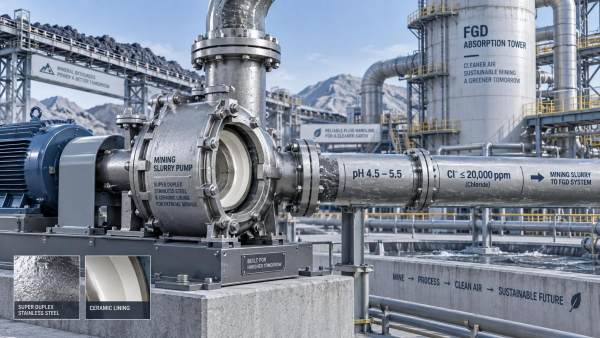
What is the expected service life of corrosion-resistant slurry pumps in aggressive FGD and mining environments?
What is the expected service life of a corrosion resistant slurry pump? Discover realistic 3–7+ year lifespans in FGD & mining—backed by field data, material science, and reliability engineering.- Sep 16, 2026
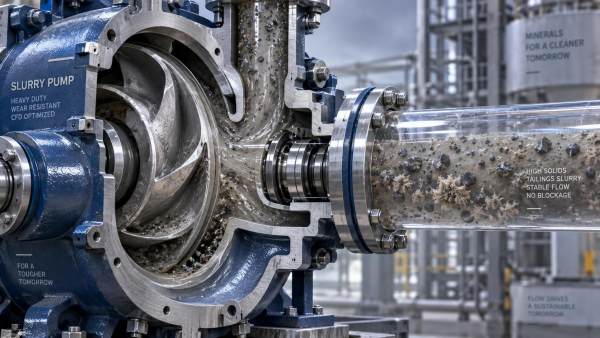
Is CFD-optimized pump design truly more effective for anti-clogging in high-solids tailings transfer?
Is CFD optimized pump really better for anti-clogging? Discover evidence-based insights on real-world high-solids tailings performance—where it works, where it doesn’t, and what truly matters. - Sep 14, 2026
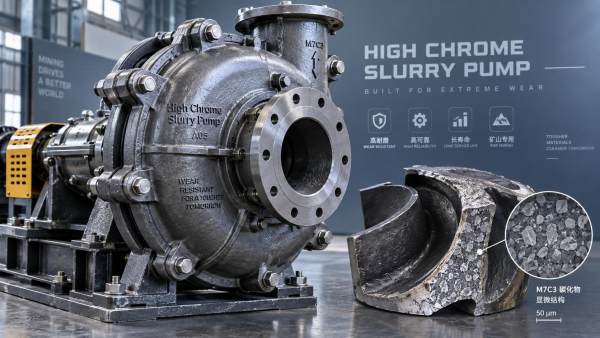
Are high-chrome alloy slurry pumps worth the investment for long-term mining operations?
Are high chrome alloy slurry pumps worth the higher price? Discover when they deliver real ROI in abrasive mining operations—and when they don’t.

Get a Quote
Please leave your information and email address, and we will contact you as soon as possible.