
Why Do Slurry Pump Seals Fail in Hot Slurry Applications?
Hot slurry pump seal failure often starts when heat, abrasive solids and an unstable liquid film act on the seal at the same time. The temperature shown on the process control system may be within a seal’s stated limit, yet conditions at the seal faces can be much hotter or less stable than that reading suggests.
The first question after a failure is therefore not simply whether the seal material was rated for the slurry temperature. It is whether the seal chamber maintained enough clean, liquid-phase lubrication under actual operating conditions, including startup, shutdown and process upsets. Face damage, hardened elastomers or a sudden rise in leakage can each point toward a different part of that operating picture.
Why heat makes a slurry seal less forgiving
Mechanical seal faces need a thin liquid film to control friction and carry away heat. In a hot slurry pump, the liquid at the faces is affected by local pressure, frictional heat and the movement of solids through the seal chamber. If the liquid vaporizes, drains away or is displaced by solids, the faces can run with inadequate lubrication. Friction then adds more heat, potentially accelerating damage.
Slurry adds another complication. Abrasive particles can scratch the faces, but they can also settle around springs, secondary seals or other moving parts. A seal that cannot move freely may no longer accommodate normal shaft movement or face wear. In either case, leakage may be the final symptom of a problem that began with temperature, pressure, solids accumulation or a combination of all three.
High temperature also affects components beyond the faces. Elastomers can harden, lose elasticity or become chemically incompatible with the process fluid. Metal components expand as temperatures change, and rapid heating or cooling can create thermal distortion. Whether any of these becomes the dominant failure mechanism depends on the seal design, materials, process chemistry and operating history.
The most common mechanisms behind failure
Loss of the lubricating film
A seal can lose its liquid film when local pressure falls enough for the liquid to vaporize at its operating temperature. Pressure near the seal faces is not necessarily the same as the pressure measured elsewhere in the system. Restrictions, recirculation arrangements, transient conditions and heat generated at the faces can all affect the local environment.
Running a pump without adequate liquid in the seal chamber is another route to the same problem. This may occur during initial filling, after maintenance, during an interrupted supply or when the pump continues to run after process conditions have changed. A hot restart can be especially demanding if liquid trapped near the seal has vaporized or the chamber has not been properly vented.
Look for heat discoloration, damaged or cracked faces, and a failure that occurred soon after startup or a process interruption. These observations support further investigation, but they do not prove dry running on their own. Similar damage can result from excessive friction caused by other mechanical or operating problems.
Solids entering or accumulating around the seal
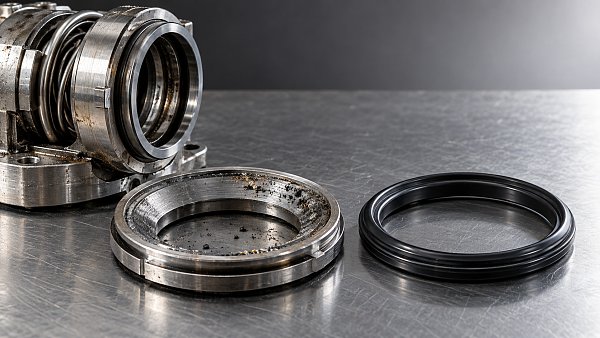
Hard particles can score seal faces when they enter the sealing interface. Solids may also collect in low-flow areas of the chamber, pack around the seal or interfere with components that need to move. As deposits build up, the seal may stick, run unevenly or fail to close correctly after a temperature or pressure change.
The risk depends on more than solids concentration. Particle size, hardness, shape and the tendency to settle or crystallize all matter. A slurry that remains mobile at normal operating temperature may leave deposits when it cools during shutdown. On restart, those deposits can restrict movement before the pump returns to steady conditions.
Abrasive wear on faces should prompt a review of the seal chamber and its flow pattern, not just a search for harder face materials. Harder materials may improve resistance to some forms of wear, but they cannot compensate for a chamber that repeatedly packs with solids or a seal that is deprived of lubrication.
Elastomer and material degradation
O-rings and other secondary seals must withstand the combined effects of temperature, process chemistry and the duration of exposure. An elastomer selected solely from a temperature rating may still swell, harden, crack or lose its ability to maintain contact in the actual fluid. Cleaning chemicals and shutdown conditions should be considered alongside the normal slurry composition.
Inspect removed elastomers for changes in hardness, swelling, cracking, flattening or surface attack. Compare the condition of parts exposed to the process with those in cooler or less exposed positions. When possible, preserve a sample for examination; damaged elastomers can be difficult to interpret after they have been cleaned, handled or left in the open.
Seal face materials have their own limits. Thermal shock, uneven cooling and frictional heating can contribute to cracking or distortion. A change in face material may be appropriate, but only after checking why the faces experienced those conditions.
Flush or barrier system problems
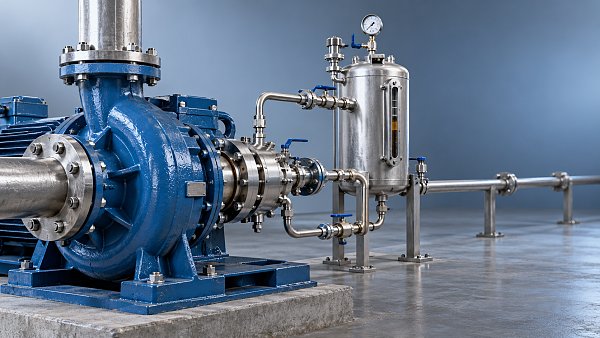
Many slurry seal arrangements rely on an external flush, a barrier fluid or another support system to control the seal environment. These arrangements differ, so their pressure, flow, temperature and cleanliness requirements must be checked against the specific seal design. A suitable support system can reduce solids exposure and remove heat; an interrupted or poorly controlled one can allow damage to develop quickly.
Common issues include blocked lines, inadequate supply pressure, overheated fluid, dirty strainers, incorrect valve positions and instruments that do not show what is happening at the seal. A pressure indication at the supply source alone may not reveal a restriction closer to the pump.
For a pressurized dual-seal arrangement, loss of the required pressure relationship can change which fluid moves across the seals. It may increase leakage or allow process fluid toward areas intended to contain cleaner barrier fluid. Check the specified pressure differential and alarm settings for the installed arrangement rather than applying a generic setpoint.
External flush fluid also enters or interacts with the process in some configurations. Its effect on product dilution, downstream treatment and process chemistry belongs in the reliability assessment. Increasing flush flow without understanding the seal design may create a different operating problem while leaving the original failure mechanism unresolved.
How to investigate a failed seal
Start with the operating sequence. A seal that leaks immediately after installation calls for a different line of inquiry from one that fails after a hot shutdown or gradually deteriorates over a long run. Establish when leakage began, whether it was steady or sudden, and what changed around that time.
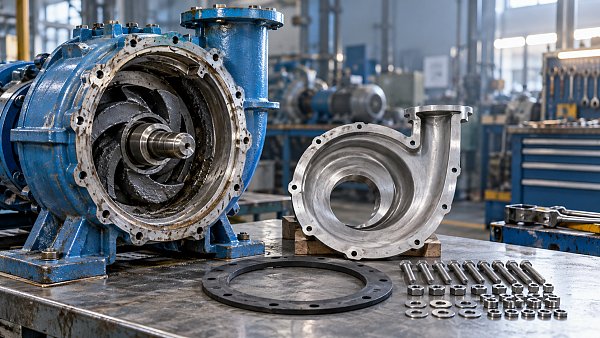
Before dismantling, follow site procedures to isolate, depressurize, cool and drain the equipment as appropriate. Hot slurry, trapped pressure and support fluids can remain hazardous after the pump has stopped. Record available readings and valve positions before disturbing the system, provided doing so is safe.
Then bring together evidence from four areas:
- Process conditions: Operating temperature and pressure, temperature changes, slurry composition, solids behavior and any periods of low flow or interrupted supply.
- Seal support: Flush or barrier fluid pressure, flow, temperature, cleanliness and alarm history, together with the condition of lines and restrictions.
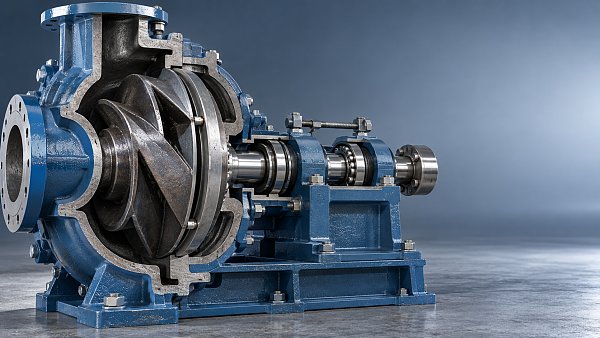
- Mechanical condition: Shaft or sleeve condition, bearing problems, alignment, vibration and evidence of excessive shaft movement, assessed against the equipment manufacturer’s limits.
- Removed components: Face wear patterns, cracks, deposits, elastomer condition and signs of rubbing or interference. Keep parts in their original orientation where practical.
Correlating these observations is more useful than treating any single mark as a verdict. For example, scored faces and solids in the chamber suggest abrasive exposure, but the underlying cause may be a blocked flush line or a shutdown procedure that allowed solids to settle. Likewise, heat damage may follow a support-fluid interruption, low chamber pressure or a mechanical problem that increased face loading.
If the evidence is ambiguous, retain the failed parts and operating records for a joint review with the seal and pump specialists. Replacing components before documenting the condition can remove the best evidence available.
What to change before restarting
Correct the identified operating fault before relying on a replacement seal to improve service life. Clear and inspect support lines, verify instruments and alarms, and confirm that the seal chamber can be filled and vented according to the equipment instructions. Check that the planned startup sequence establishes the required support-fluid conditions before the seal is exposed to process operation.
Review the full operating envelope with the seal designer. Include normal and upset temperatures, pressure at the seal location, slurry characteristics, cleaning fluids, expected shutdown duration and the possibility of deposits forming as the system cools. A seal arrangement suitable for a clean hot liquid may need a different chamber or support approach when solids are present.
Where failures recur during shutdown or restart, examine that transition separately from steady-state operation. The pump may perform well at its normal duty point while the seal is exposed to settling, vaporization or inadequate support flow during a short period at either end of the run. Changes to flushing, draining, cooling or restart procedures should be assessed for their effect on the whole process and carried out under the equipment and site operating requirements.
After restart, track leakage and the support-system readings alongside process temperature and pressure. A stable seal is not established by the absence of leakage at the first startup alone; the more useful test is whether the arrangement continues to protect the faces through the operating changes that caused trouble before.
Related Information
 Nov 05, 2026
Why Do Slurry Pump Seals Fail in Hot Slurry Applications?
Hot slurry pump seal failure can stem from heat, abrasives or poor lubrication. Discover how to identify the cause and prevent repeat failures.- Nov 05, 2026
Which Seal Options Suit Petrochemical Slurry Pumps?
Compare petrochemical slurry pump seal options, from packing to dual mechanical seals. Find the right fit for leakage control, solids and operating conditions. - Nov 04, 2026
How Much Does Slurry Pump Liner Replacement Cost?
Slurry pump liner replacement cost depends on parts, labor, freight, and downtime. Learn how to compare quotes and budget for long-term value. - Nov 04, 2026
How Do You Adjust Slurry Pump Impeller Clearance?
Slurry pump impeller clearance adjustment made clear: discover safe, practical steps to maintain efficiency, reduce wear, and avoid costly downtime.

{item.title}
Get a Quote
Please leave your information and email address, and we will contact you as soon as possible.