
Which Seal Options Suit Petrochemical Slurry Pumps?
The right seal depends first on what the pump is carrying and what the plant can tolerate if it leaks. For a hazardous hydrocarbon slurry, a dual mechanical seal with a suitable barrier system may be the strongest starting point. For a less hazardous, water-compatible slurry where controlled leakage is acceptable, gland packing can be practical. An expeller seal may reduce leakage during operation, but it still needs a separate arrangement for sealing when the pump stops.
These petrochemical slurry pump seal options are not interchangeable upgrades. Each relies on different operating conditions and support systems. A seal that performs well against clean liquid can fail quickly when solids settle around its faces, while a seal designed for abrasion may still be unsuitable for a volatile or chemically aggressive process.
Compare the seal arrangements before selecting one
Start by defining the consequences of leakage, not by choosing the most abrasion-resistant seal material. A seal selection is incomplete until the pump, seal chamber, flush or barrier system, and operating procedures have been considered together.
Gland packing: practical when controlled leakage is acceptable
Packing consists of rings installed around a shaft sleeve and compressed by a gland. It remains a common choice for slurry service because the arrangement is relatively straightforward to inspect and maintain. Packing material and sleeve surfaces can be selected for the liquid and solids involved.
Most conventional packed glands need a controlled amount of leakage for cooling and lubrication. Tightening the gland until leakage stops can generate heat, accelerate sleeve wear and damage the packing. The leakage must be collected and handled in a way that is appropriate for the process fluid.
A clean, compatible flush is often supplied to the packing area to help prevent abrasive particles from entering the gland and to carry away heat. That supply has consequences: it can dilute or contaminate the process, increase liquid sent to downstream equipment, or introduce a substance that reacts with the slurry. A flush connection alone does not guarantee protection; pressure, flow and reliability must suit the arrangement.
Packing is therefore a reasonable candidate when some leakage is permissible, flush liquid is available and the maintenance team can access the gland. It is generally a poor choice when even small releases create an unacceptable exposure, fire or environmental risk. In those services, reducing visible drips by overtightening the gland does not turn packing into a containment system.
Mechanical seals: lower leakage, but faces need protection
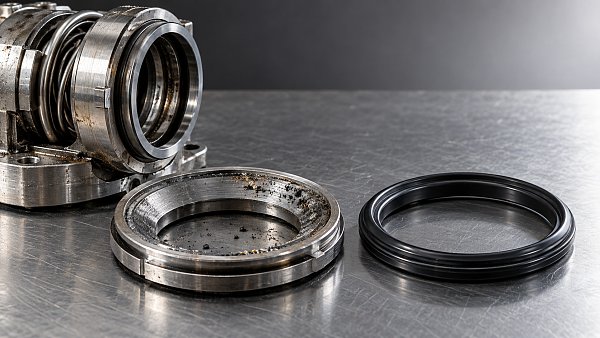
A mechanical seal controls leakage across carefully finished faces, one rotating with the shaft and the other stationary. The faces need a suitable fluid film and must remain within their operating limits. Abrasive particles, crystallization, vaporization or loss of cooling can disrupt that film and shorten seal life.
The choice between a single and a dual seal should follow the required level of containment and the ability to support the seal, not just the purchase price.
Single mechanical seals
A single seal can suit a slurry pump when the pumped liquid is compatible with the seal materials, process leakage can be managed, and the faces can be kept adequately lubricated and free of damaging solids. Depending on the process, the seal may use a clean external flush or a suitable process-fluid arrangement.
For abrasive service, hard face materials such as silicon carbide are often considered, but face hardness is only part of the decision. Chemical compatibility, thermal conditions, face geometry and the way solids move through the seal chamber all matter. An arrangement that traps particles behind the faces can fail even when the selected faces resist abrasion.
A single seal can leak process fluid to the surrounding area if its primary sealing faces deteriorate. It may therefore be inappropriate where the consequence of a release is high, even if its materials are compatible with the slurry.
Dual mechanical seals
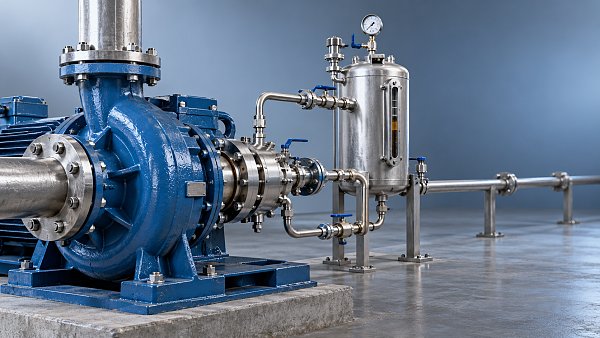
A dual arrangement uses two sets of sealing faces with a fluid between them. In a pressurized barrier-fluid arrangement, the barrier is maintained above the relevant seal-chamber pressure so that, under normal conditions, leakage tends to move toward the process and toward the atmospheric side rather than directly from the process to the atmosphere. An unpressurized buffer arrangement works differently and does not provide the same pressure-driven separation.
This distinction matters when the slurry contains hazardous or volatile components. A dual seal can provide a more suitable containment arrangement, but only when the selected system, pressure control and monitoring are appropriate for the duty. The barrier fluid must also be compatible with the process because some barrier fluid may enter it during normal operation or a fault.
Barrier systems add equipment and operating responsibilities. Loss of pressure, insufficient circulation, overheating or contamination can damage the seal or change the direction of leakage. Check how the system will be filled, cooled, monitored and maintained, and what operators should do when an alarm occurs. A dual seal without a dependable support system can be less reliable than its specification suggests.
Expeller seals: useful while running, not a complete standstill solution
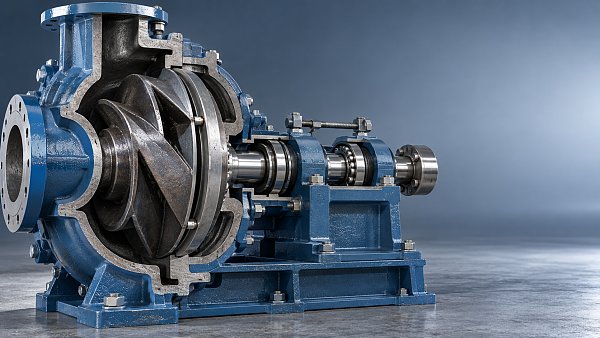
An expeller is a secondary impeller near the shaft entry. As it rotates, it creates a pressure effect that can reduce the amount of slurry reaching the shaft-sealing area. In a pump designed for it, this can limit leakage during operation and reduce dependence on continuous gland flush.
Its effectiveness depends on the pump design and operating conditions, including speed and pressure at the sealing area. It is not a universal retrofit for any slurry pump. Changes in suction conditions or operation outside the intended range can affect how well it works.
When the shaft stops, the expeller no longer generates its dynamic sealing effect. A separate static seal, often using packing or another device, must handle the stopped condition. For a pump containing hazardous fluid, assess startup, shutdown and standby leakage as carefully as running leakage. An expeller arrangement should not be assumed to provide the same containment as a properly designed dual mechanical seal system.
How to choose a seal for the actual duty
A useful selection process begins with the full range of conditions, including what happens before flow is established and after the pump stops. Nominal flow and pressure alone do not describe what the seal will encounter.
- Define the leakage limit. Identify the consequences of a release, the available collection or containment, and whether controlled leakage is acceptable. This often determines whether packing or a single seal is even a candidate.
- Describe the solids. Provide particle size distribution, concentration and, where known, particle shape and abrasiveness. Also identify whether solids settle, accumulate or harden when the pump is idle. Settling behavior can be as important as the average solids content.
- Identify the liquid and its changes. Include all expected process components, cleaning fluids and possible operating upsets. Check compatibility with seal faces, metal parts, elastomers and any flush or barrier fluid.
- Establish seal-chamber conditions. Give the seal supplier the expected pressure and temperature range at the seal, not just the pump discharge values. Include startup, shutdown, standby and foreseeable excursions.
- Review utilities and maintenance. Confirm that clean flush or barrier fluid can be supplied consistently and that its entry into the process is acceptable. Allow for access, instrumentation, spare parts and the response to a support-system failure.
Two slurries with the same solids concentration can require different arrangements. A relatively benign slurry that remains suspended may be manageable with flushed packing. A slurry containing volatile hydrocarbons, coarse particles and components that crystallize as the pump cools presents a different problem: containment, face protection and shutdown behavior all need attention at the same time.
Match the flush and seal chamber to the solids
External flush can protect a seal by introducing clean fluid into the seal chamber, but it must reach the area where protection is needed. A poorly positioned connection or a chamber that allows solids to accumulate can leave the seal exposed despite a functioning supply.
For packing, flush is commonly used to help keep solids away from the shaft sleeve and lubricate the gland. For mechanical seals, the arrangement must support the specific seal design and its cooling and lubrication needs. The required supply conditions are determined by the complete installation, including seal-chamber pressure and the selected seal.
Flush quality matters too. Liquid containing grit can become another source of wear, while an incompatible flush can react with the process or cause deposits. If dilution is unacceptable, discuss alternatives such as a suitable dual-seal support arrangement or an expeller-equipped pump. Neither eliminates the need to assess leakage paths and process compatibility.
Pay particular attention to standby pumps. Solids can settle around the seal during a long stop, and a slurry that cools may become more viscous or form deposits. A flush or circulation arrangement that works during continuous running may need a different operating procedure for idle periods and restart.
Use failure symptoms to refine the selection
Repeated seal replacement without examining the failure often reproduces the same problem. A damaged shaft sleeve and packing that hardens quickly can point toward excessive gland tightening, inadequate cooling or abrasive contamination. Face chipping or rapid wear on a mechanical seal may be associated with solids, vibration, installation damage or an unsuitable operating condition. A loss of barrier-fluid pressure deserves investigation as a system fault, not merely a seal-face problem.
No symptom proves a single cause. Record when leakage began, whether the pump was starting or running steadily, the condition of the seal and sleeve, and any changes in pressure, temperature, flush flow or vibration. Share those observations with the pump and seal suppliers alongside the process conditions.
Before placing an order, document the selected seal arrangement together with its support system and operating limits. The final decision should answer a practical question: can this installation control leakage and protect the seal during normal running, shutdown, restart and foreseeable utility failures? If the answer depends on a flush, barrier supply or standby procedure, those provisions are part of the seal selection, not optional accessories.
Related Information
 Nov 05, 2026
Why Do Slurry Pump Seals Fail in Hot Slurry Applications?
Hot slurry pump seal failure can stem from heat, abrasives or poor lubrication. Discover how to identify the cause and prevent repeat failures.- Nov 05, 2026
Which Seal Options Suit Petrochemical Slurry Pumps?
Compare petrochemical slurry pump seal options, from packing to dual mechanical seals. Find the right fit for leakage control, solids and operating conditions. - Nov 04, 2026
How Much Does Slurry Pump Liner Replacement Cost?
Slurry pump liner replacement cost depends on parts, labor, freight, and downtime. Learn how to compare quotes and budget for long-term value. - Nov 04, 2026
How Do You Adjust Slurry Pump Impeller Clearance?
Slurry pump impeller clearance adjustment made clear: discover safe, practical steps to maintain efficiency, reduce wear, and avoid costly downtime.

{item.title}
Get a Quote
Please leave your information and email address, and we will contact you as soon as possible.