
How Much Does Slurry Pump Liner Replacement Cost?
Slurry pump liner replacement cost includes the price of the wear parts, the labor to install them, and the cost of taking the pump out of service. There is no reliable universal price: a small liner set installed during a scheduled shutdown has a different cost profile from a large, heavy set that requires lifting equipment, urgent freight, and an extended production interruption.
To establish a usable budget, request a quote for the exact parts and calculate the full cost of the planned work. Then compare that total with the expected service life. A liner with a higher purchase price can cost less over time if it lasts longer under the same duty and reduces the number of shutdowns.
Build the Cost Around the Complete Replacement
The liner price is only the starting point. A quote may cover one worn component, a complete liner set, or a broader package that includes seals and fasteners. Before comparing prices, establish exactly what each offer contains and whether the parts are interchangeable with the installed pump.
Record taxes, import charges, and disposal costs where applicable. Keep the quoted price separate from allowances for uncertain work, such as repairs discovered only after disassembly. This makes it easier to identify which costs are committed and which still need inspection.
Define Which Parts Are Being Replaced
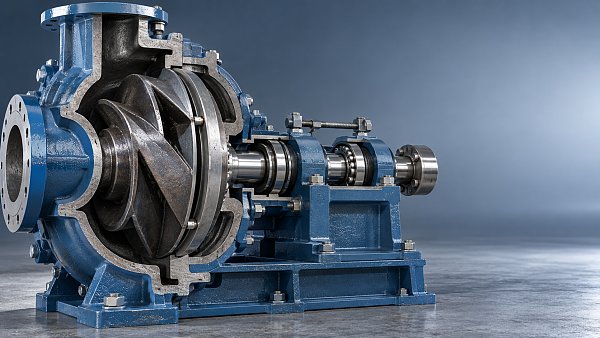
“Liner” does not identify the same package on every pump. A wet-end assembly can include a casing liner or volute and separate side liners. Depending on the design, a quote may name these pieces individually rather than as a set. Some pumps use a replaceable liner within an outer casing; others have a wear-resistant casing that performs a similar function. Confirm the construction before budgeting for a liner change.
Use the pump identification details and existing part numbers where available. Include the size, configuration, material designation, and any design revision. A description based only on the pump’s pipe diameter is insufficient: pumps with similar connections can have different internal dimensions and mounting arrangements.
Consider related wear parts at the same time. An impeller, throatbush, or side liner that is close to its wear limit may justify replacement during the same outage. Replacing sound components automatically, however, increases the bill without necessarily extending the interval to the next shutdown. Inspection records and measured clearances provide a better basis for the decision.
Material Selection Changes Both Price and Service Life
Hard metal and elastomer liners respond differently to slurry conditions. Their purchase prices and replacement intervals should be compared against the same duty, rather than against a general claim that one material is always more economical.
Hard metal liners
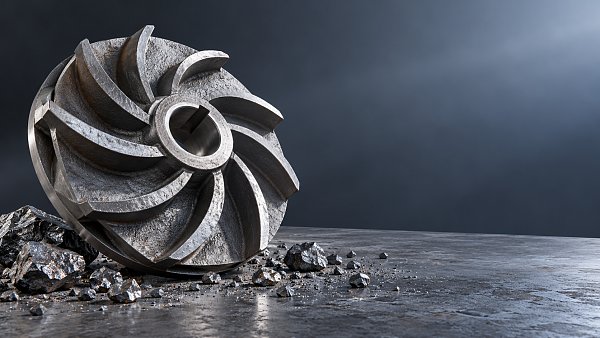
Wear-resistant metal, such as a high-chromium alloy, is often considered for abrasive duties and for particles that can damage softer surfaces. Its performance still depends on particle size, impact angle, slurry velocity, and chemical conditions. Hardness alone does not establish how long a liner will last.
Metal components can be heavy and require planned lifting arrangements. Some alloys also have limited resistance to impact damage, so an application involving large particles or foreign objects needs evaluation beyond abrasion resistance. Confirm the proposed alloy and its suitability for the actual slurry rather than treating all hard metal quotes as equivalent.
Elastomer liners
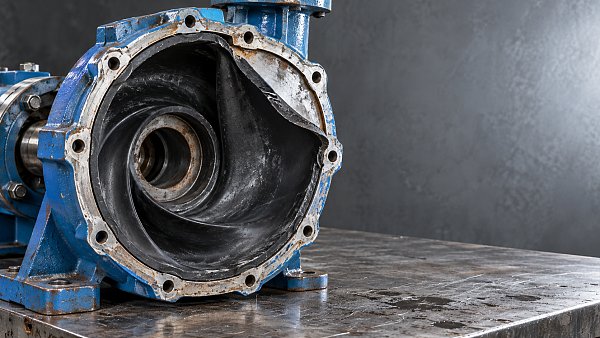
Rubber and other elastomers can perform well in suitable slurry services, especially where particle characteristics and operating conditions allow the lining to absorb impact. Selection must account for temperature, chemical exposure, particle shape, and the pump design. A material that resists abrasion in one slurry can deteriorate rapidly when exposed to an incompatible chemical or unsuitable temperature.
Changing from metal to elastomer, or the reverse, also requires a compatibility review. Differences in liner thickness, mounting features, clearances, and adjoining components can mean that a material change is not a direct part-for-part substitution. Include any required conversion parts and labor in the comparison.
Estimate Labor From the Actual Outage Scope
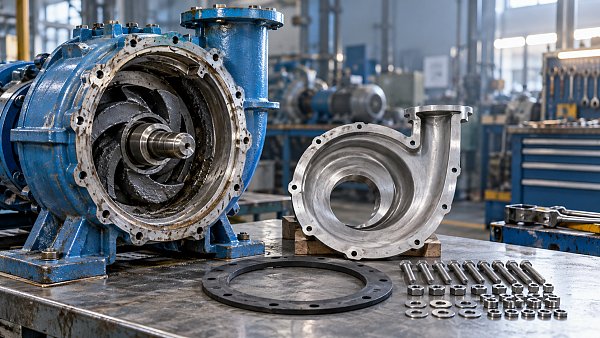
A useful labor estimate starts with the work sequence, not a generic installation allowance. The pump must be isolated, drained, and made safe according to site procedures before the wet end is opened. Residual slurry may need removal, and access to the casing bolts and lifting points affects how quickly the assembly can be dismantled.
Once open, the job can include cleaning mating surfaces, inspecting the casing and fasteners, removing worn components, fitting the new liners, reassembling the pump, and setting clearances in accordance with the applicable maintenance instructions. The final scope also includes re-establishing connections where disturbed and checking the pump after return to service.
Labor rises when access is restricted, parts are seized, or lifting equipment must be brought into a congested area. A corroded fastener is a small item with a potentially large effect if removal damages a threaded hole or delays reassembly. Similarly, a damaged outer casing or worn mounting surface may require repair before a new liner can be fitted correctly.
Separate planned installation time from an allowance for discovery work. If previous shutdown records show recurring fastener or casing damage, use those records to refine the estimate. Without an inspection history, treat the allowance as a provisional budget item rather than a confirmed repair.
Put a Value on Downtime
The operational cost of an outage depends on what happens while the pump is unavailable. A standby pump with sufficient capacity may keep the process running, leaving the main expense in maintenance and energy. If the pump is a bottleneck and no suitable standby is available, the financial effect of a longer shutdown can be much greater than the difference between competing liner prices.
Estimate downtime using the expected duration of the work and the site’s applicable cost of lost production or temporary pumping. Avoid assigning a production-loss figure when the process can be rescheduled or inventory can absorb the interruption. Conversely, include restart constraints if the process cannot return to normal output immediately after the pump is reassembled.
Lead time matters even when a replacement is scheduled. A low-priced liner that arrives after the planned outage can force a second shutdown or require continued operation with a worn component. Ask for a delivery commitment and confirm whether the quoted lead time covers manufacturing, dispatch, and transport to the site.
Compare Cost Per Operating Hour
The most useful comparison combines the complete replacement cost with the service life achieved under comparable conditions:
Cost per operating hour = total cost of one replacement event ÷ operating hours between replacements
Include the liner set, associated parts, labor, lifting, freight, and the relevant downtime cost in the event total. Use operating hours rather than calendar time when the pump does not run continuously. If throughput varies substantially, cost per volume of slurry pumped can be a more meaningful measure, provided the volume is recorded consistently.
For example, compare two quotations by entering each complete installed cost and dividing it by the service life supported by records from the same pump duty. A higher-priced set is economically preferable only if its longer life or reduced outage cost offsets the additional expense. A longer projected life supplied without comparable operating evidence should remain a scenario, not a guaranteed saving.
Keep the comparison fair. A liner removed early because of an unrelated seal failure did not necessarily reach the end of its useful life. Equally, a liner that remained installed longer after a reduction in slurry concentration has not demonstrated superior wear resistance under the original duty. Note changes in solids concentration, particle characteristics, flow, speed, and operating hours alongside the replacement date.
Recognize Wear Patterns Before Ordering the Same Liner
A short replacement interval does not automatically mean the liner material was poorly selected. Localized wear near a particular section of the casing or side liner can point to flow conditions, clearances, or particle movement that differ from the assumptions behind the previous selection. Uneven damage may also reflect incorrect fit, a disturbed joint, or a change in the slurry.
Record the location and character of wear before discarding the old parts. Broad surface loss, deep localized grooves, cracking, and chemical softening are different observations and should not be treated as interchangeable evidence. Photographs, remaining-thickness measurements where feasible, and operating records help distinguish a material problem from a change in duty.
Where abnormal wear is found, investigate the cause before relying on the previous interval for the next budget. Replacing the liner with the same material and expecting the old service life can understate future spending if the process conditions have changed.
Compare Quotes on the Same Basis
Request an itemized quotation for the defined part numbers or verified dimensions, material, quantities, delivery terms, and required date. State whether installation, lifting equipment, consumables, and disposal are included. If a substitute is offered, obtain its material specification and confirm dimensional compatibility with the adjoining parts before treating it as an equivalent option.
Review the conditions attached to any service-life estimate or warranty. A promise based on a different slurry, speed, or solids loading cannot be used as a direct prediction for the installed pump. Clarify how defects, fit problems, and freight damage are handled, including who pays for return transport or replacement work.
Finally, preserve the estimate and the actual job record together. The difference between quoted and actual hours, additional parts, and the next measured wear interval provides a stronger basis for the following replacement budget than the liner purchase price alone.
Related Information
 Nov 04, 2026
How Much Does Slurry Pump Liner Replacement Cost?
Slurry pump liner replacement cost depends on parts, labor, freight, and downtime. Learn how to compare quotes and budget for long-term value.- Nov 04, 2026
How Do You Adjust Slurry Pump Impeller Clearance?
Slurry pump impeller clearance adjustment made clear: discover safe, practical steps to maintain efficiency, reduce wear, and avoid costly downtime. - Nov 03, 2026
Why Is Your Slurry Pump's Rubber Liner Peeling?
Can sharp particles cause slurry pump liner peeling? Discover the warning signs, other possible causes and practical steps to prevent repeat failures. - Nov 03, 2026
Can High-Chrome Pump Parts Resist Coarse, Sharp Particles?
Will high chrome pump parts resist wear from coarse, sharp particles? Discover their limits and learn how to select the right alloy for your slurry pump.

{item.title}
Get a Quote
Please leave your information and email address, and we will contact you as soon as possible.