
Can High-Chrome Pump Parts Resist Coarse, Sharp Particles?
Yes, high-chrome pump parts can resist wear from coarse, sharp particles, and they are often a strong choice for abrasive slurry service. Their hard, carbide-rich structure helps resist the cutting and gouging caused by mineral solids. But resistance is not immunity: large particles striking at high velocity can still remove material, and heavy impacts can chip or crack a hard casting.
The useful question is not simply whether a pump part is high chrome. It is whether the particular alloy, component design and operating conditions suit the solids passing through the pump. A part that performs well against sharp sand may not be the best choice for a slurry containing large, irregular rocks or a highly corrosive liquid.
How high-chrome parts resist sharp solids
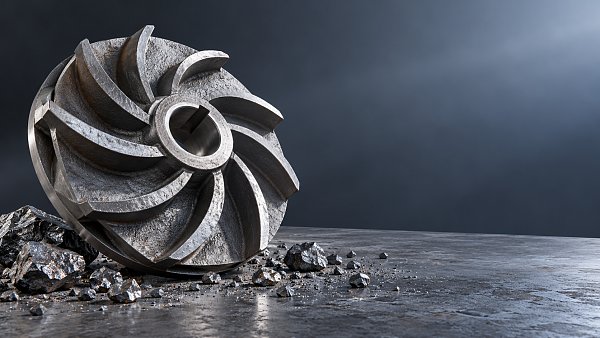
High-chrome pump parts are commonly made from abrasion-resistant white irons. Their wear resistance comes largely from hard chromium-rich carbides within a metallic matrix. The carbides help resist abrasion, while the surrounding matrix contributes to the overall strength and toughness of the casting.
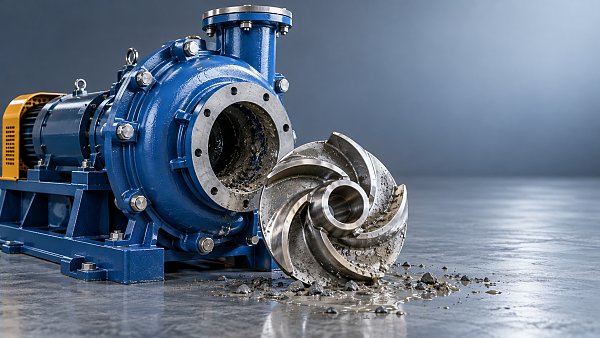
In a slurry pump, particles do not wear every surface in the same way. Some slide along a surface and cut into it; others strike it directly or become trapped in narrow clearances. A hard alloy can slow material loss in many of these conditions, particularly when the main problem is repeated abrasion by mineral particles.
Hardness alone, however, does not describe the whole material. High-chrome alloys can differ in composition, microstructure and heat treatment. Two parts described simply as “high chrome” may therefore behave differently under the same slurry conditions. Higher hardness can improve resistance to some forms of abrasion, but it may also come with less tolerance for severe impact.
What changes when particles are coarse and sharp?
Particle size and shape affect both the force of contact and the way material is removed. Sharp edges can scratch or cut a surface, while coarse particles can cause deeper local damage than fine particles under otherwise comparable conditions. Large solids may also strike components more forcefully or pass through restricted areas with less clearance.
The largest particles matter, but so does the particle-size distribution. A slurry described as coarse may contain a steady load of gravel-sized solids, or mostly fine material with occasional large pieces. Those are different wear and blockage risks. The concentration of solids and the hardness of the particles also matter: a high-chrome casting may handle a soft, coarse solid differently from an angular, hard mineral.
Impact angle changes the wear mechanism as well. Particles moving across a surface at a shallow angle can cause cutting and scraping. More direct impacts may cause indentation, cracking or chipping, especially where a brittle surface is exposed to large, energetic particles. Inside a pump, both mechanisms can occur in different locations.
That is why a single laboratory hardness value cannot predict the life of an impeller or liner. The same material may show acceptable wear on one surface and localized damage on another, depending on how the slurry moves through the pump.
Start with the wear pattern, not just the material name
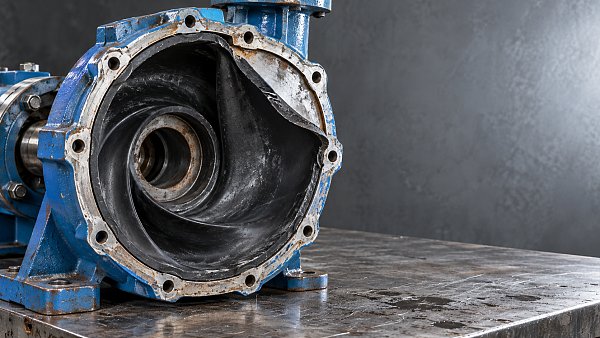
If an existing pump is wearing out too quickly, inspect the removed parts before ordering a harder replacement. Record where the loss occurs, how quickly it develops and whether the surface is smoothly worn, deeply grooved, chipped or cracked. Photos taken at consistent maintenance intervals can make the pattern easier to compare.
- Broad, relatively even thinning can indicate ongoing abrasive erosion. A suitable high-chrome grade may be worth considering when the part has enough impact tolerance for the duty.
- Deep grooves or concentrated wear can point to a high-velocity flow path, particle buildup or a clearance issue. Replacing the material alone may leave the underlying cause unchanged.
- Chipped edges or cracks can indicate impacts, mechanical contact, installation stress or another source of excessive loading. A harder, more brittle part may make the problem worse.
- Rough, irregular attack combined with corrosion can indicate that the liquid chemistry is contributing to material loss. An abrasion-focused alloy is not automatically suitable for corrosive service.
These signs are starting points, not definitive diagnoses. Wear patterns can overlap, and a damaged part should be assessed alongside the pump’s operating history. For example, an impeller with damage near its inlet may be exposed to coarse solids, but the inspection should also consider cavitation, foreign objects and whether the part has contacted a stationary component.
Check the duty before choosing an alloy
A useful material selection starts with a description of the actual slurry and operating conditions, not just the name of the pumped product. When discussing replacement parts with a pump manufacturer or material supplier, gather the following information.
- Describe the solids. Identify the material where possible, its approximate size range, the largest particles expected, their shape and the proportion of solids in the slurry. Note whether unusually large pieces enter during upset conditions.
- Describe the liquid. Include its chemistry, temperature and any known corrosion concerns. A material selected for abrasion also needs to be compatible with the liquid it contacts.
- Identify the affected components. An impeller, throatbush and casing liner can experience different flow angles and impact conditions. The best material is not necessarily the same for every wetted part.
- Record how the pump operates. Provide the pump speed, flow and pressure information available, along with any changes in duty, recirculation, blockages or frequent starts and stops.
- Document the current failure. Note the installed material, service time, wear locations and whether the part was replaced because of thinning, cracking, leakage or loss of hydraulic performance.
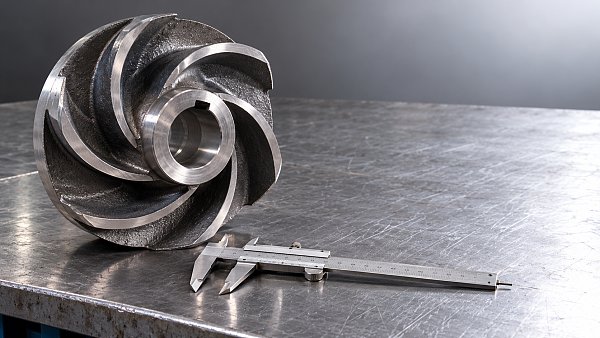
With that information, compare the available grades on abrasion resistance, impact tolerance and corrosion compatibility. Also confirm that the proposed casting fits the pump and maintains the intended clearances. A wear-resistant material cannot compensate for an incorrectly fitted component or a part with unsuitable geometry.
When high chrome is a good fit, and when it may not be
High-chrome white iron is often a practical option when the slurry contains hard, angular mineral particles and abrasive erosion is the dominant failure mechanism. Impellers and liners in mineral-processing and similar slurry duties can benefit from a hard wear surface, provided particle impacts and liquid chemistry remain within the material’s capabilities.
It becomes a less straightforward choice when very large particles or tramp material strike the part hard enough to cause fracture. In that situation, a tougher material may provide more reliable service even if it loses material faster under pure abrasion. The decision depends on the cost of gradual wear compared with the risk of sudden breakage and unplanned shutdown.
Rubber or elastomer-lined components may be considered in some slurry duties, particularly where the particles and operating conditions suit an elastic lining. They are not a universal substitute for metal: large, sharp particles, high local velocities, temperature and chemical exposure can limit their usefulness. The pump design must also support the chosen lining.
Other metallic alloys may be appropriate where corrosion, impact or a combination of wear mechanisms dominates. Comparing alternatives by material label alone is misleading. The better choice is the one that provides an acceptable, predictable service interval in the specific component, while avoiding failures that disrupt the process.
Operating conditions can undo a material upgrade
Slurry velocity has a major influence on wear because faster-moving particles strike surfaces with greater energy and can cause more aggressive erosion. Running a pump faster to recover lost flow may increase wear, while operating far from the intended duty can create unfavorable flow patterns. Any speed or duty change should be evaluated against the pump’s operating limits and the needs of the system.
Clearances matter too. As wear parts lose material, internal clearances can increase and pump performance can fall. Depending on the pump design, restoring an adjustable clearance may recover performance for a time. Continued wear can eventually make adjustment ineffective, so clearance management is not a substitute for inspection or replacement.
At the same time, restricting flow or reducing speed without considering the full system can create other problems, including solids settling in the pipeline. The aim is not simply to make slurry move as slowly as possible; it is to operate within a range that transports the solids and suits the pump.
Screening out oversized material upstream can also reduce the risk of blockage and damaging impacts when the process allows it. This will not eliminate wear from the particles that remain, but it can address a failure mode that a harder impeller alone cannot solve.
How to judge whether the replacement worked
Compare the new part with the previous one under as similar a duty as practical. Track operating hours, changes in flow or pressure, maintenance adjustments and the condition of each component at removal. Also record changes in feed size, solids concentration or pump speed; otherwise, a longer or shorter life may be attributed to the alloy when the duty has changed.
Look beyond the life of the most visibly worn part. A harder impeller may last longer while an adjacent liner becomes the limiting component. The useful result is a more predictable maintenance interval and acceptable performance across the wetted assembly, not simply a higher hardness reading on one casting.
For coarse, sharp particles, high chrome is a sensible candidate when abrasive wear dominates and impact and corrosion are manageable. Begin with the slurry, inspect the failure pattern and select the grade for the component’s actual exposure. That sequence gives a more reliable basis for a replacement decision than choosing the hardest available part.
Related Information
 Nov 03, 2026
Why Is Your Slurry Pump's Rubber Liner Peeling?
Can sharp particles cause slurry pump liner peeling? Discover the warning signs, other possible causes and practical steps to prevent repeat failures.- Nov 03, 2026
Can High-Chrome Pump Parts Resist Coarse, Sharp Particles?
Will high chrome pump parts resist wear from coarse, sharp particles? Discover their limits and learn how to select the right alloy for your slurry pump. - Nov 02, 2026
Is Stainless Steel Worth the Extra Cost for Chloride Slurry?
Is stainless steel worth the extra cost for chloride-bearing slurry? Compare grades, wear risks, and lifecycle costs to find the best-value solution. - Nov 02, 2026
How to Check Aftermarket Slurry Pump Parts for Fit
How can I check whether aftermarket slurry pump parts will fit my existing pump? Discover the key dimensions, interfaces and materials to verify before ordering.

{item.title}
Get a Quote
Please leave your information and email address, and we will contact you as soon as possible.