
What Factors Affect FGD Pump Lifecycle Cost?
The purchase price is only one part of an FGD pump’s total cost. Over years of service, electricity, wear parts, maintenance labor, and production interruptions can matter much more than the initial quotation. In a flue gas desulfurization system, abrasive limestone or gypsum slurry and corrosive process conditions make those costs especially sensitive to pump selection and operating practices.
Understanding FGD pump lifecycle cost means looking beyond a single efficiency figure or the expected life of an impeller. The useful question is how the pump, materials, maintenance plan, and wider process will perform together under real operating conditions.
What belongs in an FGD pump lifecycle cost calculation?
Lifecycle cost is the estimated total cost of owning and operating a pump over a defined period. For an FGD application, it should include both routine expenditure and the financial consequences of credible failures.
- Initial investment: the pump, motor, drive, instrumentation, installation, commissioning, and any necessary piping or foundation work.
- Energy: electricity consumed at actual operating points, including changes in performance as components wear.
- Maintenance: inspection, lubrication, alignment, seal work, labor, and planned overhauls.
- Consumables and spares: impellers, liners, shaft sleeves, seals, bearings, and inventory carrying costs.
- Downtime: lost production, replacement equipment, overtime, and other consequences attributable to a pump failure.
- End-of-life costs: removal, disposal, and replacement or refurbishment where relevant.
These categories should be estimated over the same service period when comparing options. Future expenditure can also be discounted to present value using the plant’s approved financial assumptions. That matters when one pump costs more upfront but is expected to use less energy or require fewer major overhauls later.
Start with the slurry, not the pump catalog
FGD systems move different fluids at different stages. An absorber recirculation pump may handle a large flow of abrasive slurry, while a limestone feed or gypsum transfer duty can present a different combination of solids, chemistry, and operating hours. Treating every FGD pump as though it sees the same conditions is a common source of misleading cost estimates.
Solids determine how components wear
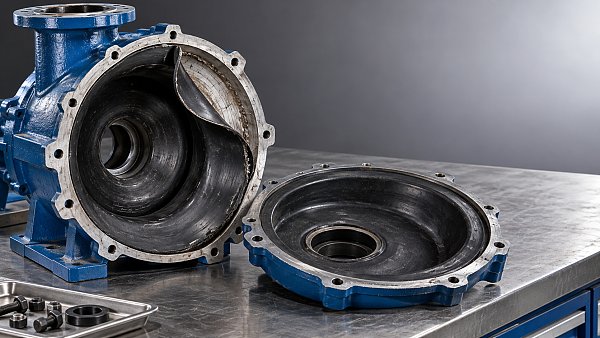
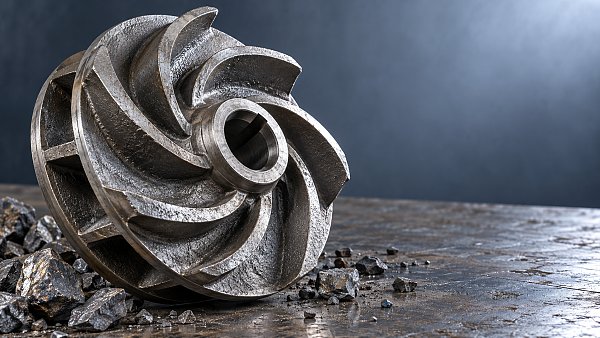
Solids concentration, particle size, particle shape, and hardness all influence erosion. Coarser or more angular particles can damage wetted components more rapidly, especially where flow changes direction or local velocities are high. The casing, impeller, throatbush, and liners may not wear at the same rate, so the cost calculation should consider the full set of parts likely to be replaced during an overhaul.
Slurry properties also affect hydraulic performance. A pump selected from clean-water curves alone may not deliver the required duty once slurry effects are considered. Use representative operating data and the manufacturer’s applicable slurry corrections rather than assuming that a pump will perform identically on water and process fluid.
Chemistry changes the material decision
Chloride concentration, pH, temperature, and dissolved oxygen can affect corrosion. In some duties, abrasion removes protective surface films and makes corrosion worse; the combined damage may be more severe than either mechanism considered separately.
High-chrome alloys, stainless alloys, and elastomer-lined constructions can each be appropriate in certain conditions, but no material is universally best. Compare them against the actual slurry and process chemistry, including credible excursions. A lower-priced liner is not a saving if it requires frequent replacement, while a costly alloy may be difficult to justify if a less expensive material provides adequate service life.
Energy cost depends on the operating point
Many FGD pumps run for long periods, making power consumption a major part of lifecycle cost. The relevant figure, however, is not simply the maximum efficiency printed on a pump curve. It is the energy used across the flow and head conditions the plant actually experiences.
Hydraulic power rises with flow, total dynamic head, and fluid density. Electrical input also depends on pump, motor, and drive efficiency. Request a performance estimate at the expected duty points, using the appropriate slurry properties, and check whether the proposed motor and drive cover the full operating range.
Oversizing deserves particular attention. A pump selected with excessive margin may need continuous throttling to control flow. That can waste energy and leave the pump operating away from its preferred range, with potential consequences for vibration, recirculation, and component life. Equally, a pump selected too close to its limit may struggle when process demand changes or wear reduces performance.
Variable-speed control may reduce energy use where flow demand genuinely varies, but it is not automatically the lowest-cost choice. Include the drive purchase, electrical losses, maintenance, and system constraints in the comparison. Minimum flow requirements and the risk of solids settling in piping must also be considered before reducing speed.
Wear life is only half of maintenance cost
Two pumps can have similar component life and still cost different amounts to maintain. The difference may lie in how long it takes to isolate, open, inspect, and reassemble them.
When reviewing designs, ask practical questions:
- Can the casing or liner be accessed without extensive pipe removal?
- How are impeller clearances checked and adjusted as wear progresses?
- Are lifting points, removal space, and safe handling arrangements available?
- Which parts are routinely replaced together, and what are their lead times?
- Can the maintenance team obtain the tools and instructions required for the work?
Clearance adjustment can be valuable because wear may increase internal leakage and reduce performance before parts reach their physical replacement limit. Still, adjustment intervals should follow equipment guidance and observed condition; incorrect clearances can create contact or accelerate damage.
Seal selection also affects both maintenance and auxiliary consumption. Depending on the duty, arrangements may require seal water or other support systems. Include the cost and availability of that supply, the consequences of seal leakage, and the suitability of the arrangement for the slurry. A seal that looks inexpensive in isolation can add substantial cost if its support requirements are overlooked.
Downtime changes the economics of a spare
The cost of a failed pump depends on what happens next. If a standby unit can immediately maintain the required duty, the operational impact may be limited. If the pump is critical to absorber operation and no effective backup is available, a long repair can have much wider consequences.
For each option, estimate the likely repair duration as well as the failure-related cost. Include isolation and cooling time where applicable, access for lifting equipment, parts availability, reassembly, and testing. Avoid counting the same production loss twice if it is already captured elsewhere in the plant’s financial model.
Spare-parts strategy should reflect that risk. Holding an impeller or seal assembly ties up capital, but waiting for a replacement can extend an outage. Consider the criticality of the pump, supplier lead times, storage conditions, and whether parts are interchangeable across installed units. A standby pump also has a lifecycle cost: it needs inspection, periodic operation where appropriate, and maintenance to remain ready.
Installation and system design can create hidden costs
A well-selected pump can still be expensive to operate if the surrounding system causes poor suction conditions or unstable flow. Check available net positive suction head against the pump’s requirements at the expected operating temperature and slurry conditions, with appropriate margin. Poor suction conditions can contribute to cavitation, noise, vibration, and damage.
Piping layout matters too. Unnecessary restrictions increase head and energy demand, while low velocities in slurry lines may allow solids to settle. The appropriate velocity depends on the slurry and piping arrangement; it should be established for the specific duty rather than copied from a generic rule.
Allowing enough space around the pump is another lifecycle decision. Tight access may reduce initial construction cost but make every future inspection or liner change more difficult. Foundations, alignment, drainage, flushing provisions, and isolation points should be reviewed before installation rather than discovered as problems during the first overhaul.
How to compare pump options on a like-for-like basis
A useful comparison does not require perfect predictions. It requires consistent assumptions and a clear view of what is uncertain.
- Define the duty profile. Record expected flow, head, operating hours, slurry density, solids characteristics, temperature, and chemistry. Include normal and credible off-design conditions.
- Set a common evaluation period. Use the same timeframe, electricity price basis, discount rate, and escalation assumptions for every option.
- Estimate energy at each operating condition. Combine input power with the expected hours at that condition. Account for motor and drive losses where they are not already included.
- Build a maintenance schedule. Estimate wear-part quantities, labor hours, service intervals, seal support, and planned outage time. Use site history where it is relevant and identify assumptions where it is not.
- Assess failure consequences. Consider standby capacity, repair duration, parts lead times, and the operational impact of losing the pump.
- Test the result. Recalculate using less favorable wear life, higher electricity costs, or longer repair times to see whether the preferred option changes.
For example, a pump with a higher purchase price may appear attractive because of lower estimated power consumption. But if that advantage depends on running continuously at one duty point that rarely occurs, the comparison should be revised. Conversely, a lower-cost pump may remain the better choice when operating hours are limited and maintenance access is straightforward.
Use operating data to keep the estimate honest
A lifecycle calculation is most useful when it becomes a working record rather than a one-time procurement exercise. Track power, flow, pressure, vibration, seal condition, and maintenance findings where instrumentation permits. Compare wear patterns and replacement intervals with the original assumptions, noting changes in slurry properties or operating hours that may explain the difference.
Look for trends rather than relying on a single reading. Rising power at comparable duty, declining flow, or more frequent clearance adjustments may justify investigation. Those symptoms do not identify a cause on their own: wear, changes in system resistance, instrumentation errors, and process changes can all affect the readings.
The lowest FGD pump lifecycle cost comes from matching the equipment to the real duty and maintaining that match as conditions change. A careful comparison of energy, materials, access, spares, and downtime gives operators a sounder basis for selection than purchase price alone—and a clearer plan for what to monitor after the pump enters service.
Related Information
 Nov 08, 2026
Why Is My Slurry Pump's Rubber Liner Peeling?
Can sharp particles make your slurry pump's rubber liner peel? Discover the warning signs, other common causes, and practical ways to prevent repeat failures.- Nov 08, 2026
Do High-Chrome Pump Parts Resist Coarse, Sharp Particles?
Will high chrome pump parts resist wear from coarse, sharp particles? Discover when they perform best and how to choose the right alloy for your slurry. - Nov 07, 2026
What Factors Affect FGD Pump Lifecycle Cost?
FGD pump lifecycle cost goes beyond purchase price. Explore how energy, slurry wear, maintenance, spares, and downtime affect your total investment. - Nov 07, 2026
Froth Pump vs. Standard Slurry Pump: What's the Difference?
Froth pump vs standard slurry pump: compare air handling, performance, and selection factors to choose the right pump for your application.

{item.title}
Get a Quote
Please leave your information and email address, and we will contact you as soon as possible.