
Do High-Chrome Pump Parts Resist Coarse, Sharp Particles?
High-chrome pump parts can resist wear from coarse, sharp particles, especially when abrasion is the main cause of failure. Their hard carbide-rich structure helps resist cutting and gouging as particles move through the pump. But they are not immune to wear, and a harder alloy is not automatically the best choice for every slurry.
The practical question is what the particles do when they reach the metal. Sharp particles sliding along an impeller can remove material by cutting. Large particles striking a casing or vane can also cause impact damage. A high-chrome alloy may perform well in the first situation but require a tougher grade or a different part design in the second.
Before selecting replacement parts, examine the particle size and shape, the pump’s operating conditions, and the wear pattern on the parts being removed. These details are more useful than choosing a material solely because it has a high hardness rating.
How coarse, sharp particles wear high-chrome parts
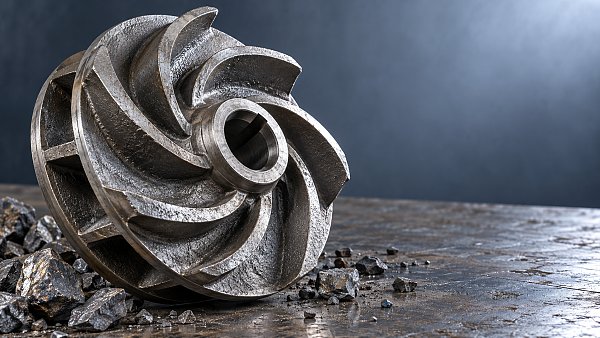
High-chrome white irons contain hard chromium-rich carbides within a metallic structure. The carbides help resist abrasion, while the surrounding metal influences how the casting responds to impact and cracking. The balance depends on the alloy composition, casting quality and heat treatment, not just the chromium content.
In a slurry pump, particles do not contact every surface in the same way. Some slide or roll along a passage; others strike a surface as the flow changes direction. Sharp edges can cut into the metal, while repeated impacts can chip or crack a surface. A damaged surface may then wear faster as more material is exposed to the flow.
Coarse solids can also create problems that a wear-resistant alloy cannot solve. If particles are too large for the pump’s passages, they can lodge in an impeller or obstruct the flow. A material upgrade does not increase the pump’s solids-handling capacity.
When high chrome is a good fit
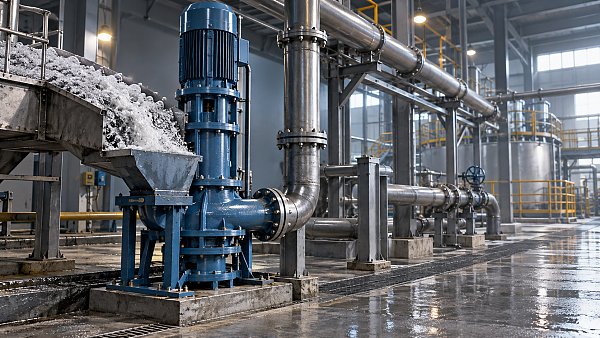
High-chrome parts are often a practical choice for abrasive mineral slurries containing angular solids, provided the pump is designed to pass the particles and severe impact is not the dominant problem. Impellers, liners and casings may benefit where the main damage is gradual loss of metal from particles moving at speed.
Consider a slurry containing sharp crushed mineral particles that produce smooth, directional wear in an impeller passage. A suitable high-chrome casting may offer useful resistance to that abrasive action. The selection still depends on the size of the largest particles, the flow path and the condition of the rest of the pump.
High chrome deserves more scrutiny when the feed contains oversized, heavy solids that strike surfaces hard, or when removed parts show repeated cracking or broken edges. In that situation, chasing maximum hardness may make the part less tolerant of impact. A tougher alloy, a different wear material or a pump designed for larger solids may be more appropriate.
Slurry chemistry matters too. Some high-chrome grades are formulated to provide better corrosion resistance than others, but a grade chosen mainly for abrasion may not be suitable for an acidic or otherwise corrosive liquid. Corrosion and abrasion can act together: chemical attack weakens the surface, and passing particles remove the affected material.
Five checks before changing the material
1. Look beyond the average particle size
The largest particles can determine whether a pump handles the slurry reliably, even when most of the material is much finer. Check both the normal particle-size distribution and the size of occasional oversize material. Compare these with the solids-handling limits and passage geometry of the pump and impeller being considered.
Particle shape matters as well. Angular, freshly fractured solids tend to present cutting edges; rounded particles may produce a different wear pattern. If the process changes between operating campaigns, base the selection on the conditions the pump will actually see, not just a sample from an unusually clean or fine feed.
2. Identify where and how the old part failed
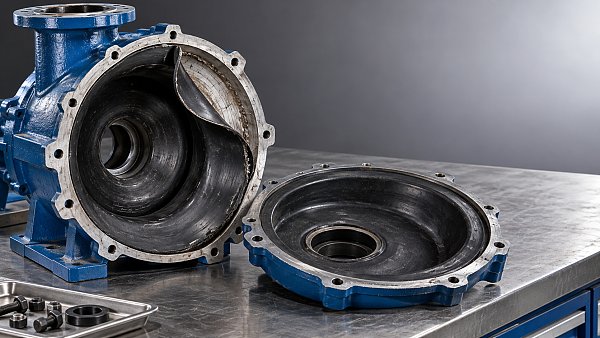
Inspect the impeller, liner and casing together when the pump is opened. A worn impeller alone does not necessarily identify the cause. Look for the location, direction and severity of damage:
- Directional grooves or polished wear paths can indicate particles sliding along the surface.
- Localized pits, chipped edges or broken sections can indicate repeated impact, although other failure mechanisms must also be considered.
- Broad, uneven thinning may reflect the way slurry is distributed through the pump or changes direction inside the casing.
- Corroded surfaces combined with erosion suggest that the liquid chemistry may be contributing to material loss.
These are clues, not a complete diagnosis. Record the part’s location, service time and operating history, and compare the damage with previous removals. Photographs taken before cleaning or disposal can make later comparisons more useful.
3. Review velocity and operating conditions
Slurry velocity strongly affects wear because it influences how often and how forcefully particles contact surfaces. Running a pump faster than necessary can increase wear, but slowing it down without checking the system can create another problem: solids may settle in the pipeline or pump.
Review pump speed, flow rate, pressure and the requirements of the entire circuit together. Operating far from the pump’s intended range can change internal flow patterns and concentrate wear in areas that were not expected to take the greatest load. Changes to speed or impeller size should account for both pump performance and the velocity needed to keep solids moving through the line.
4. Check clearance and mechanical condition
As wear parts lose material, internal clearances can increase. More slurry may recirculate through those gaps, reducing efficiency and accelerating local wear. Follow the pump manufacturer’s procedure for checking and adjusting clearances; an overly tight setting can cause contact and damage.
Also investigate vibration, bearing condition, alignment and evidence of parts rubbing. A casting blamed for poor wear life may be working in a pump with a mechanical or hydraulic problem. Replacing the alloy alone will not correct that underlying cause.
5. Specify the grade, not just “high chrome”
High chrome describes a family of alloys, not a single guaranteed performance level. Two castings marketed under that name can differ in composition, heat treatment, hardness, toughness and resistance to corrosion. The same nominal grade can also perform differently if casting quality or dimensions vary.
When requesting a replacement, provide the operating conditions and the failure pattern, then ask for the proposed material specification and heat-treatment condition. Confirm that the part fits the pump model and operating arrangement. A material certificate or inspection record can help establish what was supplied, but it does not by itself predict service life in a particular slurry.
Hard metal, rubber or a tougher alloy?
Hard-metal components are commonly considered for sharp, abrasive solids because they resist cutting and erosion. They may be a good choice where particles are coarse enough to damage softer linings but not so large or energetic that impact becomes the overriding concern.
Rubber-lined components can be useful in some slurry applications, particularly where their resilience helps absorb particle impact. They are not universally better for coarse, sharp solids: large angular particles can cut or tear an elastomer, and temperature and chemical compatibility can limit its use. Pump design and the specific lining material matter.
A tougher metal may be preferable where breakage is the main failure mode. It could wear faster by abrasion while being less prone to catastrophic cracking. That trade-off can be worthwhile if a broken part causes an unplanned shutdown or damages other components. No comparison is complete without considering the geometry of the wear part and the consequences of failure.
How to judge whether a change worked
Set a baseline before installing a new grade. Record the existing part material, operating hours, slurry characteristics, pump speed and the location of wear. Measure remaining thickness at repeatable inspection points where access and the pump design allow it. Use the same approach for the replacement.
Compare parts under similar duty conditions. A longer interval between replacements is not necessarily evidence of a better alloy if the slurry became finer or the pump ran fewer hours. Likewise, a part that lasts longer but causes a significant loss of pump performance may not be the best overall choice.
Look at the full operating outcome: wear rate, risk of breakage, energy use, maintenance effort and downtime. Check adjacent components as well. Extending impeller life may reveal that the casing liner is now the limiting part, which changes the most useful replacement strategy.
If wear is concentrated in one area, discuss both material and design with the pump supplier. A different passage geometry, liner arrangement or operating point may reduce the exposure that caused the damage. For coarse, sharp slurries, the strongest decision is usually a combination of suitable alloy, adequate particle passage and controlled operating conditions.
Related Information
 Nov 08, 2026
Why Is My Slurry Pump's Rubber Liner Peeling?
Can sharp particles make your slurry pump's rubber liner peel? Discover the warning signs, other common causes, and practical ways to prevent repeat failures.- Nov 08, 2026
Do High-Chrome Pump Parts Resist Coarse, Sharp Particles?
Will high chrome pump parts resist wear from coarse, sharp particles? Discover when they perform best and how to choose the right alloy for your slurry. - Nov 07, 2026
What Factors Affect FGD Pump Lifecycle Cost?
FGD pump lifecycle cost goes beyond purchase price. Explore how energy, slurry wear, maintenance, spares, and downtime affect your total investment. - Nov 07, 2026
Froth Pump vs. Standard Slurry Pump: What's the Difference?
Froth pump vs standard slurry pump: compare air handling, performance, and selection factors to choose the right pump for your application.


{item.title}
Get a Quote
Please leave your information and email address, and we will contact you as soon as possible.