
What Annual Maintenance Does a Flue Gas Desulfurization Pump Need?
What Annual Maintenance Does a Flue Gas Desulfurization Pump Need?
What annual maintenance does a flue gas desulfurization pump require to remain reliable in abrasive, corrosive service? It requires a planned inspection covering hydraulics, wet-end wear parts, seals, bearings, alignment, vibration, and corrosion protection.
For plant managers and maintenance teams, the objective is not simply completing a yearly checklist. It is preventing leaks, capacity loss, unexpected shutdowns, and emissions-control risks before they affect production.
An effective annual program combines condition data gathered during operation with an outage inspection. The findings should determine repair scope, spare-parts requirements, and whether the pump can safely complete another operating cycle.
Why Annual FGD Pump Maintenance Is a High-Priority Task
FGD pumps operate in one of the harshest services within industrial facilities. Limestone slurry, gypsum solids, chlorides, acidic conditions, and temperature changes continuously challenge pump materials and rotating components.
Unlike clean-water pumps, FGD slurry pumps can lose performance gradually without an immediate alarm. Erosion enlarges hydraulic clearances, while corrosion weakens surfaces, fasteners, casings, and sealing-system components over time.
A reduction in discharge pressure or flow can affect absorber circulation, slurry distribution, and sulfur dioxide removal efficiency. When performance drops, operators may compensate by increasing speed, creating additional mechanical stress.
Annual maintenance gives teams an opportunity to verify whether the pump still meets process requirements. It also helps distinguish normal wear from damage caused by improper operating conditions or installation problems.
The financial impact of inspection is usually modest compared with an emergency repair. Unplanned failures may require expedited parts, extended outages, environmental reporting, and production losses beyond the pump repair itself.
Maintenance records also support better capital planning. When wear trends are documented, managers can predict replacement timing instead of making decisions under pressure after a failure occurs.
The annual interval should be treated as a baseline, not a universal rule. Pumps handling high solids, aggressive chlorides, frequent starts, or off-design flow may require more frequent condition-based inspections.
Start With Operating History and Condition Data
Before opening the pump, review its operating history for the previous year. This information establishes whether internal inspection should focus on routine wear or a developing mechanical or process-related problem.
Compare actual flow, discharge pressure, power draw, speed, and operating hours with the pump curve and prior baseline readings. Meaningful deviations often reveal wear before dismantling begins.
Review vibration trends, bearing temperatures, seal-water consumption, leakage reports, and motor current records. A single reading may be inconclusive, but a sustained trend provides useful maintenance direction.
Operators should document abnormal noise, intermittent vibration, reduced tank levels, unstable flow, or frequent standby-pump changeovers. These observations can reveal problems that periodic instrument readings do not capture.
Also examine process changes made during the year. Changes in slurry density, particle size, pH, chloride concentration, temperature, or duty point can significantly alter pump wear patterns.
Verify whether the pump has operated near shutoff, at very low flow, or beyond its preferred operating range. These conditions can increase recirculation, vibration, heat generation, and component damage.
A practical annual review converts this information into an inspection plan. It identifies which components need measurement, which spares should be prepared, and whether specialist support is necessary.
Inspect Wet-End Components for Erosion and Corrosion
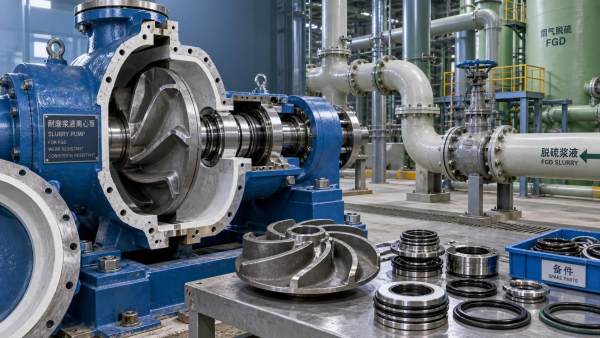
The wet end deserves the greatest attention because it handles the slurry directly. Inspect the casing, liner, impeller, throatbush, suction liner, and discharge-side surfaces for wear and chemical attack.
Look for uneven liner thickness, washout around joints, deep grooves, cracking, delamination, and exposed substrate material. Localized damage often indicates turbulence, solids concentration issues, or poor flow distribution.
Measure critical thicknesses using the manufacturer’s recommended points and compare results with original dimensions or previous outage measurements. Visual inspection alone cannot reliably determine remaining service life.
Inspect the impeller vanes for thinning, pitting, rounded leading edges, and damage near the eye. Erosion in these areas reduces hydraulic efficiency and can create flow instability.
Check impeller-to-liner clearances because excessive clearance allows internal recirculation. This reduces head and capacity, increases energy consumption, and may encourage operators to run the pump harder.
For rubber-lined pumps, inspect bonding integrity, softening, blistering, tears, and edge lifting. For high-chrome alloy components, inspect for cracking, severe corrosion, and erosion at high-velocity zones.
Replace components according to measured condition, not appearance alone. A part that looks acceptable may have insufficient remaining thickness to survive the next operating period safely.
Examine Seals, Packing, and Seal Support Systems
Seal-system failure is a common cause of FGD pump downtime because slurry contamination can rapidly damage sealing faces, packing, sleeves, and supporting components.
Identify the installed sealing arrangement before inspection. FGD pumps may use packed glands, mechanical seals, expeller seals, dynamic seals, or specialized combinations selected for slurry characteristics and containment requirements.
For packed pumps, inspect packing condition, gland adjustment, sleeve wear, leakage patterns, and flush-water quality. Packing should provide controlled lubrication, not excessive leakage or dry-running friction.
For mechanical seals, inspect faces, elastomers, springs, secondary seals, and sleeve condition. Replace damaged parts and investigate contamination, dry running, vibration, or pressure fluctuations that caused the failure.
Confirm that seal-water pressure, flow, and filtration meet the pump manufacturer’s requirements. Low-quality or insufficient flush water can allow abrasive slurry to enter areas intended to remain protected.
Inspect flush lines, valves, strainers, pressure gauges, flow indicators, and drain paths. A healthy seal cannot compensate for plugged lines, incorrect connections, or a failed support system.
Review leakage history with operations personnel. A small, stable packing leak may be acceptable, while rising leakage, visible solids, or repeated adjustments indicate that intervention is overdue.
Check Bearings, Shaft Condition, and Mechanical Alignment
Annual maintenance should include a complete examination of the rotating assembly because bearing damage and shaft misalignment can accelerate wear throughout the entire pump.
Inspect bearings for noise, discoloration, pitting, roughness, contamination, and excessive play. Lubricant analysis can reveal water ingress, metal particles, incorrect grease selection, or overheating before failure occurs.
Replace lubricant according to manufacturer specifications and verify the correct quantity. Over-greasing can raise temperatures, while inadequate lubrication shortens bearing life and increases vibration levels.
Measure shaft runout and inspect the shaft for scoring, corrosion, fretting, or damage at seal and bearing locations. Shaft defects can prevent reliable sealing even after new components are installed.
Check coupling condition, keyways, bolts, guards, and flexible elements. Worn couplings or loose hardware can introduce misalignment and create vibration that resembles an internal pump problem.
Perform precision alignment between the pump and motor after reassembly, considering thermal growth where applicable. Soft foot should also be corrected before final alignment measurements are accepted.
Inspect the baseplate, foundation bolts, grout, and pipe supports. Pipe strain or a weakened foundation can distort pump alignment after startup, shortening bearing and seal life.
Use Vibration and Performance Testing Before Returning to Service
Reassembly does not complete annual maintenance. A controlled startup and performance test confirm whether the work restored safe operation and whether any hidden problems remain.
Before startup, verify rotation direction, coupling guards, lubrication, seal-system connections, suction conditions, and valve positions. Confirm that the pump is properly primed and free from trapped air.
Record baseline vibration at bearing locations in horizontal, vertical, and axial directions. Compare readings with previous measurements and applicable site limits rather than relying on subjective judgments.
Monitor bearing temperatures during warmup because incorrect lubrication, misalignment, or assembly errors can appear quickly. Temperature should stabilize within the equipment manufacturer’s expected operating range.
Verify flow, discharge pressure, motor current, and speed against the required operating point. A pump that runs smoothly but misses hydraulic duty may still compromise absorber performance.
Observe seal leakage and seal-water conditions during startup and after several hours of operation. Early changes may indicate that packing adjustment or mechanical-seal support settings need correction.
Document all test values in the asset record. These measurements create the baseline needed to identify deterioration during the next operating cycle and improve future maintenance decisions.
Review the Pump’s Interaction With the FGD System
Not every recurring pump issue originates inside the pump. Annual maintenance should include a review of the surrounding FGD system and operating conditions affecting reliability.
Inspect suction piping for blockage, air ingress, sediment buildup, damaged linings, and poor flow distribution. Restricted suction conditions can cause cavitation, vibration, reduced capacity, and rapid impeller damage.
Check discharge piping, isolation valves, check valves, expansion joints, and supports for leaks or restrictions. A partially closed valve or blocked line can move the pump far from its intended duty point.
Review slurry chemistry with process personnel. Changes in limestone quality, gypsum crystal size, chloride level, or solids concentration may require adjustments to materials, speed, or maintenance intervals.
Confirm that standby pumps are exercised and capable of taking load. A neglected standby unit provides little protection when the duty pump requires emergency service or planned repair.
Evaluate whether the current pump materials remain suitable for observed corrosion and abrasion. Repeated replacement of the same component may justify a material upgrade or hydraulic redesign.
This broader system review prevents maintenance teams from repeatedly repairing symptoms. It shifts attention toward the operating conditions that determine long-term FGD pump life.
Plan Parts, Labor, and Repair Decisions Around Measured Risk
Annual maintenance is more effective when critical spares are identified before the outage. Common requirements include liners, impellers, throatbushes, sleeves, bearings, seals, packing, gaskets, and fasteners.
Maintain accurate pump model, serial number, material specification, and component part numbers. FGD pumps often have material-specific parts that should not be substituted without engineering review.
Use inspection measurements to classify components as reusable, monitor closely, replace during the outage, or stock for the next interval. This approach controls cost without accepting avoidable risk.
Consider the consequence of failure when making replacement decisions. A pump serving a single critical absorber loop may justify earlier replacement than a unit with proven standby capacity.
Coordinate outage timing with production, environmental compliance, and contractor availability. Waiting until a pump has failed can turn a manageable maintenance job into a costly operational event.
When repeated failures occur, conduct a root-cause review rather than merely replacing damaged parts. Examine operating point, slurry characteristics, installation quality, maintenance practices, and equipment selection.
A well-maintained history allows managers to forecast repair budgets and compare lifecycle costs between component materials, suppliers, and alternative pump configurations with greater confidence.
Build an Annual FGD Pump Maintenance Checklist
A usable annual checklist should define inspection tasks, acceptance criteria, measurements, responsible personnel, required spares, and post-maintenance test requirements for each pump asset.
Include operating data review, external inspection, wet-end thickness measurements, seal inspection, bearing assessment, lubrication service, shaft checks, coupling inspection, alignment, and vibration baseline testing.
The checklist should also require verification of seal-water systems, suction conditions, discharge piping, foundation integrity, protective guards, instrumentation, and emergency or standby-pump readiness.
Photographs of worn areas can be valuable when taken consistently. They help maintenance teams compare component deterioration between outages and explain replacement decisions to plant management.
Assign clear acceptance limits where possible, using manufacturer documentation and site experience. Terms such as “acceptable wear” are too subjective unless supported by measurable thresholds.
After the outage, capture labor hours, replacement parts, root causes, and test results. These records convert routine work into a reliability dataset rather than a one-time repair event.
Review the checklist annually and update it when equipment, process conditions, materials, or failure patterns change. A static checklist can miss emerging risks in a changing FGD system.
Conclusion
What annual maintenance does a flue gas desulfurization pump require? The essential work includes condition review, wet-end inspection, seal servicing, bearing checks, alignment, system evaluation, and documented startup testing.
The most important maintenance decisions should be based on measured wear, operating data, and failure consequences. This protects process performance while avoiding unnecessary replacement of serviceable components.
For facilities operating in corrosive slurry environments, annual FGD pump maintenance is a reliability investment. A disciplined program reduces emergency repairs, improves lifecycle planning, and supports consistent emissions-control performance.
Related Information
 Oct 01, 2026
How mining slurry pumps affect downtime in high-wear circuits
Mining Slurry Pumps can make or break uptime in high-wear circuits. Learn how smarter selection, wear materials, and maintenance reduce failures and lifecycle costs.- Sep 30, 2026
Selecting coal washing pumps for fine coal recovery circuits
Coal Washing Pumps for fine coal recovery: learn how to select reliable slurry pumps for stable pressure, longer wear life, efficient dewatering, and lower downtime. - Sep 29, 2026
What causes slurry pump failures in flue gas desulfurization systems
Flue Gas Desulfurization Systems: discover the main causes of slurry pump failures, from cavitation and abrasion to seal leaks, corrosion, and unstable operation. - Sep 30, 2026
What Should Be Included in a Dredging Pump Quotation?
What should be included in a dredging pump quotation? Explore essential duty data, slurry specifications, scope, performance guarantees, and commercial terms for confident buying.
Get a Quote
Please leave your information and email address, and we will contact you as soon as possible.