
Are Double-Casing Slurry Pumps Cheaper to Maintain Than Single-Casing?
A double-casing slurry pump can be cheaper to maintain when abrasive wear requires repeated replacement of the wetted casing surfaces. Its economic advantage comes from replacing sacrificial liners while retaining a serviceable outer casing. That advantage is not automatic: liner prices, replacement time, impeller life, maintenance access, and spare-parts availability can outweigh the savings from preserving the casing.
A single-casing pump can cost less to maintain in less abrasive service, where casing replacement is infrequent and simpler construction reduces the work involved in an overhaul. The useful comparison is therefore not “liner price versus casing price,” but total maintenance cost over the same operating duty and period, with production downtime assessed separately.
What the casing arrangement actually changes
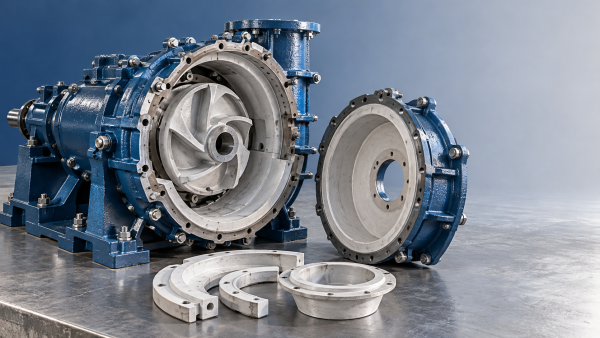
In a double-casing slurry pump, replaceable wear liners sit inside an outer structural casing. Depending on the design, these liners may be metal, elastomer, or another suitable wear-resistant material. The outer casing provides structural support and containment as designed, while the liners form much of the slurry-contacting passage.
In a single-casing design, the main casing itself forms the wear-resistant slurry passage and performs the structural function. Once wear reaches the manufacturer's allowable limit, the casing may need replacement or an approved repair. This does not mean every component is integral: side plates, throatbushes, and other wear parts may still be separately replaceable.
Terminology varies between suppliers. A quotation described as “single casing” or “double casing” does not establish the exact replacement scope. Cross-sectional drawings and parts lists are more useful: they show which surfaces wear, which parts can be changed independently, and what must be dismantled to reach them.
The distinction matters because double casing separates some wear-replacement costs from structural-casing costs. It does not eliminate impeller wear, shaft-seal maintenance, bearing work, or the consequences of operating outside the pump's suitable range.
The strongest case for double casing is repeated casing wear
If the volute or casing liner is a recurring maintenance item, preserving the outer casing can reduce the material replaced during each overhaul. This becomes valuable when the structural casing remains fit for service through several liner changes and the liner assembly costs materially less than a complete single casing.
However, a replaceable liner is not necessarily inexpensive. A large high-chromium alloy liner can still be a substantial casting, with significant purchase, freight, and handling costs. A lined assembly may also require several components, seals, and fasteners. The comparison must use the complete replacement package rather than the price of one prominently quoted part.
Wear life is equally important. A cheaper liner that requires more frequent replacement can produce a higher annual parts bill than a longer-lasting single casing. Conversely, a liner system that provides suitable wear resistance and allows selective replacement can avoid discarding material that still has useful life.
Localized wear deserves particular attention. If one region determines the overhaul interval, a design with a separately replaceable component at that location may offer better economics than one requiring a larger assembly to be replaced. That advantage depends on the actual parts breakdown, not simply the number of casings.
Retention of the outer casing also has limits. Liner damage, leakage behind the liner, corrosion, or operation beyond allowable wear limits can compromise the surrounding assembly. Inspection and timely replacement are necessary to preserve the intended cost advantage. An outer casing should not be treated as permission to run a failed liner until the next convenient shutdown.
Wear life depends on more than the casing label
A comparison between a rubber-lined double-casing pump and a hard-metal single-casing pump changes both the construction and the material. Any difference in maintenance cost cannot automatically be credited to the casing arrangement.
Elastomers can perform well with suitable fine-particle abrasive slurries, but sharp oversize particles, temperature, chemical compatibility, and impeller peripheral speed can restrict their use. Hard-metal components present different wear characteristics and limitations, including corrosion compatibility and impact resistance. Neither material category is universally cheaper over its service life.
Several operating variables can dominate the result:
- Particle size, shape, and hardness: Fine abrasive particles and coarse angular solids impose different wear mechanisms. Occasional oversize material may damage a liner even when the normal slurry is suitable.
- Solids concentration and variability: Changes in feed conditions can alter loading and wear patterns, making average concentration alone an inadequate comparison basis.
- Pump speed and operating point: Excessive speed and operation far from the intended range can increase wear and hydraulic loading. Actual hydraulic selection matters more than a casing label.
- Suction conditions: Cavitation and unstable suction can damage components and shorten maintenance intervals regardless of casing construction.
- Chemistry and temperature: Corrosion, elastomer degradation, and material-property limits can determine replacement intervals before abrasion does.
A defensible cost comparison therefore starts with equivalent flow, head, slurry properties, operating hours, and acceptable performance. Comparing an oversized pump running under poor conditions with a correctly selected alternative measures selection quality as much as construction.
Service access can reverse the parts-cost advantage
Double-casing construction adds interfaces and components that must be handled correctly. Depending on the design, liner replacement can involve opening a split casing, lifting heavy wear parts, renewing seals, cleaning mating surfaces, and confirming correct seating. Incorrect assembly can cause leakage, liner movement, or premature failure.
Yet more components do not necessarily mean a longer outage. A pump designed for straightforward access, equipped with suitable lifting arrangements and serviced by a prepared crew, may be faster to overhaul than a simpler pump installed in a congested location.
The reverse is also possible. A single-casing assembly may be relatively quick to exchange when a complete spare is available. Its replacement part may cost more, but the shorter intervention can offset that difference where maintenance windows are tight.
Useful labor estimates should cover isolation, draining, flushing, access preparation, disassembly, inspection, lifting, reassembly, clearance adjustment, and return to service. Quoted “liner replacement time” may cover only the central mechanical task and exclude much of the actual outage.
Seized fasteners, insufficient crane capacity, restricted access, and pipework loads can extend either type of repair. Installation drawings and the planned maintenance procedure provide a firmer basis for estimating labor than assumptions about simpler or more complex construction.
Compare recurring cost, not just overhaul invoices
A practical direct-maintenance comparison can use the following relationship:
Maintenance cost over a common period = scheduled replacement parts + scheduled labor and services + expected unscheduled repair costs.
Inventory carrying costs and expedited freight can be added where material. Lost production should be reported alongside direct maintenance rather than hidden inside it, because its value depends on plant redundancy, storage capacity, and whether the pump limits overall output.
Consider a purely illustrative calculation, not a supplier quotation or a prediction of service life. Assume two pumps perform the same duty for 6,000 operating hours per year:
The annualized values divide yearly operating hours by the overhaul interval and multiply by the cost per event. They represent a long-run average; actual annual expenditure will be uneven.
Despite its cheaper wear-part package, the double-casing pump is more expensive under these assumptions because it requires more frequent work and more labor per event. If its overhaul interval increased to 4,000 hours without changing the event cost, its annualized scheduled maintenance cost would fall to $16,500.
The calculation illustrates why the maintenance interval is a decisive input. It also shows why a parts quotation alone cannot establish which pump is cheaper. The example excludes unscheduled failures, stockholding, and production losses; those require separate assumptions.
Downtime and spare-parts supply need their own assessment
A lower-cost wear package offers little protection against a prolonged outage if the correct liner is unavailable. For internationally sourced pumps, the relevant issue is not simply catalog availability but the time required to manufacture, ship, clear, and deliver the exact material and configuration.
Double-casing designs can require several matched liner components. Their availability should be checked as a complete overhaul set, including seals and any hardware that cannot safely be reused. Single-casing designs may involve fewer major pieces but heavier or more expensive spares. Neither arrangement automatically minimizes inventory value.
Interchangeability also needs confirmation. Similar dimensions or model descriptions do not establish that parts have the correct fits, material properties, hydraulic geometry, or pressure suitability. An inexpensive substitute that changes clearances or wears prematurely can erase the original saving.
The economic effect of downtime depends on the system. With an installed standby pump, a maintenance event may create little immediate production loss, although redundancy is reduced while repairs continue. Without standby capacity, a modest difference in repair duration can outweigh a substantial difference in component price.
Fewer maintenance events may also mean fewer isolations and heavy lifts. That operational benefit should be considered alongside cost, but it must come from a demonstrated longer service interval—not an assumption that one casing design inherently requires less intervention.
What evidence supports a lower-maintenance-cost claim?
The most useful evidence is a component-level maintenance history from a comparable duty, with operating conditions recorded. “Pump life” is too broad: the casing liner may survive several impellers, while seals or bearings may drive more frequent shutdowns. If a common component determines the outage schedule, changing the casing arrangement may have limited effect on maintenance frequency.
Where comparable records are unavailable, a quotation can still be evaluated against specific questions:
- Which components are included in the proposed overhaul package, and which are expected to last through multiple overhauls?
- What slurry properties, speed, flow, and head support the estimated replacement interval?
- What wear limits trigger replacement, and how will they be measured?
- Can worn components be changed independently, or must matched assemblies be replaced?
- What access, lifting equipment, special tools, and labor hours does the proposed service procedure require?
- Which critical spares are stocked, and what are the replenishment arrangements?
Estimates should be tested against shorter and longer wear-life assumptions. If a small change in the assumed interval reverses the result, the cost advantage is uncertain and should not be presented as an inherent design benefit. Inspection records, operating hours, and measured wear can progressively replace those assumptions.
Double casing is most likely to reduce maintenance cost when replaceable liners avoid repeated replacement of a costly structural casing, provide adequate wear life, and can be serviced efficiently. Single casing remains economically credible when casing wear is slow, replacement is straightforward, or its wear life offsets a higher replacement-part price. The deciding evidence is the cost and frequency of actual maintenance events—not the construction label alone.
Related Information
 Oct 25, 2026
Are Double-Casing Slurry Pumps Cheaper to Maintain Than Single-Casing?
Is a double-casing slurry pump cheaper to maintain than a single-casing pump? Compare wear life, parts, labor, and downtime to find the best value for your operation.- Oct 25, 2026
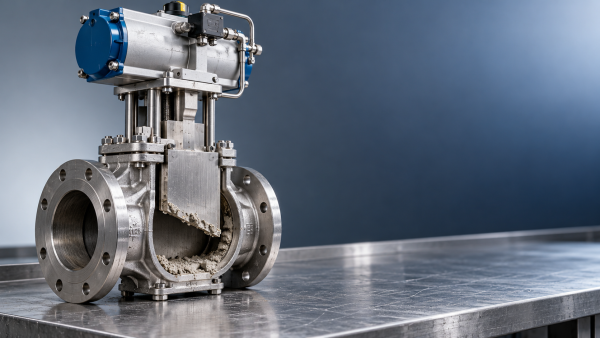
How Do You Free a Slurry Knife Gate Valve Stuck Partly Open?
How do I free a slurry knife gate valve stuck partly open? Discover safe isolation steps, approved flushing methods, and repair checks to restore reliable operation and reduce downtime. - Oct 24, 2026
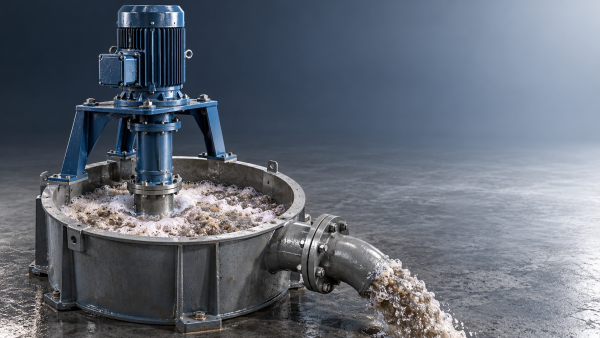
How Much Should a Froth Pump Be Oversized for Flotation Concentrate?
How much should a froth pump be oversized for flotation concentrate? Learn how inlet air, peak flow, and head affect sizing to avoid costly mistakes and select the right pump. - Oct 24, 2026
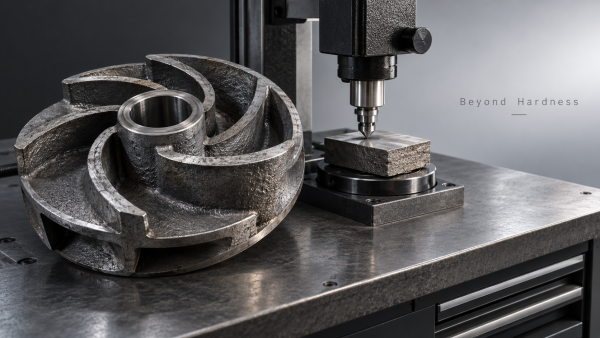
Is Higher Hardness Always Better for High-Chrome Pump Castings?
Is higher hardness always better for high chrome pump castings? Discover how toughness, carbide structure, and slurry conditions affect service life—and choose smarter to reduce downtime.

{item.title}
Get a Quote
Please leave your information and email address, and we will contact you as soon as possible.