
When do wear resistant slurry pumps justify higher upfront cost over standard models?
Procurement professionals in mineral processing, cement production, power generation, and heavy industrial manufacturing face this question regularly—not as a theoretical exercise, but as a real budget line item with operational consequences. A wear resistant slurry pump often carries a 30–70% higher initial price than a standard-duty counterpart. That premium isn’t arbitrary, but it also isn’t automatically justified. The decision hinges on three tightly interlocked conditions: how aggressively the slurry erodes components, how much downtime the operation can tolerate, and whether maintenance labor and spare parts costs are already straining the OPEX budget.
The short answer: wear resistant slurry pumps typically pay back within 6–18 months when operating in applications where standard pumps require replacement or major rebuilds more than twice per year—or when unplanned downtime exceeds 4 hours per incident and occurs more than quarterly. But that rule of thumb only holds if you’re measuring the right things, not just counting pump replacements.
It’s not about solids content alone—it’s about particle hardness, velocity, and duty cycle
Many procurement teams default to solids concentration (% by weight) as the primary filter for wear resistance needs. That’s misleading. A 25% limestone slurry at low velocity may cause minimal wear on cast iron impellers; a 12% quartz sand slurry at high flow velocity through a tight discharge bend can degrade the same pump in under 200 operating hours. What matters is the combination:
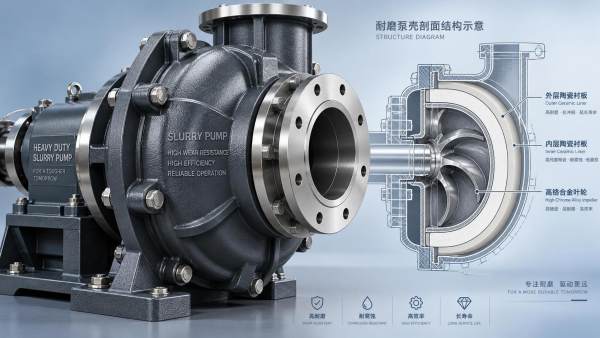
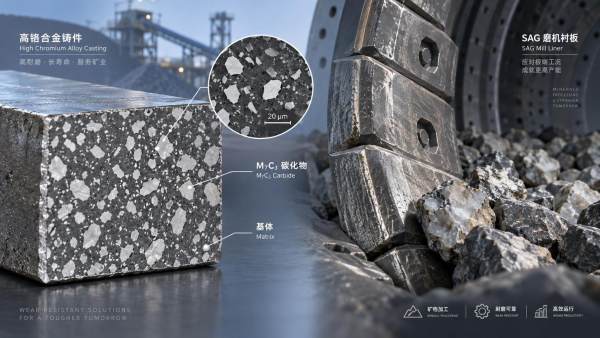
- Abrasive particle hardness relative to wet-end materials: Quartz (Mohs 7), alumina (9), or steel mill scale (often >8) will rapidly erode ASTM A532 Class I white iron—but not necessarily ASTM A532 Class II or III, nor high-chrome alloys like Ni-Hard 4 or duplex stainless steels with >27% Cr.
- Flow velocity and turbulence: Velocity above 2.5 m/s dramatically accelerates erosion, especially at elbows, reducers, and volute exits. Pumps running near shut-off head or throttled heavily generate recirculation zones that accelerate localized wear—regardless of average solids loading.
- Continuous vs. intermittent duty: A pump running 24/7 with no cooling breaks accumulates thermal fatigue and abrasive wear synergistically. Intermittent service allows some recovery—thermal stress relaxes, particles settle, and seals reseat. This difference shifts the break-even point significantly.
If your application hits two or more of these—e.g., quartz-rich tailings at 3.2 m/s, continuous 22-hour shifts—you’re already past the threshold where material upgrades become financially rational, not just technically advisable.
Downtime cost isn’t hypothetical—it’s quantifiable and often underestimated
Standard pumps fail predictably: seal leaks first, then bearing noise, then impeller clearance loss leading to vibration and casing wear. Wear resistant slurry pumps delay those failure modes—but they don’t eliminate them. What changes is the *pattern* of failure and its impact.
A standard pump in aggressive service might require seal replacement every 3–4 weeks and full wet-end rebuild every 3–4 months. Each seal change takes 2–4 hours of skilled labor; each rebuild consumes 12–20 hours plus $1,800–$3,200 in parts. More critically, those interventions often occur during scheduled maintenance windows—unless vibration spikes or flow drops trigger emergency shutdowns.
Wear resistant variants extend seal life to 8–12 weeks and wet-end life to 9–18 months. But their real value emerges when failures shift from routine to rare—and therefore unpredictable. When a standard pump fails mid-shift during a critical batch pour or ore transfer, the ripple effect isn’t just repair time. It’s lost throughput, overtime labor to catch up, potential quality deviations from inconsistent flow, and sometimes safety incidents from rushed repairs under pressure.
Calculate downtime cost conservatively: include direct labor (including supervision), lost production value (not just margin—use throughput × unit value), energy consumed during idle periods, and any contractual penalties. If that number exceeds $2,500/hour—and many processing lines do—the 4–6 hour reduction in annual unplanned downtime from upgrading often covers half the pump’s premium before Year 1 closes.
Maintenance labor and spare parts logistics matter more than spec sheets
Procurement teams often compare pump specs side-by-side: head, flow, efficiency, material grade. But the real differentiator lies downstream—in the tooling, training, and inventory required to support them.
Standard pumps use common shafts, generic mechanical seals, and widely stocked castings. Maintenance crews know the torque sequences, alignment tolerances, and failure signatures cold. Spare parts arrive in 2–3 days from regional distributors.
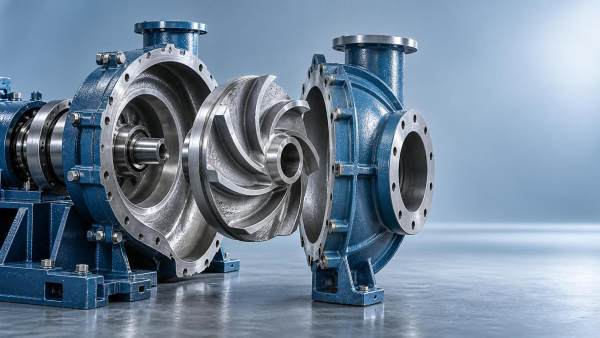
Wear resistant slurry pumps frequently require proprietary shaft sleeves, specialized double-cartridge seals rated for >10 bar differential pressure, and custom-machined impellers or liners made from hardened alloys that aren’t carried in general stock. Lead times stretch to 6–10 weeks. And if your maintenance team hasn’t rebuilt one before, the first overhaul may take 2–3x longer than expected—even with OEM documentation.
This doesn’t negate the ROI—it reframes it. The justification strengthens when your site already maintains a dedicated slurry pump technician, stocks key wear components (like ceramic throatbushes or tungsten-carbide wear plates), and has experience with alloy-specific heat treatment requirements during reassembly. If not, factor in 3–6 months of capability ramp-up before the full TCO benefit materializes.
Where the premium *doesn’t* pay back—and what to watch instead
Not every high-solids application warrants the upgrade. Three scenarios consistently undermine the business case:
- Batch processes with long idle periods: If the pump runs 4 hours/day, 3 days/week, and sits idle otherwise, corrosion and gasket degradation often dominate over abrasive wear. A robust standard pump with upgraded elastomers may outperform a wear resistant model on total lifecycle cost.
- Slurries with sharp, angular particles but low density: Fly ash, certain coal washery rejects, or crushed glass slurries cut deeply but lack mass-driven impact energy. Here, surface-hardened steels (e.g., ASTM A532 Type A) often deliver better value than full high-chrome castings.
- Applications where pump size is oversized: An over-sized pump running far left on its curve generates cavitation at the impeller eye—eroding even wear-resistant materials faster than intended. Fixing the system hydraulics (e.g., trimming impeller, adding control valves) delivers greater ROI than upgrading the pump itself.
Also beware of “wear resistant” claims tied solely to hardness numbers (e.g., “60 HRC”) without context. Hardness without fracture toughness invites chipping under impact loading. Look instead for documented field performance in comparable service—especially data showing mean time between failures (MTBF), not just lab wear rates.
Ultimately, the decision isn’t about choosing “better” hardware—it’s about aligning capital spend with where your plant’s real constraints lie: uptime reliability, labor capacity, spare parts agility, or production continuity. When abrasive wear is accelerating maintenance frequency, driving unplanned stops, or consuming skilled labor disproportionate to output, the higher upfront cost isn’t an expense. It’s a targeted investment in operational resilience—one measured not in dollars saved on the invoice, but in hours reclaimed, batches completed, and schedules kept.
 Sep 16, 2026When do wear resistant slurry pumps justify higher upfront cost over standard models?Wear Resistant Slurry Pumps deliver ROI in 6–18 months for high-erosion, continuous-duty applications—cut downtime, extend service life, and slash TCO.
- Sep 14, 2026How do high chrome alloy castings perform in abrasive mineral processing environments?High Chrome Alloy Castings deliver exceptional wear resistance in abrasive mineral processing—discover how microstructure, heat treatment, and real-world conditions drive true service life.
- Sep 15, 2026What causes rapid impeller wear in slurry pumps—and how Delin mitigates it through material and design controlWhat causes rapid impeller wear in slurry pumps? Discover how Delin’s integrated material & hydraulic design control extends service life—proven in harsh mineral and wastewater applications.
 May 28, 2026Unlocking the Power of the Venturi Dredge PumpDiscover the innovative features and benefits of the Venturi Dredge Pump for efficient dredging.
Get a Quote
Please leave your information and email address, and we will contact you as soon as possible.