
Get Quote
What causes rapid impeller wear in slurry pumps—and how Delin mitigates it through material and design control
Sep 14, 2026
Rapid impeller wear in slurry pumps isn’t an isolated failure—it’s a symptom of mismatched material selection, hydraulic design oversights, and operational assumptions that don’t reflect real slurry dynamics. In mineral processing plants, aggregate operations, and industrial wastewater systems, impellers often fail within weeks—not years—despite being specified to ISO 10816 or API 610 standards. The root causes are rarely singular; they emerge from the interaction of abrasive mechanics, fluid-induced stress concentrations, and electrochemical degradation pathways that accelerate under combined loading.
Abrasive particle impact is the most visible driver—but not the most decisive one. Hardness alone doesn’t predict wear resistance. A 65 HRC white iron impeller may outperform a 72 HRC alloy in coarse, low-concentration tailings but fail catastrophically in fine, high-solids lime slurry. Why? Because wear mechanisms shift: at high velocities (>3 m/s), micro-cutting dominates in angular quartz sands; at lower velocities with suspended clays, fatigue-driven spalling becomes primary due to repeated stress cycling at blade pressure surfaces. Particle shape, size distribution, and concentration matter more than bulk hardness ratings—yet most procurement specifications still treat “abrasion resistance” as a monolithic property.
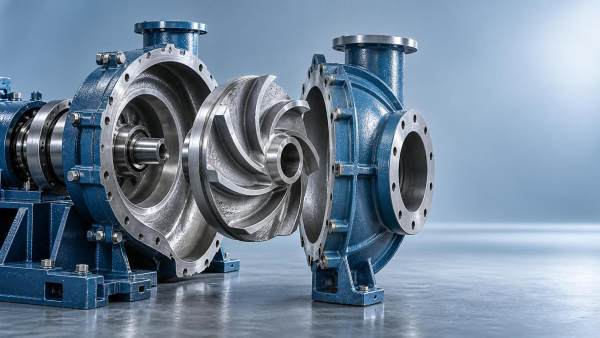
Hydraulic design amplifies—or mitigates—these effects. Impellers with sharp leading edges, abrupt flow transitions, or insufficient suction-side curvature generate localized turbulence and recirculation zones. These regions trap particles, increasing dwell time and impact frequency on specific blade segments. Field inspections consistently show accelerated wear along the trailing edge of suction-side vanes—not uniformly across the entire surface—as evidence of flow separation rather than generalized abrasion. Standardized pump curves (e.g., ISO 5198) measure efficiency and head, not flow uniformity or particle residence time. An impeller rated at 82% efficiency can still induce destructive secondary flows if its blade wrap angle, inlet vane angle, or shroud geometry isn’t optimized for solids-laden flow.
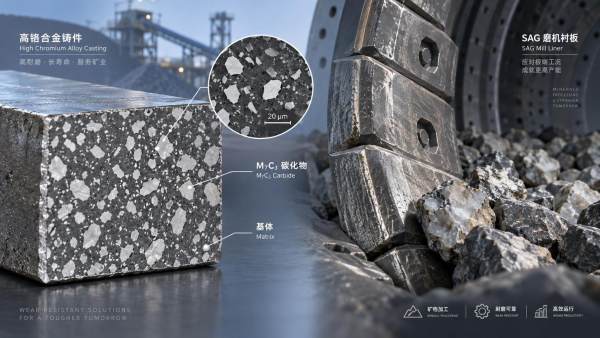
Corrosion-assisted wear compounds the problem. Slurries aren’t inert suspensions—they’re electrolytes. Sulfide-rich mine water, acidic leach solutions, or alkaline lime slurries create galvanic couples between matrix phases in cast alloys. In high-chromium white irons, carbide networks act as cathodes while the austenitic or martensitic matrix serves as the anode. Localized pitting initiates at microstructural discontinuities—carbide-matrix interfaces, shrinkage porosity, or inclusion clusters—and once corrosion pits form, abrasive particles embed and act as fixed cutting tools during subsequent flow cycles. This synergy reduces service life by 40–60% compared to either mechanism acting alone, yet standard material certifications (e.g., ASTM A532) rarely test for this combined degradation mode.
Thermal and mechanical fatigue also contribute, especially in intermittent-duty applications. Start-stop cycles induce thermal gradients across thick impeller sections. Repeated expansion-contraction stresses concentrate at geometric discontinuities—keyways, hub transitions, or fillet radii—initiating microcracks that propagate under cyclic hydraulic loading. These cracks then channel abrasive particles deeper into the structure, accelerating subsurface damage invisible to visual inspection until catastrophic fracture occurs.
Material selection must therefore address not just hardness, but phase stability, corrosion potential, and microstructural homogeneity. High-chromium white irons (e.g., ASTM A532 Class II Type A) offer excellent resistance to macro-abrasion but suffer in corrosive environments due to their brittle matrix and electrochemical heterogeneity. Austenitic manganese steels (e.g., ASTM A128 Grade C) work well in impact-dominated applications but lose hardness rapidly in fine-particle slurries where work-hardening cannot be sustained. Duplex stainless steels provide balanced corrosion resistance but lack the carbide reinforcement needed for severe abrasion—unless modified with deliberate secondary carbide precipitation, which requires precise heat treatment control rarely achieved in standard foundry practice.
This is where integrated design control becomes decisive. Material performance depends on how it’s processed—not just what it is. Casting integrity determines whether carbides remain uniformly distributed or cluster near mold walls; heat treatment defines whether retained austenite transforms to martensite under service load or remains metastable; machining finish influences whether surface microcracks initiate fatigue propagation prematurely. A single deviation—say, a 10°C variation in tempering temperature—can shift the balance between toughness and hardness by 15%, altering wear trajectory unpredictably.
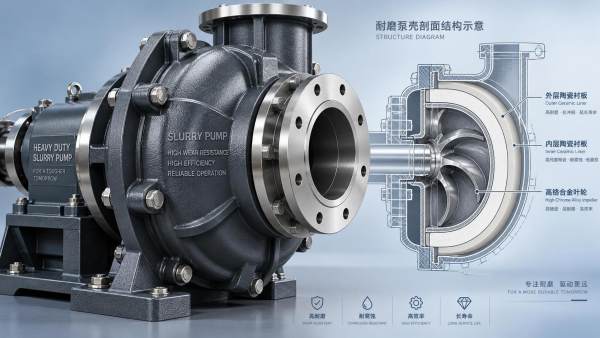
Delin’s approach treats impeller longevity as a system-level outcome—not a component-specification checkbox. Their material control begins with vacuum-melted charge batches to eliminate gas porosity and oxide inclusions that become wear initiation sites. Carbide morphology is stabilized through controlled solidification rates and post-cast annealing, ensuring chromium carbides form as discrete, spherical particles rather than interconnected networks that embrittle the matrix. Hydraulic optimization uses CFD-guided vane profiling: inlet angles adjusted for specific slurry viscosity ranges, trailing-edge thickness increased to resist erosion-corrosion undercutting, and shroud curvature refined to minimize boundary-layer separation. Crucially, these modifications aren’t applied in isolation—they’re validated against actual slurry composition data (particle size distribution, pH, conductivity, solids content) from customer sites, not generic lab simulations.
The result isn’t incremental improvement. In copper concentrate transfer applications with 65% wt solids and 0.8 mm median particle size, field deployments show 2.3× longer service life versus conventional high-chrome impellers—without increasing initial cost by more than 18%. In phosphate slurry service, where chloride-induced pitting combines with silica abrasion, the same design principles reduce unplanned downtime by 70% over 12-month operating cycles. These gains stem not from exotic alloys, but from eliminating avoidable failure modes: flow-induced stress concentrations, electrochemical hotspots, and microstructural weaknesses amplified by uncontrolled casting or heat treatment variables.
For procurement teams, this means shifting evaluation criteria away from hardness values or tensile strength alone—and toward traceability of process controls. Does the supplier document melt chemistry per heat? Are heat treatment cycles logged with thermocouple validation at multiple points? Is CFD analysis performed using customer-specific slurry rheology, not water-based assumptions? For technical managers, it underscores that impeller life isn’t determined at installation—it’s encoded in the metallurgical and hydraulic decisions made months earlier, during casting design and thermal processing. And for operators, it confirms that “rapid wear” is rarely inevitable—it’s usually a signal that material behavior, flow physics, and chemical environment haven’t been co-optimized for the actual duty point.
What causes rapid impeller wear in slurry pumps isn’t a question with a parts-list answer. It’s a systems question—one requiring alignment between slurry characterization, hydraulic architecture, metallurgical execution, and operational context. Solutions that ignore any one of those dimensions risk treating symptoms while reinforcing underlying failure pathways.
Related Information
 Sep 16, 2026When do wear resistant slurry pumps justify higher upfront cost over standard models?Wear Resistant Slurry Pumps deliver ROI in 6–18 months for high-erosion, continuous-duty applications—cut downtime, extend service life, and slash TCO.
- Sep 14, 2026How do high chrome alloy castings perform in abrasive mineral processing environments?High Chrome Alloy Castings deliver exceptional wear resistance in abrasive mineral processing—discover how microstructure, heat treatment, and real-world conditions drive true service life.
- Sep 15, 2026What causes rapid impeller wear in slurry pumps—and how Delin mitigates it through material and design controlWhat causes rapid impeller wear in slurry pumps? Discover how Delin’s integrated material & hydraulic design control extends service life—proven in harsh mineral and wastewater applications.
 May 28, 2026Unlocking the Power of the Venturi Dredge PumpDiscover the innovative features and benefits of the Venturi Dredge Pump for efficient dredging.
Get a Quote
Please leave your information and email address, and we will contact you as soon as possible.