
How Do FGD Pump Maintenance Costs Compare Across Pump Designs?
A flue gas desulfurization pump maintenance cost comparison shows that the cheapest purchase price rarely delivers the lowest lifecycle expense in abrasive slurry service.
For most operators, horizontal centrifugal slurry pumps offer the best balance of access, predictable repairs, and operating cost when properly sized for duty.
Vertical sump and submerged pumps can reduce some sealing requirements, but their maintenance costs often rise when inspection, lifting, or internal access becomes difficult.
The right choice depends on slurry chemistry, solids concentration, pump location, required availability, maintenance capability, and the financial consequences of unplanned shutdowns.
Rather than comparing maintenance budgets by pump type alone, plant teams should evaluate wear life, labor hours, spare-part consumption, downtime exposure, and serviceability.
FGD applications are especially demanding because limestone slurry, gypsum crystals, chlorides, fluctuating pH, and occasional solids upset conditions accelerate component degradation.
A pump design that survives nominal operating conditions may still become expensive if it cannot tolerate off-design flow, air entrainment, scaling, or abrasive recirculation.
This article compares common FGD pump designs from a maintenance perspective and explains where each design can provide value or create hidden operating costs.
What Drives Maintenance Cost in FGD Slurry Pump Service?
Pump maintenance spending is usually driven by wet-end wear, seal failures, bearing damage, corrosion, vibration, labor access, and the duration of each outage.
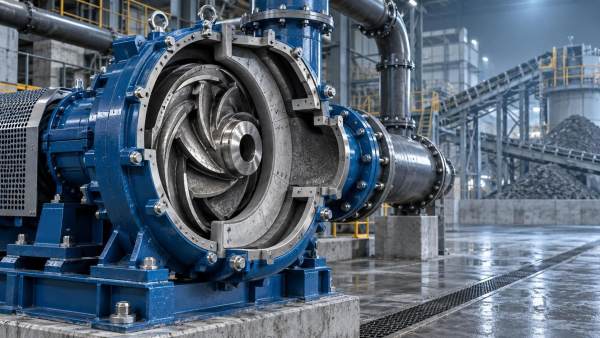
Wet-end parts commonly include impellers, liners, throatbushes, casings, suction liners, and expellers, depending on the selected pump configuration.
In abrasive FGD duty, material selection has a direct effect on replacement frequency, but premium materials do not compensate for poor hydraulic selection.
Excessive flow velocity can erode metal surfaces rapidly, while low-flow recirculation can create localized turbulence, heat, vibration, and uneven component wear.
Slurry concentration also matters because gypsum particle size, limestone quality, and solids loading influence abrasion patterns across the pump hydraulic passageways.
Chloride-rich environments add corrosion risk, particularly where coating damage, crevice corrosion, or incompatible fasteners allow aggressive process liquid to penetrate.
Mechanical seals can be a major recurring cost when flush-water quality is poor, suction conditions are unstable, or solids enter the seal chamber.
Downtime frequently costs more than replacement parts, particularly when a pump limits absorber circulation, gypsum dewatering, wastewater treatment, or process availability.
Maintenance access changes the economics significantly because a repair requiring several hours of lifting and disassembly may require a full shift on another design.
Therefore, a meaningful flue gas desulfurization pump maintenance cost comparison should use annualized lifecycle cost rather than isolated spare-part prices.
How Do Horizontal Centrifugal FGD Pumps Compare?
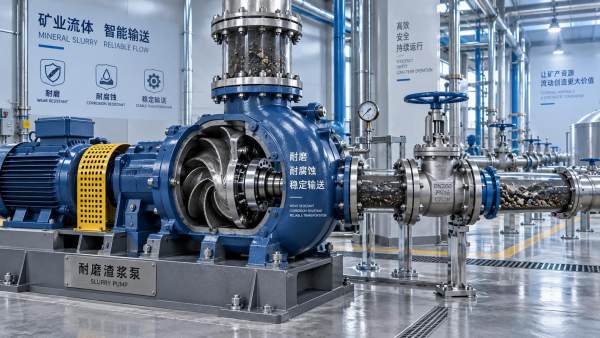
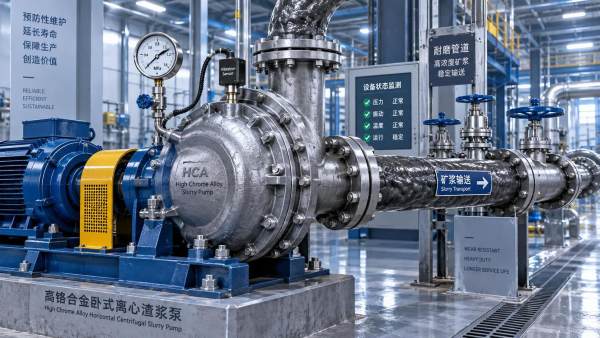
Horizontal centrifugal slurry pumps are widely used in FGD systems because they combine high flow capability, robust construction, and relatively straightforward maintenance access.
Most designs allow technicians to inspect bearings, seals, couplings, and drive components without removing the pump from its installed foundation.
Back-pull-out arrangements can further reduce repair time by allowing the rotating assembly to be removed while the casing and piping remain connected.
This accessibility usually lowers labor cost and reduces outage duration, especially when plants maintain spare rotating assemblies for critical duty positions.
Horizontal pumps also support a broad range of wet-end materials, including high-chrome white iron, duplex stainless steel, rubber linings, and specialty alloys.
High-chrome wet ends generally perform well against abrasive gypsum slurry, while elastomer-lined designs can be advantageous under selected particle and chemistry conditions.
The principal maintenance drawback is sealing complexity, since horizontal pumps commonly use mechanical seals, packed glands, or expeller-based sealing arrangements.
Mechanical seal failures can be costly when slurry enters seal faces, flush systems plug, or operators run the pump outside its preferred pressure range.
However, seal costs are manageable when the application is correctly engineered, seal support systems are maintained, and suction conditions remain stable.
For many absorber recirculation, limestone slurry, and gypsum transfer duties, horizontal centrifugal pumps produce the most predictable maintenance budget over time.
Where Can Vertical Sump Pumps Reduce or Increase Costs?
Vertical sump pumps are commonly selected for pits, sumps, overflow collection points, drainage areas, and applications where flooded suction is beneficial.
Because the pump wet end operates below liquid level, these designs can avoid priming requirements and reduce the risk of suction-side air entry.
Many vertical configurations do not require a conventional mechanical seal, which can eliminate one important source of recurring maintenance expense.
This advantage is meaningful where sealing water is unavailable, contaminated, unreliable, or expensive to treat within the broader FGD water balance.
Yet seal savings should not be mistaken for universally lower maintenance costs, because submerged components can be harder to inspect and repair.
Long shafts, column pipes, line bearings, and submerged drive components may require additional attention, particularly in deep sump installations.
Wear or misalignment in line bearings can create vibration, shaft deflection, and contact damage that is less visible during routine walkdown inspections.
Maintenance teams may need lifting equipment, confined-space procedures, or sump isolation before removing the pump, increasing labor time and outage coordination.
Vertical sump pumps are usually economical for intermittent drainage or auxiliary services, but continuous high-solids duty demands careful design verification.
They are strongest when their installation benefits outweigh their more challenging service access, not simply because they eliminate a mechanical seal.
What About Submerged and Cantilever Pump Designs?
Submerged and cantilever pump designs are often considered where floor space is limited, process containment is important, or installation geometry favors vertical equipment.
Cantilever designs position bearings above the liquid level and extend the shaft into the sump, avoiding submerged bearings in many configurations.
This can improve reliability compared with fully submerged long-shaft designs, particularly when slurry contamination would otherwise damage underwater bearing assemblies.
However, the unsupported shaft length must match the application, because high solids, deep immersion, and hydraulic loads can increase deflection risk.
Abrasion around the lower wet end can remain severe, and component replacement may require withdrawing the complete assembly from the sump.
Where pumps are installed in corrosive absorber areas, lifting operations may also involve degraded fasteners, restricted access, and additional safety controls.
Submerged pumps may reduce leak exposure at the floor level, which is valuable where slurry spills create housekeeping, safety, or environmental concerns.
Still, containment benefits should be weighed against the time needed to retrieve the equipment when an impeller, liner, shaft, or bearing fails.
For critical continuous duty, many facilities install redundant submerged pumps so one unit can remain available during inspection or repair activities.
The maintenance economics improve substantially when redundancy, accessible lifting points, spare assemblies, and documented removal procedures are included during project design.
Why Wet-End Materials Matter More Than Initial Part Cost
Wet-end material selection often determines whether an FGD pump requires scheduled refurbishment or experiences repeated unplanned failures between planned outages.
High-chrome white iron is frequently used for abrasive slurry because its hardness provides strong resistance against erosive gypsum and limestone particles.
Its limitation is brittleness under impact loading, making material selection and operating control important where tramp material or severe cavitation may occur.
Rubber-lined components can offer excellent abrasion resistance in suitable services, especially when particle characteristics and slurry chemistry match the elastomer.
They may be less suitable where elevated temperatures, sharp particles, oil contamination, or chemical conditions attack the lining material.
Stainless steel and duplex alloys may improve corrosion resistance, but they are not automatically the best solution for heavy abrasion.
In some cases, operators pay more for corrosion-resistant alloys yet experience rapid erosion because hydraulic velocity and solids impact remain uncontrolled.
The relevant calculation is cost per operating hour, including labor and lost production, rather than the catalog price of a liner or impeller.
Plants should record wear measurements during overhauls, correlate them with operating data, and use the trend to forecast replacement intervals.
That evidence supports more accurate spare-part stocking and prevents premature replacement of components that still have useful service life remaining.
How Do Seal Systems Change the Maintenance Budget?
Seal selection is one of the most practical differences between FGD pump designs because leaks can trigger safety, reliability, and cleanup costs.
Mechanical seals provide controlled containment, but they require appropriate chamber pressure, compatible faces, reliable flushing, and protection from solids intrusion.
Double mechanical seals can improve containment for difficult duties, although their support systems introduce more instruments, piping, and maintenance points.
Packed gland seals are simpler and may tolerate certain slurry duties well, but they consume flush water and require regular adjustment.
Excessive gland leakage wastes water and creates slurry runoff, while insufficient leakage can overheat packing and damage the shaft sleeve.
Expeller seals can reduce or eliminate external flush-water demand in certain conditions, but performance depends on suction pressure and operating stability.
Vertical sump pumps can avoid conventional shaft seals entirely, which is attractive for dirty or intermittent applications with limited seal support infrastructure.
Nevertheless, removing a seal does not remove maintenance responsibility; it shifts attention toward bearings, shafts, columns, and withdrawal access.
Facilities should compare seal cost using complete annual figures, including water, utilities, repair labor, cleanup, leakage consequences, and associated downtime.
For critical FGD duty, the most economical seal system is usually the one that matches real operating conditions instead of theoretical design conditions.
How Should Plant Teams Compare Downtime and Labor Exposure?
Downtime risk should be treated as a cost category because a pump failure can constrain emissions control, reduce production, or require costly operating adjustments.
Two pumps with similar annual spare-part spending can have very different business impacts if one can be repaired in four hours and another requires two days.
Horizontal pumps often have an advantage where maintenance crews can remove a cartridge, install a spare assembly, and rebuild offline.
Vertical and submerged pumps may require cranes, sump draining, work permits, and retrieval operations before technicians can begin the actual repair.
Labor exposure also matters because difficult access increases the probability of rushed work, assembly errors, lifting hazards, and extended troubleshooting.
Maintenance planners should document mean time to inspect, mean time to repair, and the additional preparation work required for each pump design.
These figures provide a more useful comparison than manufacturer claims about durability, especially at facilities with limited maintenance staffing or contractor dependence.
Redundant duty-standby arrangements can reduce production risk, but they do not eliminate repair expense or the need to preserve standby equipment condition.
A standby pump that is not periodically tested may fail when needed, turning a manageable maintenance event into a plant availability issue.
The best design is usually one that fits the site’s lifting capability, access limitations, spare strategy, and tolerance for operational interruption.
Which Pump Design Fits Common FGD Applications?
Absorber recirculation duty generally favors heavy-duty horizontal slurry pumps because these services demand high flow, abrasion resistance, and rapid maintainability.
Limestone slurry preparation and transfer also commonly suit horizontal centrifugal designs, especially where solids concentration and flow rate vary through operating cycles.
Gypsum transfer applications may use horizontal pumps where long operating hours justify easy wet-end access and predictable cartridge-based maintenance procedures.
Floor drainage, emergency collection, overflow pits, and localized sump duties often favor vertical sump pumps because flooded suction simplifies installation.
Submerged designs can be appropriate where leakage containment, limited floor area, or pit geometry makes conventional horizontal equipment impractical.
For intermittent or low-criticality services, a lower-complexity vertical pump may provide adequate value even when repair access is less convenient.
For continuous critical service, operators should prioritize robust wear materials, proven hydraulic performance, accessible maintenance, and available standby capacity.
Pump selection should also consider whether the facility can keep compatible spares, trained technicians, lifting equipment, and seal support supplies on site.
Standardizing pump models across comparable duties may lower inventory and training costs, provided the standardized design remains suitable for each slurry condition.
Using one pump design everywhere simply to simplify purchasing can create higher lifecycle cost when different FGD services have fundamentally different maintenance needs.
What Should Be Included in a Lifecycle Cost Comparison?
A practical comparison should begin with the expected operating profile, including flow range, head range, solids concentration, temperature, pH, and chloride content.
Next, estimate wet-end replacement intervals using field data, manufacturer recommendations, slurry test results, or comparable operating experience from similar installations.
Assign realistic prices to impellers, liners, seals, bearings, shafts, labor hours, lifting support, and any specialist repair services.
Calculate outage cost separately from maintenance labor because lost availability may be the dominant expense for pumps serving essential emissions-control processes.
Energy consumption should also be included, since operating a pump far from its best efficiency point can raise power cost and accelerate wear.
Evaluate inventory requirements, especially when imported castings, specialized alloys, or custom shaft lengths create long replacement lead times.
Consider inspection accessibility and determine whether technicians can identify wear before failure or only after performance has already deteriorated significantly.
Maintenance records should capture vibration, pressure, flow, motor load, seal leakage, wear measurements, and failure causes for future decisions.
Over time, this information allows teams to distinguish normal wear from problems caused by cavitation, misalignment, incorrect speed, or process changes.
A disciplined lifecycle model converts pump selection from a procurement decision into an asset-management decision based on measurable operating consequences.
Conclusion: Choosing the Lowest-Cost FGD Pump Design
A flue gas desulfurization pump maintenance cost comparison rarely produces one universal winner because FGD duties differ in solids, chemistry, criticality, and installation constraints.
Horizontal centrifugal slurry pumps usually provide the lowest predictable maintenance cost for demanding continuous service because wet-end access and repair procedures are well established.
Vertical sump pumps can reduce seal-related expense and simplify flooded-suction applications, but deeper installations may require more labor-intensive inspection and removal work.
Submerged and cantilever designs can solve containment and layout problems effectively, although their retrieval requirements must be considered in the maintenance plan.
The strongest selection decision combines wear-material suitability, hydraulic performance, seal strategy, repair access, spare availability, and the financial impact of downtime.
Plant operators should compare annualized cost per operating hour, not only acquisition cost or individual replacement-part prices, before approving an FGD pump design.
 Sep 15, 2026When custom slurry pumps make sense for unusual duty conditionsCustom Slurry Pumps deliver reliable performance in abrasive, corrosive, high-temperature, and variable-duty applications. Learn when customization reduces downtime and lifecycle costs.
- Sep 14, 2026How slurry pumping solutions can lower unplanned downtimeSlurry Pumping Solutions help manufacturers cut unplanned downtime through smarter pump selection, condition monitoring, wear control, and lifecycle-focused maintenance strategies.
- Sep 13, 2026When mining slurry pumps need thicker wear-resistant componentsMining Slurry Pumps need thicker wear-resistant components when wear rates disrupt planned maintenance. Learn how to select liners, impellers, and materials for reliable uptime.
- Sep 12, 2026What coal washing pumps need to handle dense magnetite mediaCoal Washing Pumps for dense magnetite media: learn how hydraulic design, wear materials, sealing, and suction stability protect pressure, uptime, and coal recovery.

Get a Quote
Please leave your information and email address, and we will contact you as soon as possible.