
Do High-Chrome Pump Parts Resist Coarse, Sharp Particles?
Yes. High-chrome pump parts can resist coarse, sharp particles, particularly where abrasive cutting and gouging dominate wear. Their hard microstructure makes them a strong candidate for slurry duties involving angular mineral solids. Resistance, however, is not the same as immunity: large particles striking at high velocity can still erode the metal, and heavy impacts or trapped solids can chip or fracture a hard casting.
The practical question is whether the expected wear rate and failure risk are acceptable in a particular pump. Particle hardness, size and concentration matter, as do pump speed, internal clearances and the way solids enter the impeller. A high-chrome part that performs well in a steady abrasive slurry may be a poor choice where occasional oversized rocks cause severe impact or blockage.
What high-chrome alloys do well against sharp solids
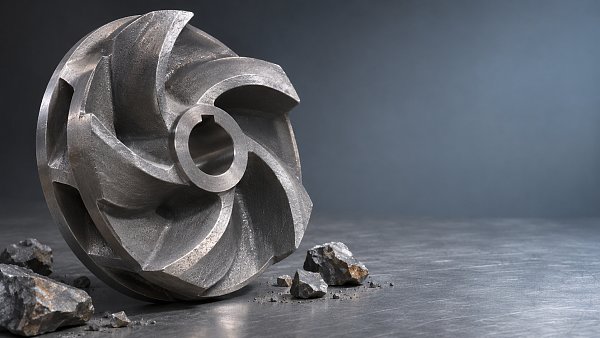
High-chrome white irons derive much of their abrasion resistance from hard chromium-rich carbides within a metallic matrix. When angular particles slide or scrape across a wetted surface, those hard constituents help resist the cutting and deformation that can quickly wear a softer material. Heat treatment and composition affect the final microstructure, so two castings described as high-chrome do not necessarily offer the same balance of wear resistance and toughness.
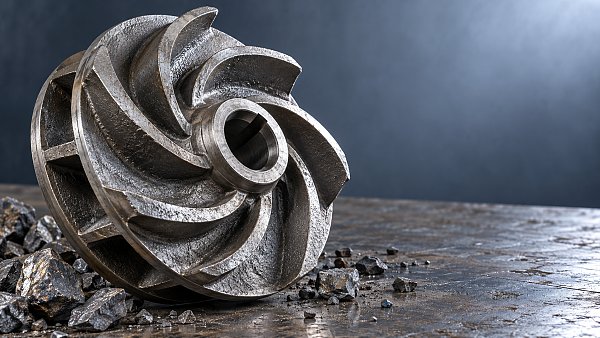
For a slurry pump, the benefit can appear in components such as impellers, liners and casing wear parts. These surfaces encounter solids moving at different speeds and angles. A liner exposed largely to repeated scouring may favor a hard alloy, while an impeller vane that sees concentrated impact and changing flow conditions must also tolerate local mechanical stresses.
Sharpness alone does not determine the result. A fine, hard particle can cause substantial erosion when enough of it passes over a surface at speed. A larger angular particle may produce deeper gouges, but its effect also depends on whether it slides along the metal, strikes it directly or becomes trapped between moving and stationary parts. The same alloy can therefore wear differently in different positions within one pump.
High-chrome is most convincing when the duty involves sustained mineral abrasion and the pump can pass the largest solids without frequent obstruction. It deserves closer scrutiny when the feed contains irregular lumps, tramp metal or other objects capable of delivering concentrated impact.
Where resistance can turn into chipping or breakage
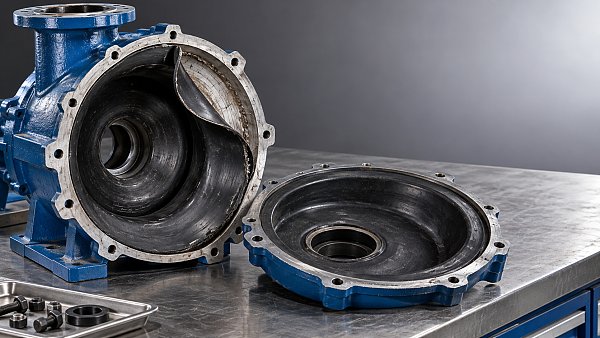
Hardness comes with a trade-off. High-chrome white iron is generally less able to deform before fracture than tougher metallic alternatives. A cutting particle may remove material gradually; a large object striking an edge or wedging in a tight clearance can create a localized load that chips the casting or causes a crack. A part may retain substantial thickness and still fail if a crack reaches a critical area.
The distinction matters when interpreting service life. If a liner wears thin in a fairly predictable pattern, a harder or differently formulated wear material may be worth evaluating. If impeller vanes break suddenly after a blockage, simply specifying greater hardness may leave the main failure mechanism unresolved. Operators should examine recovered pieces and operating records for signs of impact, cracking, uneven wear or recurring obstructions.
Coarse particles also change the hydraulic problem. Solids need sufficient passage through the suction opening and impeller, and the complete system must keep them moving without creating repeated blockages. Selecting a high-chrome impeller does not compensate for an unsuitable passage size or a feed containing objects the pump cannot safely handle.
Corrosion adds another variable. Some high-chrome alloys can offer useful corrosion resistance in particular environments, but performance depends on alloy chemistry, heat treatment and slurry chemistry. Where corrosive attack and abrasion occur together, the combined damage can differ substantially from either mechanism alone. A material selection based only on hardness leaves that interaction unexamined.
Which operating conditions make the biggest difference?
Before comparing materials, describe the slurry and pump duty as they actually vary. A single average particle size or solids concentration can conceal the short periods that cause the most damage.
- Particle hardness and shape: Hard, angular mineral particles are more likely to cut or indent a wear surface than softer, rounded particles under comparable conditions. The solids' mineral composition can matter as much as their size.
- Size distribution and largest expected solids: The coarse end of the distribution affects passage, impact and blockage risk. Occasional oversized material should be considered separately from the normal feed.
- Solids concentration: More solids can increase particle contact with pump surfaces and affect flow behavior. The relationship with wear is not necessarily proportional because particle interactions and flow patterns also change.
- Pump speed and operating point: Higher relative velocity can intensify erosion and impact. Operation far from the pump's intended range can also change internal flow and concentrate wear in particular areas.
- Slurry chemistry and temperature: The liquid phase can influence corrosion and material compatibility. Temperature and operating transients should be included when assessing the complete component, not just its abrasion resistance.
- Blockages and tramp material: Rocks, metal fragments or other foreign objects can create loads beyond those expected from the normal particle distribution.
These factors interact. Increasing speed may help meet a required duty, but it can also change the energy with which particles contact wetted parts. Reducing speed may lessen wear in some applications, yet the system must still maintain the required flow and keep solids moving. A speed change should be assessed against the pump curve and the behavior of the slurry in the entire circuit.
Feed consistency is equally important. A pump handling a relatively uniform slurry may wear at a manageable rate, while the same pump fed by intermittent coarse surges may experience localized damage. Screens, upstream crushing and feed controls can reduce exposure to oversized solids where they are appropriate to the process. They also introduce their own capacity and maintenance requirements, so their effect on the complete system needs consideration.
High-chrome, elastomers or a tougher metal?
Material selection is a comparison of likely failure modes, replacement intervals and operating consequences. High-chrome alloys often suit abrasive duties in which hard particles would rapidly cut softer surfaces. Elastomer-lined components can be attractive where their resilience helps absorb impact and where the slurry, temperature and fluid chemistry are compatible with the lining. A tougher metallic option may be worth considering when mechanical impact or fracture is the dominant concern, even if it sacrifices some resistance to sliding abrasion.
Neither category is universally superior. Elastomers can be vulnerable to cutting or tearing from sharp particles, and their performance depends on formulation and exposure conditions. Tougher metals can still erode quickly under severe abrasion. High-chrome castings may deliver a longer interval between wear replacements in one position while a different material proves more reliable elsewhere in the same pump.
Component geometry matters alongside material. The thickness available for wear, the shape of leading edges, impeller passage size and the location of replaceable liners all affect maintenance. For example, a material that wears slowly but fails unpredictably may be less desirable than one with a shorter, more predictable replacement interval if an unplanned shutdown has a high cost.
Ask for the specific alloy designation and applicable casting and heat-treatment requirements when comparing quotations. A generic “high-chrome” description provides too little information to judge equivalence. Also check whether the proposed part is dimensionally interchangeable with the installed pump and whether any material change affects clearances, balance or other manufacturer requirements.
How to judge a proposed part before committing to it
Start with the component that limits service life. An impeller with worn vane tips, a liner with a localized erosion channel and a casing damaged by impact present different problems. Photographing wear patterns and recording the location and timing of failures can make a material discussion much more useful than reporting only that “the pump wears out quickly.”
For a new duty, provide the pump supplier with the expected flow and head, slurry composition, solids concentration, particle size distribution and the largest objects that may reach the pump. Include the liquid chemistry, temperature and any foreseeable variation in feed. Ask how the proposed material and pump configuration address abrasion, impact and passage of the largest solids.
For an existing installation, compare like with like. A change in ore, operating speed or throughput can alter wear enough to obscure the effect of a new part. Record operating hours and the conditions over each trial period, and inspect parts at planned intervals. Where practical, measure remaining thickness or another consistent wear indicator at identified locations. A useful comparison considers both gradual material loss and any cracking, chipping or blockage events.
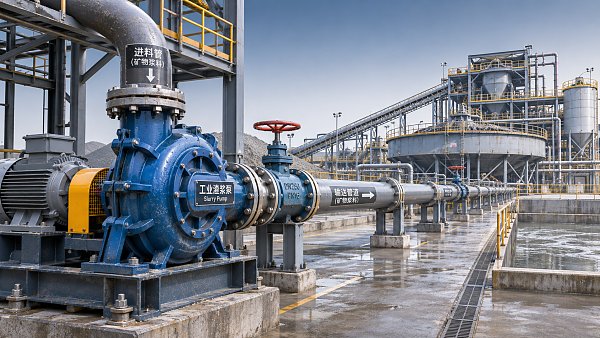
Replacement planning should cover the whole slurry circuit. A custom isolation valve may need its own review for particle passage, sealing and maintenance, and a supplier's lead time for a custom knife gate valve can affect shutdown planning. That schedule should be considered alongside the availability of pump wear parts, particularly when both components must be changed during the same outage.
High-chrome parts are a sound option when abrasive wear is the principal problem and the pump can accommodate the solids without repeated heavy impacts. If the evidence points to fracture, trapped rocks or chemical attack, investigate those mechanisms before treating a harder casting as the answer. The most useful specification is one tied to the actual slurry, the vulnerable component and an inspection plan that can show how the part performs.
Related Information
 Nov 14, 2026
Do High-Chrome Pump Parts Resist Coarse, Sharp Particles?
Explore high-chrome pump wear resistance and Ltd. custom knife gate valve lead time considerations to plan reliable slurry operations and shutdowns.- Nov 14, 2026
Should Thick Slurry Be Diluted Before Long-Distance Pumping?
Ltd. replacement slurry pump parts are just one factor in long-distance pumping. Learn when dilution helps and how to balance flow, wear and water costs. - Nov 08, 2026
Why Is My Slurry Pump's Rubber Liner Peeling?
Can sharp particles make your slurry pump's rubber liner peel? Discover the warning signs, other common causes, and practical ways to prevent repeat failures. - Nov 08, 2026
Do High-Chrome Pump Parts Resist Coarse, Sharp Particles?
Will high chrome pump parts resist wear from coarse, sharp particles? Discover when they perform best and how to choose the right alloy for your slurry.

{item.title}
Get a Quote
Please leave your information and email address, and we will contact you as soon as possible.