
What Causes a Slurry Pump to Clog During Operation?
A slurry pump that begins to lose flow, draw unstable power, vibrate more than usual, or require frequent flushing is often moving toward a blockage. The immediate cause may be a buildup at the suction, impeller, throatbush, discharge line, or seal area, but the underlying reason is usually related to solids size, slurry behavior, operating conditions, or wear inside the pump.
So, what causes a slurry pump to clog during operation? Most clogs develop when solids are too large for the pump passage, the slurry velocity falls below the level needed to keep particles suspended, foreign material enters the system, or worn components reduce the pump’s ability to pass solids. The fastest way to solve the problem is to identify where the restriction is forming before changing operating settings or dismantling the entire pump.
Start with the symptoms and the location of the restriction
Not every reduction in pump performance is a true clog. A worn impeller, air leak, cavitation issue, or incorrect speed can also reduce flow. However, a blockage usually produces a recognizable combination of symptoms: discharge pressure may fluctuate, flow may fall suddenly, motor load can become erratic, and the pump may sound as though it is repeatedly loading and unloading.
Where the symptoms appear helps narrow the diagnosis. A suction-side restriction often causes poor priming, surging flow, excessive noise, or signs of cavitation. A partial blockage near the impeller may raise power demand and cause vibration. A blocked discharge line can produce unusually high pressure upstream, assuming the pump is still generating head. When shutdown occurs frequently after a process change, inspect both the pump and the upstream feed condition rather than assuming the pump itself is at fault.
Oversized solids and unexpected debris
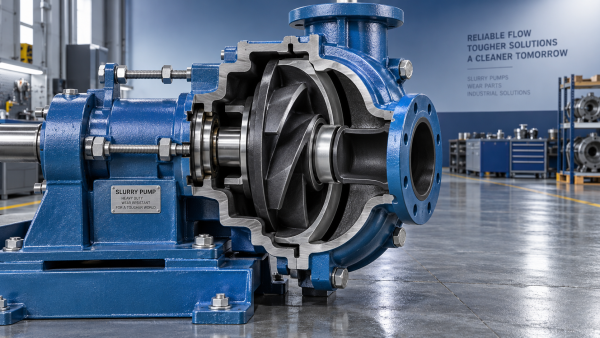
The most direct blockage cause is a particle or object that cannot pass through the narrowest internal section of the pump. This restriction is not always the nominal impeller eye. Depending on the design, the limiting passage may be the suction inlet, impeller vane channel, throatbush, liner clearance, or discharge connection.
Coarse ore, gravel, fibrous material, plastic fragments, rags, welding debris, broken screen pieces, and tramp metal can all create a sudden clog. In abrasive duties, even material that initially passes through may become trapped after interacting with another object or accumulating against worn internal surfaces. A pump may handle a certain top particle size under controlled conditions yet still block when occasional oversize material enters in clusters.
Check the actual feed, not only the intended feed specification. Screens, crushers, classifiers, and upstream separators may be bypassed, damaged, overloaded, or poorly maintained. A screen with a broken section can allow a single oversized object into an otherwise stable slurry stream. In a sump application, debris may enter during cleaning, maintenance, or changes in housekeeping practices.
Before fitting a larger pump, confirm the maximum particle size, particle shape, and the possibility of elongated or flexible contaminants. A larger impeller does not automatically solve a debris problem when the inlet pipe, valve, or discharge line remains restrictive.
Low velocity lets solids settle and compact
Many slurry systems clog because the liquid phase keeps moving while heavier solids begin settling in pipes, elbows, valves, and pump inlets. Once a bed forms, the remaining flow area becomes smaller. Velocity then increases locally but decreases in other sections, causing more unstable transport. A partial deposit can eventually become a full blockage, especially during low-load operation or after repeated stops.
This problem is common when a process is run below its planned throughput, when a variable-speed pump is slowed too far, or when a line was oversized without considering the minimum operating flow. Long horizontal runs and low points are especially vulnerable. Material with a broad particle-size distribution can be difficult because coarse particles settle while fine particles may remain suspended, changing the slurry concentration along the line.
Do not judge transport only by average flow rate. A system can show acceptable flow at one instrument location while still having a low-velocity zone elsewhere. Examine pipe routing, elevation changes, dead legs, reducers, valve cavities, and branches that are no longer used. A partially closed valve or a fouled discharge line can also reduce the transport velocity enough to create deposits upstream.
Shutdown is often when the blockage begins
During a planned or unplanned stop, solids can settle quickly in the pump suction, casing, and discharge pipe. Restarting against a settled line requires more than simply switching the motor on. The impeller may be unable to break up compacted material, and a high-torque start can stress mechanical components. Where process conditions permit, flush the line with a compatible liquid before shutdown and maintain a restart procedure that confirms the pipeline is clear.
If flushing is not possible, the system may need a different layout, a steeper line profile, a drain point, or a pump and piping arrangement designed for settled solids. The right approach depends on the slurry and process constraints; forcing repeated starts against a plugged system is not a reliable operating method.
Slurry properties can change without being obvious
A slurry is not simply water containing solids. Its behavior changes with solids concentration, particle density, size distribution, viscosity, temperature, and the presence of clays, polymers, reagents, or fibrous material. A pump that runs cleanly with one batch may clog with another even though the nominal percentage of solids appears similar.
High concentration can reduce the free liquid available to carry particles through the pump. Fine clays or thickened material may produce a paste-like flow that bridges across passages. Some mixtures settle rapidly at rest but become highly viscous when disturbed. Others form agglomerates that behave as larger particles than their individual grain size suggests.
Watch for operating changes upstream: altered water addition, thickener performance, screen changes, new material sources, reagent dosage adjustments, or temperature variation. These can affect pumpability before the issue is visible in a routine density reading. A representative slurry sample and a review of recent process changes are often more useful than adjusting pump speed blindly.
Air entrainment and poor suction conditions
Air does not usually create a solid plug by itself, but it can make solids handling unstable. Entrained air reduces the pump’s ability to develop consistent head, promotes surging, and lowers the effective velocity in the suction and discharge system. Larger particles may then settle during each low-flow cycle.
Air can enter through a vortex in a shallow sump, a leaking suction joint, an inadequately submerged inlet, or a poorly arranged feed stream that drops directly onto the pump intake. Foaming slurries require particular attention because surface foam can pull air into the inlet even when the liquid level appears adequate.
Inspect the sump level, inlet submergence, suction pipe joints, and the path of return flows. Avoid sharp disturbances immediately ahead of the pump inlet. A blocked or undersized suction line may compound the problem by increasing inlet losses and encouraging unstable flow.
Wear can turn a passing duty into a clogging duty
Wear is expected in abrasive slurry service, but its effects are not always limited to lower efficiency. Erosion can alter vane geometry, enlarge clearances, roughen flow passages, and create ledges where material begins to collect. An impeller that has lost its original profile may generate less velocity through the wet end, allowing solids to linger instead of passing through.
A worn throatbush or liner can also change internal flow patterns. In some cases, enlarged clearances reduce pumping performance enough that solids settle in the casing or discharge line. In others, uneven wear produces turbulence and localized recirculation where particles repeatedly strike the same area. The result may look like a random blockage but is actually a wear-related transport problem.
Inspect wet-end components when clogging becomes more frequent despite unchanged feed conditions. Compare clearances and component condition with the pump manufacturer’s maintenance limits. Do not assume that a pump is serviceable simply because it still rotates and produces some flow.
Incorrect pump or system selection
A slurry pump can be the wrong choice even when it meets the required head and flow on paper. The pump must also pass the expected solids, tolerate their abrasiveness, operate near a stable portion of its performance curve, and maintain sufficient velocity through the connected piping. A design intended for fine, freely flowing slurry may clog in a duty containing coarse, angular, or fibrous solids.
Operating too far left of the pump’s preferred range can create low internal velocity and recirculation. Running too slowly may reduce passage velocity; running too fast may increase wear and alter suction conditions. A pump with an insufficiently sized impeller passage is especially prone to blockage when feed characteristics vary.
System design matters just as much. Tight-radius elbows, abrupt reducers, undersized valves, poorly positioned strainers, and long low-velocity lines can become the true restriction. A pump replacement should therefore be evaluated together with the suction arrangement, discharge route, particle size distribution, solids concentration, and expected operating range.
A practical order for troubleshooting
When a clog is suspected, first protect personnel and isolate the equipment according to site procedures. Never open a pressurized casing or pipeline. Once the system is safe, investigate from the simplest external causes toward internal inspection.
- Confirm whether flow, pressure, power, speed, and sump level changed before the event.
- Check valve positions, discharge pressure, visible leaks, suction level, and any strainers or screens.
- Review recent changes in feed material, water addition, density, particle size, or operating rate.
- Inspect accessible piping low points, elbows, branches, and discharge restrictions for settled material.
- After isolation and drainage, inspect the suction inlet, impeller, throatbush, casing, and seal area for lodged solids or wear.
- Correct the root condition before restarting; clearing the obstruction alone may only provide temporary relief.
Record what was found each time the pump blocks. A pattern may emerge: clogs after low-rate operation point toward settling; clogs after certain feed batches suggest oversize or changed slurry rheology; clogs that become more frequent over time often indicate wear or deteriorating upstream screening.
Questions operators often ask
Can increasing pump speed clear a slurry pump clog?
Sometimes a minor deposit can be moved by restoring adequate velocity, but increasing speed is not a safe general response. A hard blockage, settled pipeline, or lodged foreign object may remain in place while motor load, vibration, and wear rise. Verify that the system is not plugged and that the pump is operating within its permitted speed range before making changes.
Should a suction strainer always be installed?
Not necessarily. A strainer can protect the pump from large debris, but it can also become the first restriction in a solids-handling system if its open area is inadequate or maintenance is neglected. Its opening size, available area, cleaning access, and compatibility with the expected solids must be considered as part of the whole suction design.
Why does the pump clog only after it has been stopped?
Stopping removes the velocity that keeps particles suspended. Solids settle in the casing and low sections of pipe, then compact as liquid drains away. A flush sequence, controlled shutdown, or system modification may be needed where frequent stoppages are unavoidable.
When does repeated clogging require a design review?
A design review is appropriate when blockages continue after debris control, operating corrections, and normal maintenance have been addressed. Repeated events may indicate that the pump passage, piping velocity, suction arrangement, or slurry duty falls outside the system’s practical operating limits.
Related Information
 Oct 11, 2026
What Causes a Slurry Pump to Clog During Operation?
What causes a slurry pump to clog during operation? Discover key causes, warning signs, and practical troubleshooting tips to reduce downtime and protect pump performance.- Oct 10, 2026
How Often Should Slurry Pump Impeller Clearance Be Adjusted?
How often should slurry pump impeller clearance be adjusted? Learn inspection intervals, wear indicators, and maintenance tips to improve pump efficiency and service life. - Oct 09, 2026
What Should Be Included in a Dredging Pump Quotation?
What should be included in a dredging pump quotation? Explore duty data, wear materials, drive packages, accessories, delivery terms, warranty, and testing for smarter buying.  Oct 11, 2026
How to Adjust Impeller Clearance on a Worn Slurry Pump
How to adjust impeller clearance on a worn slurry pump correctly: restore efficiency, reduce recirculation, and prevent costly wet-end damage.

Get a Quote
Please leave your information and email address, and we will contact you as soon as possible.