How Slurry Pumping Solutions Can Lower Unplanned Downtime
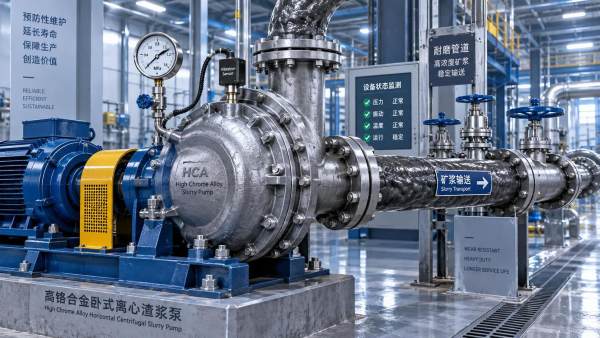
Unplanned downtime can quickly erode productivity, increase maintenance costs, and disrupt delivery schedules in demanding manufacturing environments. Effective Slurry Pumping Solutions reduce these risks through reliable flow control, wear management, and proactive maintenance.
For business decision-makers, the central question is not whether slurry systems require investment. It is which changes will deliver measurable uptime, lower lifecycle cost, and predictable production capacity.
Why Unplanned Downtime Becomes a Business-Level Problem
Slurry handling failures rarely affect only one pump. A stoppage can interrupt upstream material preparation, downstream processing, labor allocation, quality control, and committed customer delivery schedules.
In abrasive, corrosive, or high-solids applications, equipment degradation can develop quickly. When warning signs are missed, a relatively contained maintenance need becomes an urgent operational disruption.
The immediate cost is usually visible: repair labor, replacement parts, overtime, and lost throughput. However, indirect losses often create the greater financial impact across the plant.
Missed production targets may require expedited shipping, external processing, schedule changes, or delayed orders. Repeated interruptions also weaken confidence in capacity planning and asset availability.
Decision-makers should therefore treat slurry pumping reliability as an operational resilience issue. It directly influences margin protection, customer service, workforce efficiency, and capital utilization.
A pump that operates until catastrophic failure is not necessarily economical. Lower purchase cost can be overwhelmed by unplanned repairs, process instability, premature component replacement, and safety exposure.
The most effective Slurry Pumping Solutions are designed around total operating conditions. They connect pump selection, material choice, system control, monitoring, and maintenance strategy.
Identify the Actual Causes of Slurry Pump Failures
Reducing downtime begins with an accurate failure picture. Plants often replace damaged parts repeatedly without determining whether the pump, process conditions, piping, or operating practices caused the damage.
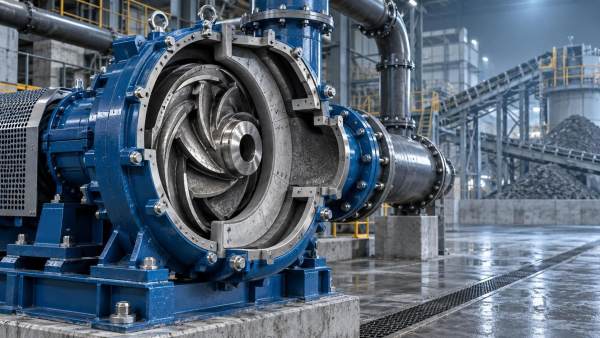
Abrasive wear is a frequent cause of failure. Hard particles can erode impellers, liners, casings, seals, and pipe bends, gradually reducing hydraulic efficiency and flow stability.
Corrosion creates a different but equally serious risk. Chemical attack can weaken wetted components, damage elastomers, and accelerate wear where corrosion and abrasion occur together.
Improper pump sizing is another common problem. An oversized unit can run inefficiently, while an undersized pump may operate beyond its preferred range and experience accelerated wear.
Operating too far from the best efficiency point can create vibration, recirculation, heat, shaft deflection, and seal problems. These effects may remain hidden until failure occurs.
Blockages also drive unplanned downtime, particularly when slurry properties vary. Particle settling, fibrous materials, oversized solids, or insufficient line velocity can restrict flow unexpectedly.
Seal failures deserve close attention because they can indicate wider system issues. Pressure fluctuations, dry running, poor flush conditions, alignment errors, and bearing wear can all contribute.
A practical reliability review should examine failure records, wear patterns, process data, repair history, and operator observations. This creates evidence for targeted improvements rather than assumptions.
Choose Pumps Based on the Slurry, Not Just the Required Flow
Flow rate and head remain essential selection inputs, but they are insufficient for demanding slurry applications. Decision-makers need a full understanding of the material being transported.
Important slurry characteristics include solids concentration, particle size distribution, particle hardness, density, viscosity, temperature, pH, chemical composition, and expected variation during production.
These factors influence hydraulic performance, component wear, power demand, seal requirements, and the probability of blockage. A pump selected for average conditions may fail under process peaks.
Centrifugal slurry pumps are widely used because they can handle continuous flow and variable capacities. Their suitability depends on proper wet-end design, speed, materials, and operating point.
Positive displacement pumps may be appropriate where viscosity is high, flow must remain consistent, or material behavior makes centrifugal pumping less reliable. Each technology introduces different maintenance requirements.
Material selection should be evaluated carefully. High-chrome alloys can offer strong abrasion resistance, while rubber linings may perform well with fine particles and certain chemical conditions.
Stainless steel, duplex alloys, ceramics, and specialized elastomers may be justified in corrosive or unusually severe duties. The correct choice depends on actual wear mechanisms, not generic specifications.
Reliable Slurry Pumping Solutions should also consider future operating changes. Production expansion, new feedstock sources, or altered process chemistry can quickly invalidate a narrowly selected design.
Design the Entire Pumping System for Stable Operation
A reliable pump cannot compensate for a poorly designed system. Suction conditions, pipeline geometry, valve placement, tank design, and control logic all affect uptime.
Inadequate suction head can cause cavitation, noise, vibration, reduced capacity, and rapid damage. Cavitation is especially costly because it can harm several components simultaneously.
Suction piping should minimize unnecessary restrictions, sharp turns, air pockets, and poor transitions. The goal is to deliver a consistent slurry supply to the pump inlet.
Pipeline velocity must be high enough to prevent solids from settling, but not so high that excessive friction, energy use, and pipe wear become unavoidable.
System designers should account for the settlement velocity of the solids, likely changes in concentration, and the consequences of intermittent operation. Startup conditions may differ significantly from normal operation.
Where long pipelines are involved, wear can occur far beyond the pump. Bends, reducers, valves, and branch connections may become recurring failure points without suitable protection.
Control valves should be selected for slurry service rather than adapted from clean-fluid applications. Poor valve design can create pressure loss, turbulence, plugging, and difficult maintenance access.
Access is a reliability consideration, not merely a maintenance convenience. Equipment that is difficult to inspect or service often remains in degraded condition longer than it should.
Use Condition Monitoring to Move from Reactive to Planned Maintenance
Planned maintenance reduces downtime only when it is based on useful information. Fixed replacement intervals can waste component life or still fail to prevent unexpected breakdowns.
Condition monitoring helps maintenance teams identify deterioration before it becomes a production event. The most valuable programs focus on indicators that connect directly to known failure modes.
Vibration monitoring can reveal imbalance, bearing damage, misalignment, looseness, cavitation, and hydraulic instability. Trend data is generally more valuable than isolated readings.
Temperature measurements provide additional insight into bearing condition, lubrication issues, seal problems, and motor loading. Sudden changes deserve investigation even when absolute values remain acceptable.
Pressure and flow monitoring can expose blocked lines, worn impellers, closed valves, insufficient feed, or changing process density. These measurements also verify that pumps meet production needs.
Power consumption is another useful operational signal. A rising or falling power profile may indicate changing solids conditions, internal wear, blockage, or operation away from the intended duty point.
Digital monitoring should support decisions rather than generate unused data. Plants benefit when alarms, thresholds, and escalation procedures are tied to specific maintenance actions.
For critical assets, remote visibility can help maintenance and operations teams respond earlier. It also supports more consistent reporting across multiple lines or manufacturing locations.
Improve Maintenance Practices That Directly Affect Pump Life
Even well-selected pumping equipment will underperform when installation and maintenance practices are inconsistent. Reliability depends on disciplined execution during routine service and major repairs.
Alignment should be checked whenever pumps, motors, couplings, or baseplates are disturbed. Misalignment increases vibration and can shorten bearing, seal, and coupling life.
Bearing lubrication requires the correct lubricant, quantity, interval, and contamination control. Over-lubrication can be as harmful as insufficient lubrication in some operating environments.
Wear parts should be inspected against defined limits rather than replaced only after visible failure. Tracking impeller clearance and liner thickness helps protect hydraulic performance.
Seal systems need clear ownership. Operators and maintenance personnel should understand flush requirements, pressure limits, leakage expectations, and the response required when operating conditions change.
Spare parts management is equally important. A plant may diagnose a failure quickly but still experience extended downtime when critical liners, impellers, seals, or bearings are unavailable.
Standardizing approved components can reduce lead-time risk and simplify training. However, standardization should not force unsuitable materials or designs into distinct slurry applications.
Post-repair reviews add value when failures recur. Reviewing the removed components, operating history, and repair quality helps prevent teams from treating symptoms repeatedly.
Calculate Return on Investment Beyond the Pump Purchase Price
Business leaders should evaluate pumping investments through lifecycle economics. The purchase price is visible, but energy use, wear rates, labor, spare inventory, and lost production often matter more.
A useful calculation starts with the true cost of an unplanned shutdown. Include lost output, contribution margin, labor disruption, repair costs, quality losses, and delivery consequences.
Next, estimate how a proposed improvement changes failure frequency, repair duration, component life, and operating efficiency. Conservative assumptions are more credible than optimistic projections.
For example, a higher-specification pump may cost more initially but provide longer wear life and fewer emergency interventions. The financial case strengthens when production is capacity constrained.
Energy consumption should not be ignored. A pump operating near its efficient range can reduce electricity use while also lowering mechanical stress and heat generation.
Maintenance labor has strategic value beyond direct cost. Reducing emergency work lets skilled technicians spend more time on planned reliability tasks and less time restoring failed equipment.
Risk should be included in the assessment. A single failure affecting a critical production line, environmental compliance requirement, or customer commitment may justify redundancy or enhanced monitoring.
The strongest business cases present both measurable savings and operational risk reduction. This gives finance, operations, and engineering leaders a common basis for investment decisions.
Know When Redundancy and Upgrades Are Justified
Not every slurry application requires duplicate pumping capacity. Redundancy should be based on process criticality, repair lead times, production flexibility, and the consequences of interruption.
A standby pump can be valuable when a single failure stops an entire line. It is less valuable when switching is difficult, spare equipment is poorly maintained, or upstream material cannot remain stable.
Duty-standby arrangements require regular testing. A backup pump that has not been exercised, inspected, or maintained may fail precisely when it is needed.
Upgrades may also be justified when repeated failures indicate a design mismatch. Increasing wear resistance, changing pump speed, revising impeller geometry, or modifying controls can improve reliability.
Before approving an upgrade, confirm that the process duty is accurately understood. Installing a more robust component without correcting system causes can produce disappointing results.
Consider upgrades when downtime patterns show recurring wear, frequent seal failures, persistent vibration, unstable flow, excessive power draw, or repairs that repeatedly exceed planned durations.
Engaging an experienced pump supplier or engineering partner can help validate assumptions. The best partners assess operating data and system behavior instead of offering a generic replacement.
Build an Action Plan for More Reliable Slurry Handling
Start by ranking slurry pumping assets according to production impact. Focus first on pumps where failure stops critical operations, creates safety concerns, or produces high recovery costs.
For each critical pump, document service conditions, failure modes, repair history, available spares, monitoring coverage, and system limitations. This establishes a practical reliability baseline.
Then identify actions that can be implemented quickly, such as correcting alignment, improving inspection routines, updating spare stock, or establishing operating limits for abnormal conditions.
Longer-term actions may include hydraulic redesign, material upgrades, automation, condition monitoring, or redundancy. Prioritize projects using expected downtime reduction and lifecycle value.
Assign clear responsibility between operations, maintenance, engineering, and procurement. Pump reliability deteriorates when no team owns the relationship between process changes and equipment performance.
Review results after implementation. Compare downtime hours, maintenance costs, wear-part life, energy consumption, and production stability against the original baseline to verify improvement.
Conclusion: Reliability Comes from Better Decisions Across the System
Unplanned downtime is rarely solved by replacing a failed pump with an identical unit. Sustainable improvement requires understanding slurry behavior, system demands, equipment condition, and business risk.
Well-designed Slurry Pumping Solutions lower downtime by matching equipment to actual service, controlling damaging operating conditions, and enabling maintenance before failures escalate.
For decision-makers, the priority is to invest where reliability improvements protect throughput, reduce emergency costs, and create more predictable operating performance across the manufacturing process.
When pump selection, system design, monitoring, maintenance, and lifecycle analysis work together, slurry handling becomes a controllable asset rather than a recurring source of disruption.